Working Remotely in Retirement: Combining Work & Travel
Working Remotely in Retirement lets you have your cake and eat it too. You can keep your mind sharp while exploring new places and soaking up different cultures, all without giving up meaningful work.
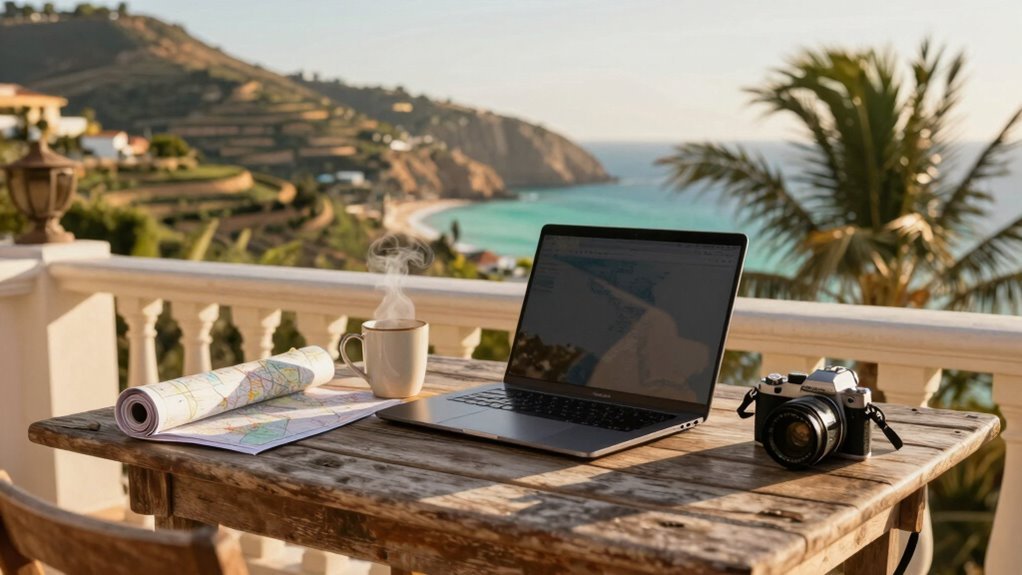
Imagine logging in from a cozy café with a view of the beach instead of a cubicle. That change of scenery can be energizing and inspiring.
Plus, you’ll save on commuting and lunch costs, giving your retirement fund a nice boost. If you’re curious about how to balance work with travel, keep going—there’s much more to share!
The Advantages of Remote Work in Retirement

In today’s world, many retirees are discovering that working remotely isn’t just about keeping busy; it’s also packed with advantages that can truly enhance your golden years.
Imagine this: you’re sipping coffee on your patio, laptop ready, connecting with colleagues without ever needing to put on dress shoes! Working remotely can lower your chance of retiring by about 14.4%, and it might even keep your mind sharp, delaying cognitive decline.
Additionally, by sticking around in the workforce a tad longer, you could boost your retirement income by nearly 8%. Life’s too short for boring routines—remote work lets you enjoy flexibility and balance, reclaiming that time usually lost to commuting.
Plus, you’ll create meaningful connections without the limitations of a typical office. So, why not blend work with fun in retirement? After all, who’s to say you can’t have your cake and eat it too?
Financial Savings: Boosting Your Retirement Fund
While you might be dreaming of sun-soaked days and leisurely brunches, tapping into the world of remote work can seriously boost your retirement fund!
Imagine extending your working years by just a few more, thanks to the flexibility of remote options. You could reduce your retirement timeline by 1.4 percentage points, and that means more time to add to those savings!
Plus, say goodbye to hefty commuting costs and daily lunches out—remote workers can save up to $12,000 a year! That’s money you can toss right into your retirement pot.
Whether you’re picking up a freelance gig or staying connected with your former employer, those extra funds can mean a whole lot more security down the line.
With remote work, you can keep your bank account healthy while enjoying the freedom to travel.
Flexibility and Lifestyle: Balancing Work and Travel
Rather than being tethered to a traditional office, you can embrace a lifestyle that blends work and travel in the most exciting ways!
Imagine setting up your laptop in a sunny Florida café or working from a cozy spot in Texas while indulging in some local barbecue. With remote work, you’ve got the flexibility to choose not just where you work, but when you work, too! In fact, the 70% of job seekers rank hybrid as a preferred work arrangement, which aligns perfectly with your desire for adventure.
Say goodbye to long commutes—more time for you to explore new places or catch up on your favorite hobbies. Plus, it’s perfect for balancing any caregiving duties you might have.
You’re not just extending your career; you’re crafting a life filled with adventure and connection. And let’s face it: higher job satisfaction is hard to ignore when you can sip coffee at sunrise while checking off tasks.
Work and travel? You’re living a retirement dream, my friend!
Cognitive Benefits of Continued Employment

Staying employed during your retirement years can be a surprisingly fun way to keep your mind sharp and engaged!
You mightn’t realize that continuing to work can considerably slow down cognitive decline. It’s true! Research shows that retirement can accelerate verbal memory decline by nearly 38%.
But if you stay employed, especially in a complex job, you’ll actually boost your cognitive function! Think of your brain like a muscle: the more you use it, the stronger it gets.
Engaging in challenging tasks keeps those neurons firing, so when you finalize your work plans, consider taking on part-time projects. Even a flexible gig can keep your mind agile and entertained.
Plus, you’ll get to enjoy the perks of work while traveling!
Social Connections and Community Engagement
Maintaining a job might boost your brainpower, but don’t forget about the social side of things! Embracing remote work in retirement can lead to feelings of loneliness if you’re not careful. Older adults often find themselves feeling isolated due to fewer casual interactions and the loss of workplace friendships.
So, how do you combat that?
Engage in community activities—join a book club, volunteer at a local charity, or take up singing in a choir! These activities not only enrich your life but also help renew old friendships.
Plus, don’t underestimate the power of the internet. Digital tools can keep you connected, transcending physical limits and allowing friendships to flourish, even from afar.
You might find that a little effort in maintaining social ties goes a long way in ensuring you enjoy your remote work lifestyle.
Planning for a Phased Retirement Approach
As you think about your journey into retirement, consider the benefits of a phased approach—it can make the change smoother and way more enjoyable!
This strategy allows you to shift gradually, keeping your financial and social life intact. Here are three key points to ponder:
- Flexibility: You can tailor your work hours, maybe switching to part-time or job-sharing. This lets you enjoy your newfound freedom without losing all your structure!
- Financial Stability: You still earn an income while tapping into retirement benefits, which helps you maintain a budget and build your savings.
- Continued Engagement: Staying involved means you can mentor younger colleagues, share your wisdom, and keep that sense of purpose alive.
Frequently Asked Questions
How Can I Find Remote Jobs Suitable for Retirees?
You can find remote jobs suitable for retirees by exploring job platforms like FlexJobs that specialize in flexible opportunities.
Tap into your skills from previous jobs, like consulting or tutoring, as these roles are in high demand.
Don’t forget to network with online communities for hidden gems!
You might even consider brushing up on your tech skills—after all, who wouldn’t want to impress a hiring manager while sipping coffee on their porch?
Happy hunting!
Are There Specific Remote Job Training Programs for Older Adults?
There are fantastic remote job training programs tailored just for older adults, like SCSEP and AARP’s BACK TO WORK 50+.
These programs help you sharpen your tech skills, boost your confidence, and get you ready for remote work opportunities—it’s like a digital boot camp for your career!
Plus, they offer career coaching and support to keep you motivated. So, strap in, and let’s master the remote world together!
What Technology Do I Need for Effective Remote Work?
For effective remote work, you’ll need a reliable laptop or desktop to keep up with your tasks.
A dual monitor setup? It’s like having an extra set of hands!
Don’t forget a good webcam and microphone—quality matters during video calls, trust me!
Invest in ergonomic furniture for your back’s sake.
And, of course, a speedy internet connection is essential; nobody likes buffering during a meeting!
Now, get set up and work your magic!
Can I Maintain Health Insurance While Working Remotely in Retirement?
You can absolutely maintain health insurance while working remotely in retirement!
Think of it like packing essentials for a trip—just make sure you have the right gear.
You’ve got options like COBRA, Marketplace plans, or even your partner’s coverage. Each route has different costs; just like a travel package.
Don’t forget to check if your plan covers you while you’re off exploring! Staying covered keeps you comfortable—after all, no one wants a surprise bill on their adventures!
How Do Remote Jobs Impact Social Security Benefits?
Remote jobs can impact your social security benefits in a big way! If you earn over certain limits, your SSI might take a hit, reducing benefits by $1 for every $2 you make above $65.
With SSDI, you can test drive jobs without losing benefits during a nine-month trial. Just remember, if you earn beyond the substantial gainful activity limit, you risk losing SSDI.
Conclusion
Embracing remote work in retirement isn’t just about staying busy; it’s a chance to explore the world while padding your bank account. Did you know that 70% of retirees say working part-time helps them feel more fulfilled? Imagine sipping coffee in a cozy café in Paris while clocking in a few hours on your laptop! So, whether you’re wandering through vineyards or lounging on a beach, merging work and travel could be your ticket to a vibrant retirement!