Travel Tips for Visually Impaired Senior Travelers
Travel Tips for Visually Impaired Senior Travelers: traveling as a visually impaired senior is a thrilling adventure waiting for you! Start by choosing vibrant, accessible destinations with friendly infrastructure and good public transit to make getting around easier.
Plan your transportation in advance—paratransit, accessible shuttles, and ride-sharing services can all be excellent options. Confirm accessibility features and pickup procedures before you travel to avoid surprises.
Look for cozy accommodations that cater to your needs, such as tactile signage, well-lit pathways, and staff trained to assist guests with vision loss. Use tech like navigation apps, voice assistants, and audio-described guides to help you explore confidently.
Engage with local guides who know the area and its accessibility challenges, and be open about your requirements; most people are happy to help. With a bit of planning and the right supports, your trips will be smoother and more enjoyable.
Researching Accessible Destinations
When you’re diving into the adventure of researching accessible destinations, it’s essential to focus on places that truly cater to your needs as a visually impaired traveler.
Look for cities with pedestrian-friendly access, inclusive infrastructure, and public transit that boasts audible signals and tactile aids. You’ll be surprised to find that while some urban areas are behind the curve, others, like Sweden and France, have really stepped it up with ramps and tactile exhibits.
Plus, keep your eyes peeled for museums and cultural sites that provide tactile graphics and audio narratives! These tools can transform your experience, giving you the joy of discovery and engagement.
And don’t forget to check out specialized guided tours—who doesn’t love a little expert insight?
Planning Your Transportation Needs
Accessible adventures are made even better when you’ve got your transportation needs sorted out!
Maneuvering public transit can be tricky, especially if you’re dealing with limited audio announcements and braille signage. It’s worth checking your local transit system to see if they offer any special programs for seniors—some cities even provide discounted fares!
If public transit doesn’t work for you, consider paratransit or ride-sharing options like Uber or Lyft. Just keep an eye on your wallet since costs can add up.
As you plan, remember to download handy GPS navigation apps designed for visually impaired users. They can guide you along the way and make getting around much smoother.
And don’t forget, it’s okay to ask for help! Travelers often strike up conversations that lead to new friends or unexpected adventures.
Choosing the Right Accommodations
Finding the perfect accommodations can set the stage for a fantastic trip, so don’t just settle for any place!
Look for hotels that feature braille signage and tactile markers; they’ll make finding your way a breeze. Adjustable lighting is essential, as it improves visibility and helps you avoid any risky tumbles. Safety features like grab bars and emergency pull cords can’t be overlooked either!
Location matters—choose somewhere central, close to accessible public transport and attractions. It’s like finding a hidden gem right at your fingertips!
Also, verify the staff is trained in guiding techniques; a friendly face who knows how to help can transform your stay.
Finally, go for rooms with contrasting colors and distinctive tactile features—these little extras make a world of difference.
Preparing for Mobility Challenges
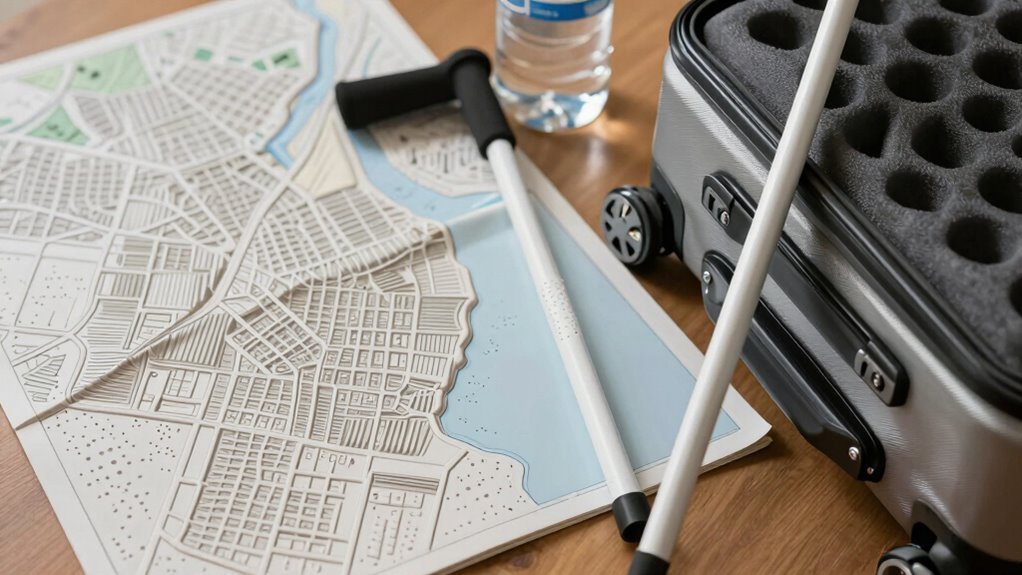
As you start planning your trip, remember that preparing for mobility challenges can be a game changer for enjoyable adventures! Here are a few tips to help you navigate with ease:
- Research Accessibility: Check if your destinations have wheelchair ramps, accessible restrooms, and clear paths. Some places are friendlier than others, so know before you go!
- Transport Planning: Arrange for transportation ahead of time. Rideshare services can be tricky, so consider using specialized transport options or local services that cater to seniors.
- Practice Safe Navigation: Familiarize yourself with your travel tools, like a white cane or mobility aids. Practicing beforehand can boost your confidence so you can glide through new surroundings! It’s also helpful to note that 18.6 million Americans reported travel-limiting disabilities, meaning that you’re not alone in seeking accessible travel solutions.
With a bit of preparation, you’ll be ready to tackle any mobility challenges and make unforgettable memories on your journey! Adventure awaits, so grab your suitcase and let’s hit the road!
Utilizing Technology for Navigation
Exploring new places doesn’t have to be a nerve-wracking adventure, especially with today’s amazing technology at your fingertips!
With tools like GPS apps and indoor navigation apps, you can confidently make your way around any unfamiliar setting. Imagine using your smartphone to receive real-time audio directions or even haptic feedback to warn you of obstacles ahead.
Devices like Glide offer a helping hand too, guiding you safely through crowded areas while identifying crosswalks and elevators along the way.
Plus, assistive navigation codes like NaviLens make it easier than ever to read signs, just like having a friendly assistant by your side.
And let’s not forget those clever apps that describe your surroundings, so you know exactly what’s nearby.
Embrace this tech—they’ll help you navigate like a pro and keep all those travel jitters at bay. After all, adventures are way more fun when you know where you’re going!
Navigating Airports With Ease
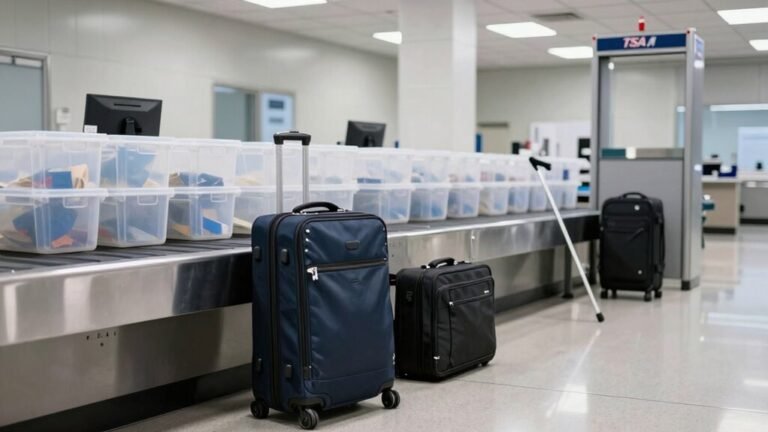
Finding your way through an airport doesn’t have to feel like an intimidating maze, especially when you know what to expect!
With a little planning, you can navigate with ease. Here are three tips to help you through:
1. Take Advantage of Priority Lanes****: These shorter queues reduce both wait time and physical strain, making your experience smoother.
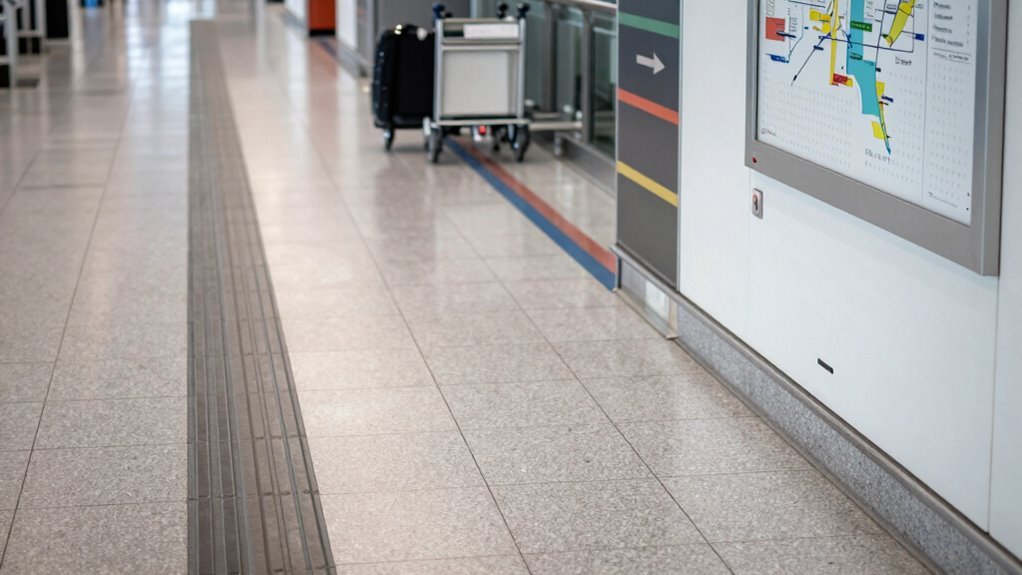
2. Leverage Accessible Features**: Airports now have tactile guide paths, widened walkways**, and Braille signage.
These enhancements make it easier for you to figure out where you’re going.
3. Ask for Help: Don’t hesitate to reach out to trained airport staff.
They’re prepared to assist, often within 20-45 minutes, so you can focus on catching your flight rather than stressing about logistics.
Enhancing Safety During Travel
Traveling can be a thrilling adventure, but when you’re visually impaired, safety often feels like a big concern looming on the horizon. To enhance your safety during travel, consider taking Orientation and Mobility (O&M) training to gain confidence and skills in navigation.
While access to training can be limited, it plays an essential role in improving your independence and reducing fall risks.
Don’t hesitate to reach out to local support networks for transportation options, particularly if public transit doesn’t feel safe. Explore rideshare programs or community-based services designed for visually impaired travelers. They’re like having a personal chaffeur without the tuxedo!
Lastly, keep your travel buddies close—whether it’s friends or family—because a solid support system can turn anxiety into excitement.
Packing Essentials for Your Journey
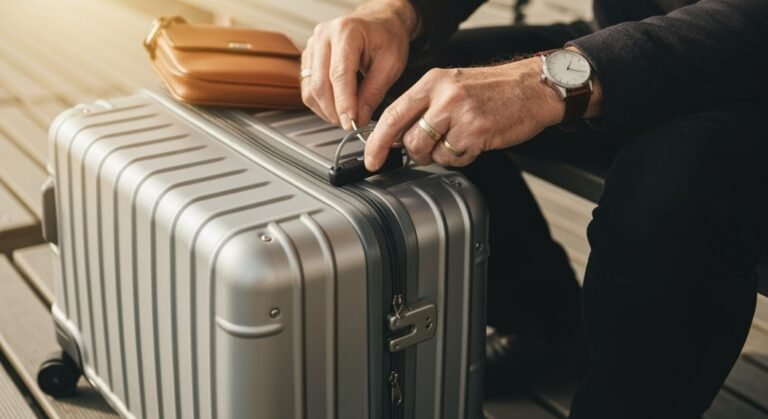
Packing essentials for your journey can make all the difference in turning a potentially overwhelming adventure into a smooth and enjoyable experience.
You’ll want to be prepared and stay organized, so here are three must-haves for your packing list:
1. Organizational Tools: Use labeled packing pouches with tactile markings for easy identification.
Packing cubes help compress clothes and keep things neat.
2. Clothing Comfort: Choose lightweight, breathable fabrics like cotton, along with flexible waistbands and comfy non-slip shoes to keep your feet happy during long days of exploration.
3. Health Supplies: Carry a travel health kit stocked with essentials, plus your medications in an easy-to-reach organizer.
Don’t forget hand sanitizer and first-aid basics for those little bumps along the way!
Communicating Your Needs Effectively
Effective communication is key to enjoying your travels, especially for visually impaired seniors who want to navigate new environments with confidence.
Don’t be shy about verbally attracting attention—call out the name of the person you’re speaking to, so they don’t jump out of their skin! Use clear directions, like “I’m standing to your left,” instead of being vague. When you’re in proximity, a gentle touch is nice—just be sure you have permission first.
Be sure to describe your surroundings with precision, mentioning where obstacles lie or how far away specific locations are. Also, don’t forget to ask for help! Whether it’s at the airport, hotel, or a busy street, most people are more than willing to lend a hand.
And hey, it’s your adventure. Own your needs like a pro! Communicating effectively will make your experience smoother and more enjoyable.
Happy travels!
Making the Most of Guided Tours
When you’ve got a guided tour lined up, it’s like revealing a treasure chest of experiences just waiting for you to explore!
To make the most of your adventure, consider these three tips:
- Choose Specialized Tours: Opt for tours designed specifically for visually impaired seniors with tactile exhibits and audio descriptions to keep you engaged.
- Connect with Your Guide: Engage with your trained guide; they’re like your personal treasure map, steering through opportunities and ensuring a safer experience.
- Utilize Resources: Make use of Braille signage and visitor assistance. These features are your best pals, helping you manage and enhance your enjoyment.
Frequently Asked Questions
What Should I Do if My Mobility Aid Is Lost or Damaged?
If your mobility aid gets lost or damaged, don’t panic!
First, contact the airline or transportation provider right away and file a report—most need it within 24 hours. Grab a Property Irregularity Report, then ask about where your aid was last seen.
Ask for a loaner if you need one, and make sure you document everything. Keep those receipts handy for insurance—after all, we want to bounce back without a hitch!
Are There Travel Insurance Options Specifically for Visually Impaired Travelers?
There are travel insurance options tailored just for you!
Many insurers offer specialized policies that cover the needs of visually impaired travelers. From medical emergencies to lost mobility aids, these plans got your back.
Some even have waivers for pre-existing conditions when you act fast—usually within a couple of weeks of booking!
How Can I Find Local Resources for Blind or Visually Impaired Services?
To find local resources for blind or visually impaired services, start with the Eldercare Locator or state Departments of Rehabilitation. They’ve got directories that match your needs.
The American Foundation for the Blind‘s VisionAware is another goldmine for support options! You can also check community centers nearby, as they often offer tailored programs.
Sure, steering through this can feel like a maze at times, but you’re not alone—support is just around the corner!
Can I Request Special Dietary Accommodations While Traveling?
Absolutely, you can request special dietary accommodations while traveling!
Just think of it as your delicious ticket to a worry-free meal. Call airlines, hotels, and restaurants ahead of time, usually 24-48 hours is best, to let them know your needs.
And don’t shy away from asking staff for menu help—they’re there to guide you!
Picture a waiter joyfully reading the menu aloud, just for you.
Bon appétit, and enjoy your travels!
What Are Common Cultural Attitudes Towards Visual Impairment in Other Countries?
Cultural attitudes towards visual impairment vary widely around the world!
In some countries, folks are super supportive, viewing disabilities positively thanks to strong legislation.
Meanwhile, others may cling to outdated beliefs about disabilities, leading to stigma.
You might find that in places where people have more contact with visually impaired individuals, attitudes improve.
Humorously, it’s like finding treasure—sometimes you gotta dig a little to see the real gems of understanding beneath the surface!
Conclusion
Traveling can be a thrilling tapestry of togetherness, exploration, and discovery, even for visually impaired seniors! By sticking to these savvy strategies, you can make your adventure both manageable and memorable. Embrace the excitement of experiencing new sights, sounds, and sensations while prioritizing comfort and convenience. So grab your guidebook, gather your gear, and get ready to commence a wonderful whirlwind of wanderlust! After all, every journey is a joy waiting to unfold!