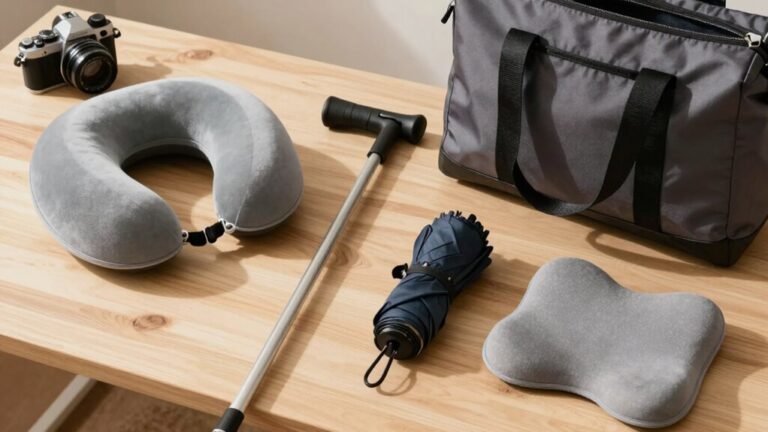
How to Sleep Comfortably on a Plane (Tips for Seniors)
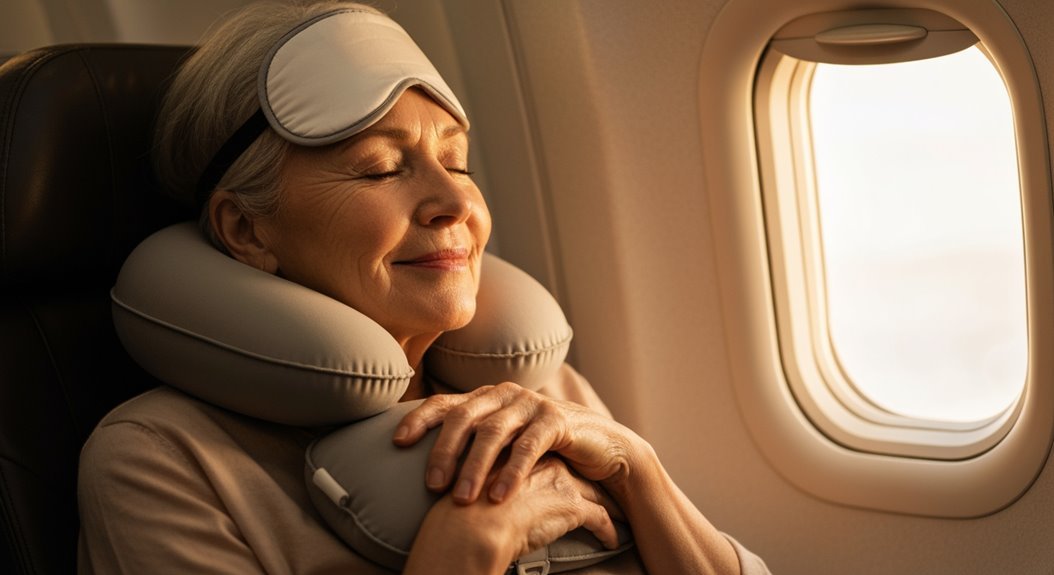
To sleep comfortably on a plane, pick a good seat—aim for the front cabin or a window seat for more peace and privacy. A window seat lets you lean against the fuselage and avoid being disturbed by neighbors.
Bring an eye mask and noise-canceling headphones or earplugs to block light and sound. Stay hydrated and avoid alcohol, and dress in layers so you can adjust for temperature changes.
Don’t overeat before your flight; a light, balanced meal helps you rest better. If you use a CPAP machine, notify the airline in advance to confirm power availability and storage options.
Want more helpful strategies to make your journey smoother? There are plenty more tips to help you arrive rested and comfortable.
Managing Sleep Disorders and Health Risks
When you’re flying, especially at night, managing sleep disorders and the health risks that come with them can feel like trying to catch a cloud in a bottle. As you age, your circadian clock takes a beating, making those night flights more challenging. You might find yourself falling asleep slower, waking up more often, or even dealing with pesky insomnia after a trip. Research has shown that flight crews, including pilots, often struggle with poor sleep quality, which can be exacerbated by irregular flight schedules. It gets trickier on long flights, as exposure to cabin noise can triple your chances of waking restless.
But don’t worry! A little preparation can go a long way. Consider chatting with your doctor before traveling so you can tackle any sleep issues head-on. Also, using sleep aids or relaxation techniques might just be the ticket to smoother skies. And hey, a good nap on the plane could turn your trip from a sleepless struggle into a dream flight!
Optimal Seat Selection for Comfort
Finding the right seat on a plane can turn your travel experience from a sleepy slog into a cozy retreat, especially if you’re steering through the skies at night.
If you’re a senior, aim for the front cabin. It’s quieter, has fresher air, and lets you board and disembark quicker—perfect for those of us who appreciate a little extra time and peace. Seats in this area are often quieter and provide fresher air, which can enhance your overall comfort on the flight.
Consider an aisle seat if you need to stretch those legs or use the lavatory often.
And let’s not forget window seats ahead of the engines; they offer a comfy place to lean and give you a sense of privacy.
Steer clear of the last rows and heavy service areas, unless you enjoy unexpected interruptions.
Rows 8 to 12 typically provide decent legroom and comfort without the hassles.
With the right seat, you’ll be drifting off before you know it, dreaming of your destination!
Environmental Adjustments to Enhance Sleep
Creating a sleep-friendly environment on a plane can feel like a mini-expedition, but with a few smart adjustments, you can transform your cramped seat into a cozy nest.
Start by managing light—don your eye mask to block out pesky cabin lights and dim your overhead light to keep melatonin flowing. It’s crucial to remember that some environmental factors can impact sleep quality, so doing your best to control them in-flight is vital.
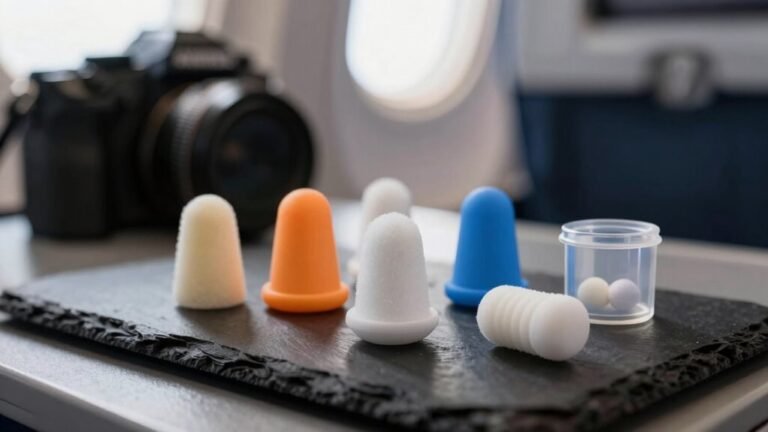
Next, turn your attention to noise; slip on noise-canceling headphones or earplugs to tune out the hum of the engines.
Want to stay comfy? Layer up with clothing and airline blankets to regulate your temperature, avoiding overheating that can thwart your snooze.
Keep that air fresh—snag some nasal spray if dryness strikes, and steer clear of heavy meals that may cause discomfort.
Finally, toss in a travel neck pillow and stretch your legs every now and then to fend off stiffness.
With these quirky tricks, you’ll be on your way to sweet dreams at 30,000 feet!
Preflight and Travel Schedule Preparation
Planning your travel schedule can feel like assembling a jigsaw puzzle, but it doesn’t have to be intimidating!
Start by consulting your healthcare provider well in advance; they’ll help you navigate any health concerns and medication needs. Remember to pack your meds in their original containers, plus some extras for those pesky travel delays.
Next, finalize your itinerary and share it with family or friends. You want your support network to know your flight details and hotel reservations.
Arrive at the airport early to dodge stressful last-minute dashes, and don’t hesitate to request assistance services.
Oh, and don’t forget to arrange for priority boarding or special meals with your airline!
With a smidge of preparation, you can look forward to a smoother travel experience. Who knows? You might feel like a travel pro by the time you snag that window seat!
Behavioral Considerations During Flights
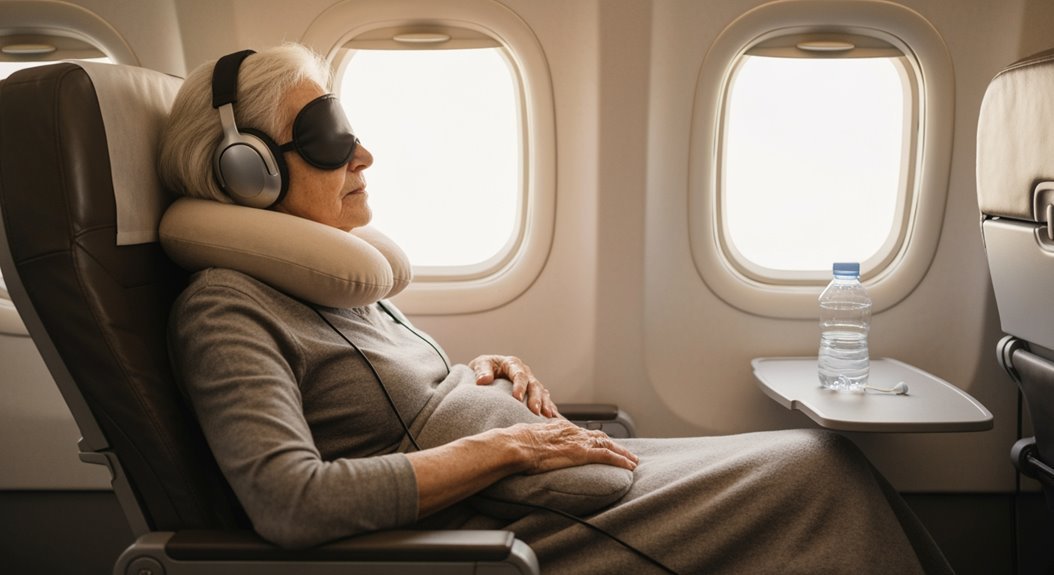
While you might be dreaming of that cozy cabin atmosphere and an invigorating drink in hand, keeping a few behavioral considerations in mind during your flight can make a world of difference.
First, let your flight attendants know about any special needs you have, like mobility assistance or restroom challenges. They’re there to help!
Opt for an aisle seat if you can, enabling you to stretch those legs and stroll around every now and then. Wearing loose, comfy clothing can help you stay relaxed, and don’t forget those sturdy shoes to avoid any mid-air tumbles.
Stay hydrated and skip the caffeine—your body will thank you later. If you start to feel anxious, take a deep breath and remember, you’re on your way to an adventure!
A little preparation and mindfulness can transform your flight from a stressful ordeal into a peaceful journey. Enjoy the ride!
Safety and Medical Considerations for Seniors
Flying can be quite an adventure, but as we age, it’s important to keep safety and medical factors in mind to guarantee a smooth journey.
Here are four key points to weigh ensuring your flight is as comfortable as possible:
- Get Medical Clearance: Before traveling, consult your healthcare provider for a check-up, especially if you have heart or respiratory conditions.
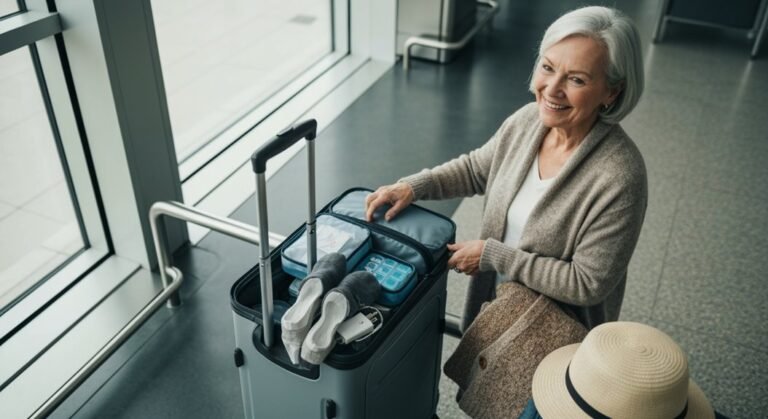
- DVT Awareness: Recognize the risk of blood clots. Use compression stockings and take regular walks to keep your blood circulating.
- Stay Hydrated: Airplane air can be dry. Drink water continuously, and skip the extra cups of coffee that’ll only leave you parched!
- Manage Medications: Keep medications in your carry-on with labels, and check TSA rules for your specific needs.
Tips for Using CPAP Machines on Planes
Traveling with a CPAP machine doesn’t have to feel like a cumbersome chore; in fact, it can be a breeze with some simple tips and preparations!
First, notify your airline about your CPAP machine at least 48 hours before flying; they often exempt it from carry-on limits since it’s a medical device. Keep your doctor’s prescription handy, along with an FAA compliance letter.
At security, don’t forget to take your CPAP out of its case—TSA likes to give it a separate screening. For in-flight use, check if your airline has power outlets available, but it’s smart to bring batteries that last 150% of your flight.
Also, consider traveling with a smaller, portable CPAP that fits easily in your bag. With these tips, you’ll not only keep your health in check but might just catch a few z’s at 30,000 feet—talk about reaching new heights in comfort!
Frequently Asked Questions
How Can I Minimize Anxiety During Flights?
To minimize anxiety during flights, try some simple strategies.
First, practice deep breathing—inhale through your nose for four counts, hold for four, then exhale through your mouth. You might also download a relaxation app or listen to calming music.
Don’t forget to bring a comfort item, like a cozy blanket or favorite book!
And hey, if you feel nervous, remember, millions fly every day, and you’re about to have your own adventure!
What Should I Eat for Better Sleep on Planes?
To transform your flight into a snooze cruise, pack magnesium-rich foods like almonds and dark chocolate.
These little nuggets can whisk you into relaxation heaven! Tryptophan-packed snacks, like turkey slices or yogurt, help your body produce sleepy hormones.
Don’t forget tart cherries or bananas for a melatonin boost!
Pair these with whole grain crackers for sustained energy.
Keep hydration in check with water-filled fruits, and you’ll drift off faster than a cloud on a sunny day!
Can I Bring My Own Pillows and Blankets?
Absolutely, you can bring your own pillows and blankets!
Most airlines let you carry them as personal items, so you won’t have to worry about extra fees. Just make sure they’re lightweight and packable.
Think cozy neck pillows and soft, breathable blankets for that perfect in-flight snuggle!
Just remember to compress them to save space. A little slice of home can make flying feel less like a sardine can and more like a comfy cloud!
Is It Safe to Wear Compression Socks During Flights?
Yes, it’s safe to wear compression socks during flights! They help keep your blood flowing, reducing that dreaded leg swelling.
Just make sure they fit snugly but aren’t too tight—no one wants sausage legs!
And while you might dream of being a jet-setting superstar, remember to occasionally take them off for a little leg stretch.
How Do I Manage Rest During Layovers?
To manage rest during layovers, scout for cozy corners that whisper “relax here.”
Look for cushions, reclining chairs, and lounges if you can swing it! Bring your travel pillow, eye mask, and maybe even fancy noise-canceling headphones to drown out the hustle and bustle.
Keep your belongings connected to avoid a wake-up call from a thief! Set an alarm, grab a snack, and snooze like it’s your job!
Conclusion
In the journey of air travel, getting some quality shut-eye is key, especially for seniors. Remember, you don’t want to wake up feeling like you’ve been hit by a freight train! So, choose your seat wisely, adjust your environment, and pack those comfy essentials. With a little preparation and these handy tips, you’ll be flying high and feeling rested. Now, go ahead and spread your wings – sweet dreams are just around the corner!