
Managing Medications on the Road
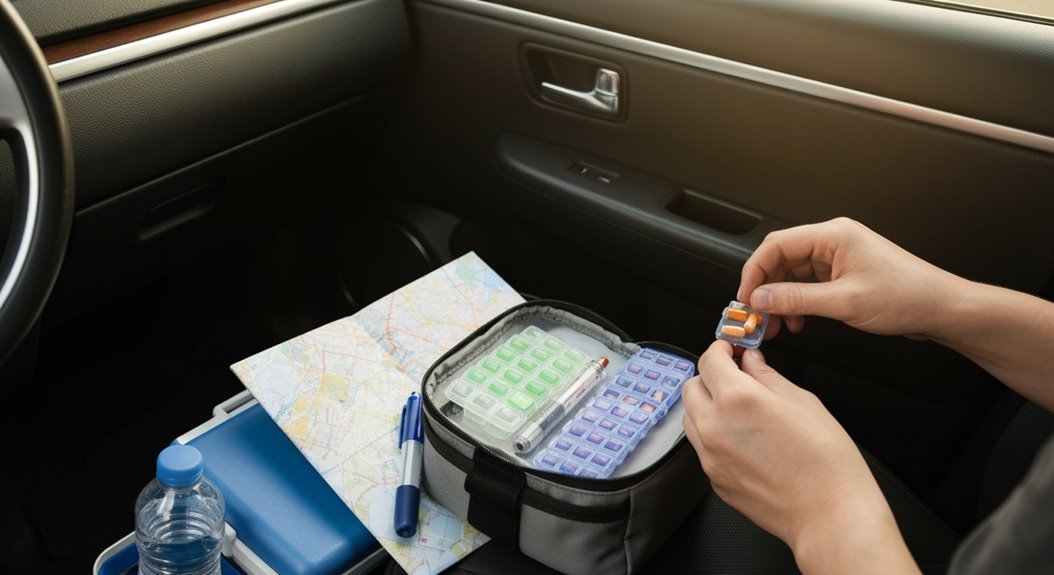
Managing medications on the road can be tricky, especially when some prescriptions cause drowsiness. Before you set off, review your medicines and note any that list side effects like drowsiness or slowed reaction times.
Some common culprits are antihistamines and sedatives, which can make driving unsafe. Time your doses when possible, and avoid driving during peak drowsy periods.
Keep track of how each medication affects you by testing them at home before a trip. If in doubt, consult your prescriber or pharmacist for safer alternatives or timing adjustments to help keep your travels smooth and safe.
Understanding Medication Classes Impacting Driving Safety
When it comes to driving safety, you mightn’t think about your medications—yet they play an essential role in how well you can navigate the roads. Many prescription drugs can affect your ability to drive safely, and being aware is key! For example, antidepressants can cause drowsiness or dizziness, while benzodiazepines might leave you feeling like a sloth behind the wheel. Even common allergy medications can knock you out, especially the first-generation antihistamines that tend to cause grogginess. Antipsychotics and antiepileptics are no strangers to the list of culprits, either—they slow down your brain and reactions. Recent studies show that antidepressants and SNRIs can significantly increase the risk of failing a road test among older adults.
The Statistical Risks of Medication Use While Driving
You may think that your driving skills are solid and your medications won’t affect your time behind the wheel, but there’s a surprising number of folks out there who are driving while kind of “medicated.” Around half of all drivers admit to using at least one potentially driver-impairing medication in the last month, and about a fifth of them don’t stop at just one! Yikes!
A third of these drivers are popping antihistamines or cough medicines, which can hit hard and fast. In fact, approximately 50% of drivers have reported using one or more PDI medications recently.
Driving soon after taking these meds isn’t uncommon—nearly half do it within two hours! The stats are scary: one-quarter of fatal car accidents are linked to drug-impaired drivers. If you’re taking multiple medications, your crash risk could double—talk about a risk you really don’t want!
Common Medications Linked to Impaired Driving
Did you know that nearly one in three drivers might be behind the wheel on medications that could impair their driving? That statistic might surprise you!
Sedatives like benzodiazepines can double your crash risk due to sedation and sluggish reflexes. Non-benzodiazepine sleep aids, such as zolpidem, can leave you feeling drowsy, too, affecting how well you steer.
Opioids are another culprit—about 9% of drivers tested after accidents have them in their system, leading to drowsiness and poor decision-making. Additionally, in 2022, approximately 13.6 million people drove under the influence of illicit drugs, which indicates a growing issue alongside medication use.
Let’s not forget those everyday antihistamines, which many take without a second thought! They can dull your senses and slow your reactions, making you less sharp behind the wheel.
Plus, cannabis is a growing concern, as it trips up coordination and judgment.
The bottom line? Pay attention to what you take before you take the wheel. Your safety—and everyone else’s—depends on it!
The Effects of Polypharmacy on Driving Performance
Although many older adults juggle multiple medications, they mightn’t realize how this polypharmacy can quietly undermine their driving performance.
Managing five or more medications can lead to serious hazards on the road. You might find that it affects your cognitive skills, like attention and decision-making, essential for safe driving. Mixing opioids with benzodiazepines, for example, can intensify risks. It’s kind of like trying to operate a fine-tuned machine while juggling extra weight—your reflexes start to falter.
You might also experience a higher chance of hard braking or sudden maneuvers, which could make you feel like you’re auditioning for a risky action movie!
Assessment Methods for Evaluating Driving Impairment
When it comes to evaluating driving impairment, having a variety of assessment methods can make all the difference in ensuring that you or your loved ones stay safe behind the wheel.
Think of it like a toolbox—each tool has its purpose. For instance, the Multi-D battery test is a shining star, boasting an impressive 82.1% specificity for safety.
Then, you’ve got those color reaction time tests and balance checks that help predict how well you’ll navigate the streets. You might even try out a pen-and-paper maze—seriously! It’s a fun way to gauge your cognitive processing speed.
Don’t forget, using a combination of these off-road tests provides a more accurate picture than relying on just one. So, gear up with these assessment methods, and you’ll be well on your way to avoiding any road mishaps!
Staying safe can be a bit of an adventure, after all!
Clinical Comorbidities and Their Impact on Driving Skills
Even if you feel fit to hit the road, it’s essential to recognize that clinical comorbidities can sneak into your driving abilities.
Think about it: younger drivers with conditions like diabetes or ADHD might find their focus or vision compromised, which can make maneuvering through traffic a bit risky. You don’t want your afternoon drive to turn into an unplanned adventure, right?
Interestingly, older drivers often self-regulate, meaning they might choose not to drive when they’re feeling off, which helps keep crash rates lower despite having higher comorbidity levels.
However, if you’re a younger driver, those pesky comorbidities could seriously amp up your crash risk. Before you hop in the car, take a moment to assess your health—after all, your well-being is the best GPS for safe driving!
Cognitive and Visual Acuity Considerations
Driving can feel like a breeze, until you realize that your medications might just be throwing a wrench in the gears. You might think those pain relievers or sleep aids are harmless, but some can actually cloud your thinking and blur your vision.
For instance, sedatives can lead to drowsiness and even double vision, making it tough to focus on the road ahead. Picture trying to steer straight while your brain feels foggy—yikes!
Plus, medications like antidepressants can mess with your reaction times, leaving you a split second too slow when it matters most. If you’re on insulin, be careful; hypoglycemia can turn your world blurry as you drive.
The Role of Age and Demographics in Driving Safety
As you navigate the exciting world of driving, it’s essential to recognize how age and demographics can shape the journey.
Young drivers, especially those aged 16-20, face the highest crash rates, often driven by inexperience and a sprinkle of overconfidence. Let’s be real—who hasn’t thought they were the best driver on the road at that age?
As you hit your 60s, your crash rate drops, but after 70, watch out! Fragility kicks in, and crash risks can spike again.
Then there’s the gender gap. Male drivers are generally more prone to accidents, especially when they’re young and reckless.
Older vehicles? They’re like that aging rock band—great in their day but risky on the road now.
Strategies for Safe Medication Management on the Road
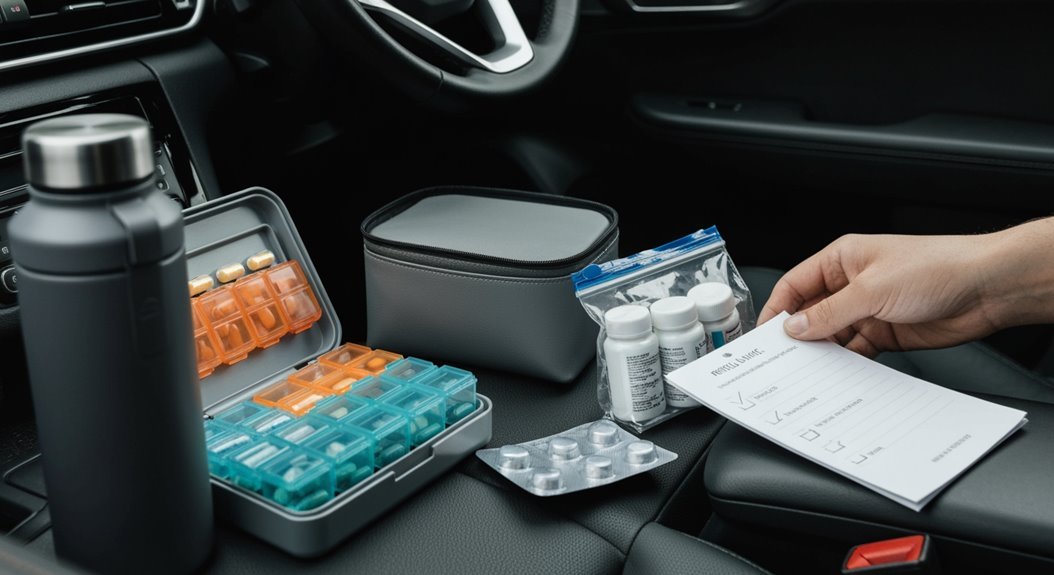
Planning a road trip? Awesome! Here’s how to keep your meds in check. First, stash those pills in their original containers; it makes life easier at customs. You should always keep your medications in your carry-on, not checked bags. After all, you wouldn’t want to lose your lifesavers, right?
Try using a handy pill organizer if your schedule’s a bit, well, complicated. Also, carry a printed and digital list of your medications—just in case things go awry.
Don’t forget to consult your doc about adjusting dosages for time zone changes. Use your smartphone as a reminder for when to take them. And hey, bring an extra stash—better safe than sorry!
As for those sensitive meds, protect them from extreme temperatures in an insulated bag. With these tips, you’ll enjoy the journey without medication worries—road tripping has never felt so good!
Resources for Drivers and Healthcare Professionals
When you hit the road, having the right resources at your fingertips can make all the difference, especially for managing medications safely and effectively.
Whether you’re a driver or a healthcare professional, there are tools that can help make your journey smoother.
You can check out DailyMed for the latest FDA drug labels or visit MedlinePlus for details about medications and potential interactions. If you’re dealing with vaccines, the CDC’s immunization schedules are a must!
For healthcare pros, the American College of Clinical Pharmacy offers resources that promote teamwork in medication management.
Don’t forget about apps like Medisafe or MyTherapy to help keep track of meds while you’re on the go; they’re like a personal assistant you can fit in your pocket!
With the right info, you’ll be ready to tackle any medication challenges that come your way—so buckle up and enjoy the ride!
Frequently Asked Questions
How Can I Discuss Medication Risks With My Doctor?
To discuss medication risks with your doctor, start by asking about each medication’s purpose and any potential side effects.
Don’t shy away from voicing your concerns—whether about interactions or allergies! Inquire which symptoms warrant immediate attention.
It’s like being your own medication detective! Always ask for written info too, so you can dive deeper later.
Are There Alternative Treatments That Won’t Affect Driving?
There are alternative treatments that won’t cramp your driving style.
Non-sedating antihistamines like loratadine and fexofenadine work wonders for allergies without turning you into a sleepyhead.
For pain, low-dose opioid combos keep you sharp while easing discomfort.
If you need a sleep aid, consider zaleplon—it’s like a gentle hug for your brain that won’t drag you down the next day.
Just chat with your doctor about your options, and you’ll be cruising safely!
What Should I Do if I Feel Unsafe Driving?
If you feel unsafe driving, pull over to a safe spot and turn on your hazard lights—it’s like sending out an SOS!
Wait for those funky feelings to pass before getting back on the road. Driving can wait; your safety can’t!
Ditch the wheels for a rideshare or call a friend for help.
Can I Drive Immediately After Taking My Medication?
You might think driving right after taking your medication is a breeze, like hopping on a merry-go-round, but hold your horses!
Some meds can turn that ride into a dizzying tilt-a-whirl. You really want to avoid feeling like you’re in a fog while behind the wheel.
How Do I Manage Medication Changes Safely While Driving?
To manage medication changes safely while driving, always chat with your doctor. They’ll help you understand how new meds affect you.
Start with short trips to see how you feel. Keep an eye out for drowsiness or dizziness. If you’re trying something new, avoid that Monday morning commute!
And remember, it’s always cool to take a break if you feel off. Your safety’s worth it—after all, the road isn’t a race!
Conclusion
So, as you hit the road, remember your medications are like those quirky travel companions—some keep you company, while others might just nod off during the trip. Staying informed about how they affect your driving can keep your journey safe and enjoyable. With a little thought and a dose of care, you can guarantee your drive is smooth, just like a perfect playlist on a sunny day. Safe travels, and don’t forget to buckle up—both you and your meds!