
Night Safety: Walking in Unfamiliar Places for Seniors
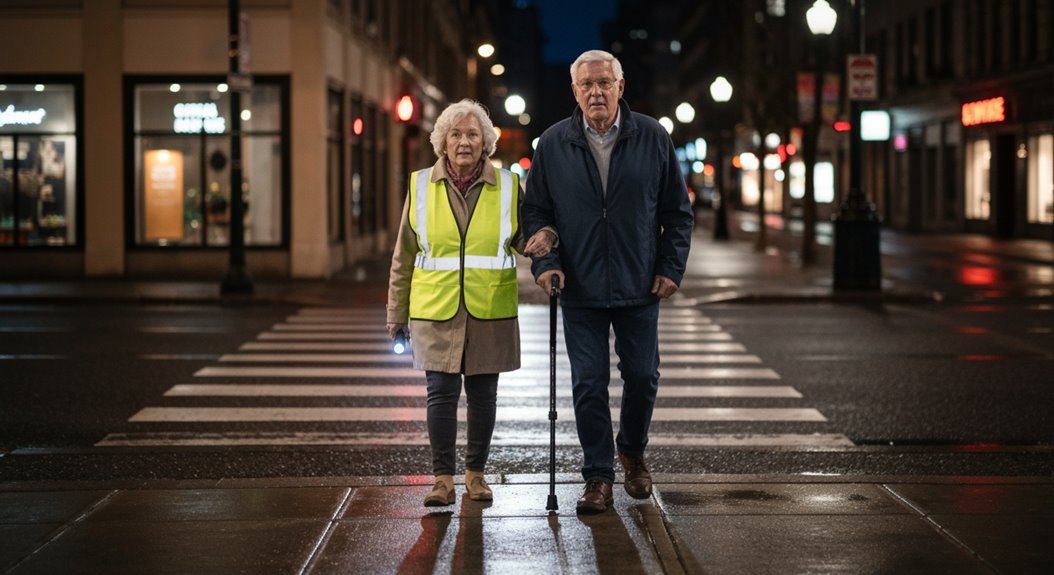
Night Safety is important when walking in unfamiliar places after dark. Stay aware of your surroundings and watch for uneven sidewalks and poor lighting—those sneaky hazards can trip you up.
Wear bright, reflective clothing so drivers and others can spot you easily. Choose well-lit routes whenever possible to reduce risk.
Keep your pace slow and steady; there’s no rush. If you can, walk with a companion or let someone know your route for extra peace of mind.
Stick with me for more tips to keep those nighttime strolls fun and safe.
Understanding the Risks of Night Walking for Seniors
When you think about taking a stroll at night, you might envision gentle breezes and twinkling stars, but, unfortunately, there’s more lurking in the shadows than just peaceful scenery. For seniors, nighttime walks can be a little trickier. With slower reaction times and dimmer vision, spotting hazards is no easy feat. You may not realize it, but just wearing dark clothing makes you blend in with the night—and not in a cool, stealthy way!
Sadly, pedestrian fatalities for older adults have climbed. If you venture out after dark, watch for fast-moving vehicles on urban streets, especially at intersections. Our 20% fatality rate is just too high! Pedestrian fatalities in the U.S. have increased by over 80% in the past 15 years, emphasizing the importance of heightened awareness while walking at night.
Then there’s the worry of crime, which can make night walks feel intimidating. Don’t let that stop you, though! With a little planning and awareness, you can enjoy the night air while keeping safety in mind. After all, who doesn’t love a good stroll?
Common Environmental Hazards to Be Aware Of
As you step out for a night stroll, it’s important to stay alert to the various environmental hazards that can turn a peaceful outing into a game of dodgeball with obstacles.
Watch for uneven surfaces, like cracked sidewalks or icy patches that can catch your foot unaware, sending you into a wobbly dance. Poor lighting might play tricks on you, hiding sneaky trip hazards like stray pets or low-hanging branches.
And let’s not forget about those crowded streets, where vehicles zoom by with little warning.
You might feel like a tightrope walker maneuvering narrow paths, dodging debris or unexpected obstacles. Poor lighting can increase the likelihood of missing these hidden dangers, so be extra vigilant as you navigate your surroundings.
Keep an eye out for busy intersections, too, where shadows can blend danger into the darkness.
Being mindful of these hazards means you can enjoy your evening without turning it into an unplanned adventure in acrobatics—let’s leave that for the circus!
Stay safe and keep those feet firmly on the ground!
The Importance of Visibility and Clothing Choices
Staying visible while you’re out and about at night isn’t just a smart move; it’s essential for your safety! Bright, retro-reflective clothing makes you stand out, reflecting light back to drivers and helping them spot you faster.
Think vibrant colors like fluorescent yellow or lime green paired with fun patterns—those eye-catching stripes are your best friends! Remember, clothing that covers your limbs with reflective tape highlights your movements, making you even more recognizable. While this stylish gear boosts your visibility, be mindful of how it interacts with car technologies. Current AEB systems may not adequately support reflective clothing users, which is a little worrisome, but don’t let that stop you from dressing safely.
Assessing Physical and Cognitive Limitations
Understanding your physical and cognitive limitations is key to enjoying safe walks at night. If you’ve got mobility impairments—like using a cane or walker—navigating unfamiliar places becomes tricky. Reduced balance and strength mean you mightn’t want to take any chances.
Don’t forget about your vision; poor lighting can make those uneven sidewalks seem like a black hole of danger!
Cognitive factors play a role too. If your memory isn’t what it used to be or if you’re feeling a bit foggy-headed, you could easily lose your way after dark. Sleep issues can add to the confusion, making night walks quite the adventure—one you didn’t sign up for!
Take a moment to assess your own situation before stepping out. By knowing what challenges you might face, you can better enjoy those night strolls—so you can focus on stars, not stumbles!
Strategies for Safer Navigation and Route Planning
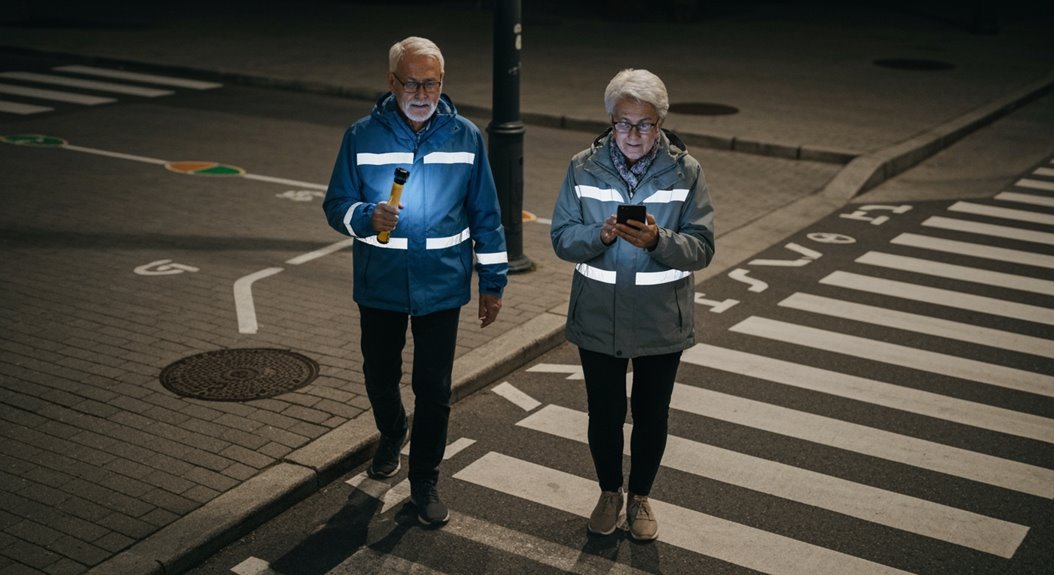
When you’re gearing up for a night stroll, planning your route is like choosing the perfect coffee blend—it can make all the difference!
Start by picking well-lit areas with established sidewalks, avoiding those shady spots that might hide potholes or uneven surfaces. Look for routes with crosswalks; they’re like little safety gates for your feet. Walking right after sunset is ideal since you’ll snag a bit of that precious natural light.
Don’t forget to wear something reflective; you want to be seen! Bright colors make you pop, and a flashlight can be your trusty sidekick.
Before hitting the pavement, lace up those sturdy shoes—think of them as your safety steering wheels on the ground.
And remember, take it slow. Sauntering instead of sprinting helps avoid tripping, allowing you to soak in the night’s charm without worrying about mishaps.
Enjoy the stroll, and stay safe out there!
Community Resources and Support for Seniors Walking at Night
Walking at night can bring a sense of adventure and tranquility, especially when you’ve planned your route wisely.
Luckily, you don’t have to initiate this journey alone! Community resources can make your nighttime strolls safer and more enjoyable. Here are some great options to think about:
- Join a Senior Walking Group: Connect with others while enjoying fresh air; safety in numbers is a real thing!
- Grab Reflective Gear: Look for local programs offering vests or flashlights to help you shine bright like a diamond… in the night.
- Think about a Walking Companion: Elder care services can match you with a buddy, ensuring you have support and company along the way.
- Advocate for Safer Sidewalks: Participate in local committees to push for better lighting and pedestrian-friendly streets in your area.
Frequently Asked Questions
How Can Technology Assist Seniors When Walking at Night?
Technology’s got your back when you’re out walking at night!
Wearable devices, like smartwatches, can detect falls and alert someone if you need help. Imagine motion-sensor lights guiding your path like friendly fireflies!
Plus, smart mobility aids help you navigate tricky spots without tripping over any rogue garden gnomes.
And hey, voice assistants can call for help faster than you can say “Oops!”
What Local Laws Should Seniors Know About Nighttime Walking?
Did you know that about 70% of pedestrian accidents happen at night?
To stay safe, you should know local laws like yielding at crosswalks and staying on sidewalks where available. If there aren’t any, walk against traffic for better visibility.
Make sure to wear bright or reflective clothes, and don’t forget to use lights when walking after dark. Following these rules not only keeps you safe but makes you a savvy night explorer too!
Are There Specific Apps for Safer Night Navigation?
For safer night navigation, you’ve got fantastic apps at your fingertips.
Life360 keeps your loved ones updated on your location and even alerts them if you fall. The I’M SAFE app lets you share your location only with those you trust—how cool, right?
Plus, Red Panic Button is a lifesaver, sending emergency alerts at a push of a button.
With these tools, you can explore confidently and keep those worries at bay!
How Can Caregivers Support Seniors’ Night Walking?
To support seniors’ night walking, you can be their buddy and stay close by. Keep pathways well-lit and clutter-free, making trips less likely.
Use cool gadgets like GPS devices for tracking. And hey, a mini ID bracelet can be a lifesaver!
Don’t forget to encourage them to join walking groups—they get exercise and companionship.
Most importantly, sprinkle some laughter during walks; it’ll ease nerves and make those night strolls feel special!
What Should I Do if I Feel Unsafe While Walking?
If you feel unsafe while walking, don’t panic!
Just head to a well-lit area with more people around, like a café or shop—nothing like a little coffee to ease your worries!
Keep your phone handy to call for help if you need it.
Always trust your instincts; if something doesn’t feel right, move on!
Wearing bright colors can help too.
Remember, you’ve got this!
Stay aware and enjoy your stroll!
Conclusion
So, when it comes to night walking, remember, you’re not just braving the dark; you’re embracing new adventures! With a little planning, the right gear, and a keen eye for tricky spots, you can navigate those unfamiliar streets like a pro. Just think of each step as a dance – graceful, careful, and full of life. So slip on those comfy shoes, lighten up your spirit, and go explore! The night is full of possibilities waiting just for you!