Choosing Comfortable Shoes: A Senior’s Guide
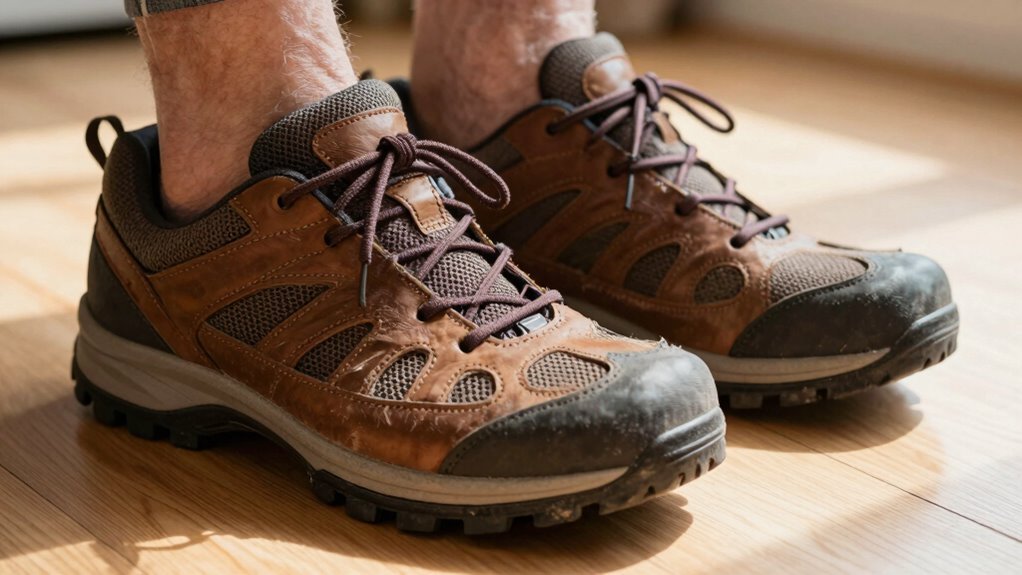
Choosing comfortable shoes as a senior is like finding a trusty sidekick for your adventures. Look for shoes with solid arch support, cushioned insoles, and non-slip soles to keep you safe and comfy as you move.
Make sure they fit well, leaving a little room for your toes to wiggle. Proper fit helps prevent blisters, pressure points, and balance problems.
And don’t forget to measure your feet at the end of the day—feet swell, so that’s the best time to get an accurate size. Stick around, and you’ll uncover more tips to step confidently into comfort!
Key Features of Comfortable Shoes for Seniors
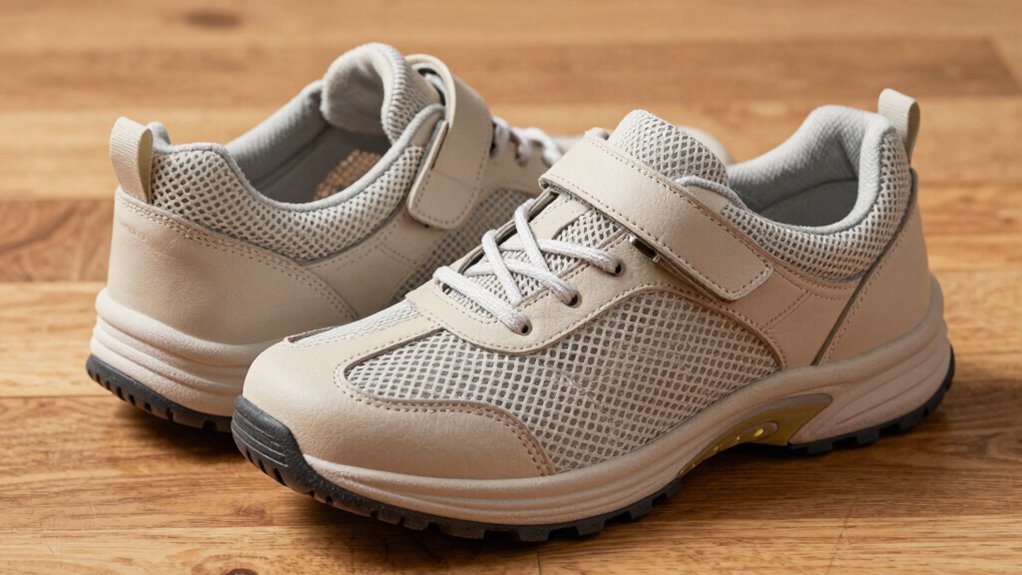
When it comes to finding the right shoes, especially for seniors, comfort isn’t just a luxury—it’s a must-have! You’ll want shoes that offer solid arch support and cushioning to keep your feet happy.
A well-cushioned insole absorbs impact, making those morning walks a breeze and reducing fatigue. Look for shoes with rocker soles; they help you walk naturally while easing joint strain.
Don’t forget non-slip soles! They’re your best friend on wet surfaces, keeping you steady and safe.
And a wide toe box? It’s like giving your toes their own little party—no more crowding or bunions here! Adjustable closures, like Velcro, make slipping in and out easy-peasy!
With all these features, you’ll find that comfortable shoes can boost your confidence and mobility.
Importance of Proper Fit and Measurement
Finding the perfect fit for your shoes isn’t just a side note; it’s the foundation for comfort and mobility! You want to measure your feet at the end of the day, when they’re most swollen.
Remember, both feet can be different sizes, so always fit your shoes to the larger one. Aim for about 3/8 to 1/2 inch of toe room—trust me, your toes will be grateful!
Also, make sure there’s no more than a quarter-inch gap at your heel; you don’t want your shoes to play hide-and-seek with your feet. If your foot shape is a touch unique, consider a 3D scan to capture all those charming little details.
Before purchasing, try the shoes on with your usual socks and walk around. A comfy shoe today can lead to happy feet tomorrow!
Design Elements Enhancing Safety and Support
To guarantee your shoes keep you safe and supported, let’s explore the fantastic design elements that make all the difference!
First, high collar heights provide excellent ankle support, reducing your risk of those pesky ankle rolls. You’ll feel more stable as they help improve your balance, which is a win-win!
Slip-resistant soles are your new best friends, featuring textured treads that grip the ground, so you can strut your stuff with confidence.
And let’s not forget cushioned insoles, like memory foam, that absorb shock—almost like giving your feet a cozy hug!
Adjustable closures, like Velcro, are super handy, making it easy to get that perfect fit.
Plus, breathable materials keep your feet happy and dry.
With features like these, you’re well on your way to enjoying safe and supported strides! Who knew shoe shopping could be so fun?
Specialized Footwear for Health Conditions
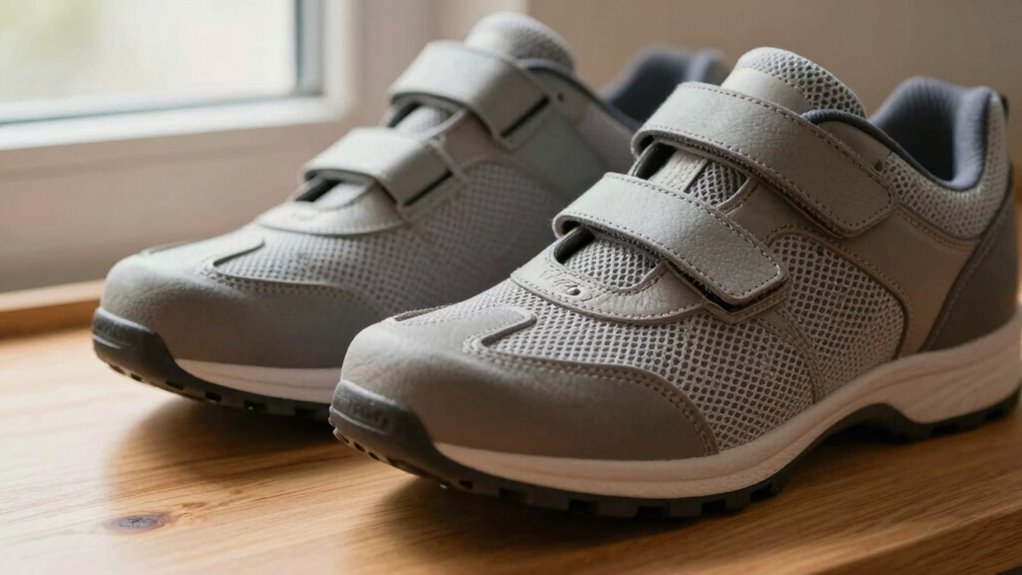
Have you ever wondered how the right shoes can make a world of difference for your feet, especially if you’re dealing with specific health conditions?
If you have diabetes, choosing diabetic footwear can be a game-changer. These shoes reduce pressure points, help prevent ulcers, and can even be covered by Medicare—talk about a win-win!
For those with swelling from conditions like heart failure, look for shoes with stretchable uppers and adjustable fastenings. They make your feet feel like they’re getting a cozy hug!
If you have bunions or hammertoes, opt for shoes with wider toe boxes and soft linings. Your feet deserve that extra love!
And remember, sturdy shoes with good support can keep you steady on your feet, especially if you deal with balance issues.
With the right fit, you’ll be the life of the party—just without the sore toes!
Promoting Activity and Fall Prevention
When it comes to staying active and preventing falls, the right footwear can make all the difference—not to mention keep you dancing through life! Choosing shoes with non-slip soles is essential; they’ll improve your balance and give you the confidence to strut your stuff.
Let’s face it, no one wants to go face-first into the floor!
Walking around in socks or slippers might seem comfy, but it’s a slip-and-slide disaster waiting to happen. You’re much better off in enclosed shoes that fit well. Look for options with sturdy, slip-resistant treads, and remember that lightweight designs can help keep you balanced.
Plus, those high collars offer delightful ankle support!
When your feet feel good, you’re more likely to get moving—and that’s a win-win! So kick those slippery shoes to the curb and step into something safe, because you deserve to enjoy every step!
Recommended Brands and Models for Seniors
Finding the perfect pair of shoes isn’t just about style; it’s about comfort and support, especially for seniors who want to keep strutting their stuff!
There are fantastic brands out there designed with you in mind, making each step a joy rather than a chore. Here are some top picks to contemplate:
- Orthofeet: Known for anatomical arch support and cushioned soles, perfect for pesky foot issues.
- Skechers GoWalk Arch Fit 2.0: Stylish and supportive, recommended by foot specialists for plantar fasciitis relief.
- HOKA: Famous for their incredible cushioning, now expanding into comfy walking shoes.
- Clarks: Combines over 200 years of expertise to create stability-focused footwear.
With options like these, you’re sure to find a pair that keeps you comfortable and stylish.
Happy shoe shopping—your feet will thank you!
How to Measure Your Feet for the Perfect Fit
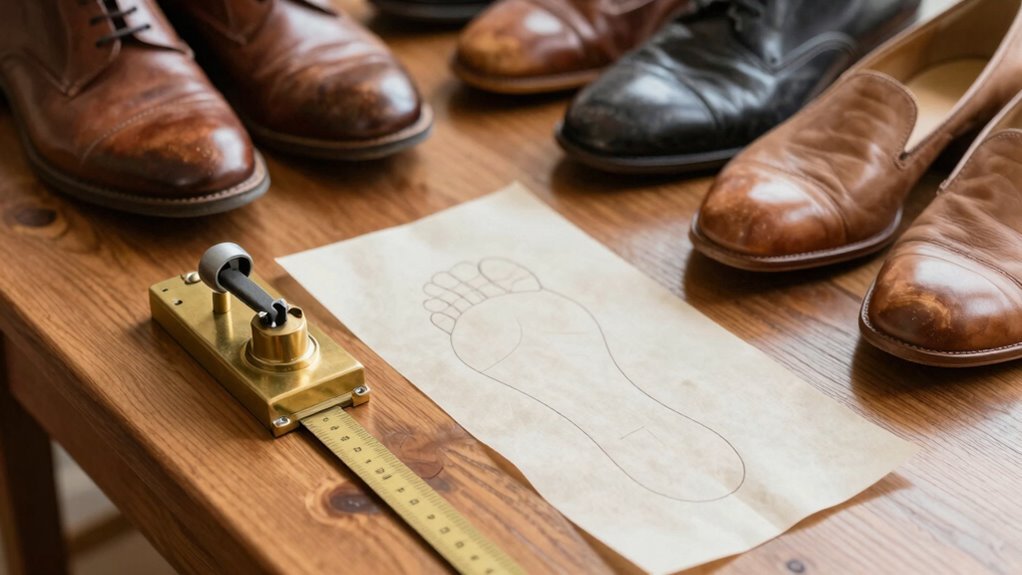
Getting the right fit for your shoes can feel like a treasure hunt, but it’s essential for keeping your feet happy!
Start by grabbing two sheets of paper, a pencil, and a ruler or measuring tape. Find a hard, flat surface to work on—maybe your living room floor. Don your favorite socks to get an accurate fit! Measure in the afternoon, when your feet are at their biggest.
Stand straight and trace each foot carefully, making sure not to wobble that pencil. Measure from the heel to your longest toe, noting those dimensions. Don’t forget the width! The widest part, just below your toes, is key to comfort.
Once you’ve got your measurements, check them against size charts. Remember, it’s better to size up if you’re between sizes. With all this done, you’re well on your way to finding shoes that keep both your feet and your spirit dancing!
Tips for Choosing the Right Shoe for Your Lifestyle
How do you choose the right shoes for your lifestyle without feeling overwhelmed? It’s easier than you think! Just follow these simple tips to find your perfect fit.
First, consider your daily activities and pick shoes that match those needs. Here’s what to think about:
- Identify activities like walking, hiking, or indoor errands.
- Look for shoes with the right traction for different surfaces.
- Make sure they accommodate any medical needs you may have.
- Prioritize comfort and easy-to-use materials for daily wear.
Caring for Your Shoes to Extend Their Life
Taking care of your shoes might feel like a chore, but it can be a game-changer for keeping them looking fresh and lasting longer! Start by giving them a quick brush or a damp cloth after each wear to whisk away dirt and debris. Remember, leather loves gentle wiping, while suede needs a dry brush or special spray. For tougher stains, grab some specialized cleaners, but steer clear of harsh chemicals—your shoes will thank you!
Regularly applying leather conditioner will keep your shoes supple, averting nasty cracks. Don’t forget to use shoe trees to maintain their shape and protect them from crushing. Rotating shoes is smart, too; they appreciate a little rest day!
When it’s storage time, opt for breathable bags to keep dust off while letting them breathe. With just a tad bit of effort, you’ll guarantee your shoes keep strutting in style for years to come!
Frequently Asked Questions
How Often Should Seniors Replace Their Shoes?
You should replace your shoes every 300 to 500 miles, or around every 4 to 6 months if you’re walking regularly.
Everyday shoes typically last about 8 to 12 months, while dress shoes can handle 1 to 3 years.
But if you notice worn-out soles or feel more foot pain, it’s time to shop!
Think of it this way: your feet deserve a comfy upgrade, not a lumpy old mess!
Happy shoe hunting!
What Materials Are Best for Breathable Footwear?
For breathable footwear, look for materials like leather, canvas, or mesh. Imagine your feet basking in a warm breeze!
Leather and suede allow airflow, while canvas keeps things light and comfy. Mesh? It’s like having tiny air conditioners for your feet!
These materials help prevent sweaty situations and pesky fungal infections.
Just remember, with great breathability comes a little more care—clean them easily to keep your feet happy and healthy!
Can Shoe Insoles Improve Comfort and Support?
Absolutely, shoe insoles can boost both comfort and support!
Think of them as cozy little clouds for your feet, offering extra cushioning and stability.
With the right insoles, you’ll feel like you’re walking on sunshine, enhancing your balance and reducing fatigue.
Plus, they’re perfect for adjusting to your foot’s unique shape, so every step feels more secure.
Who wouldn’t want a little extra pep in their step? Your feet will thank you!
How to Choose Shoes for Different Activities?
When picking shoes for different activities, think about your needs.
For walking, go for comfy shoes with good arch support and cushioned footbeds.
If you’re hitting the gym, grab something with firm midsoles and ankle support.
Running? Look for shock-absorbing soles to protect those knees!
And don’t forget about non-slip soles for indoor adventures—nobody wants to go skating on a smooth floor!
Have fun while keeping your feet happy; they deserve it!
What Should Seniors Avoid When Selecting Shoes?
When picking shoes, avoid anything too tight or too loose, as comfort is key! It’s easy to overlook the importance of proper fit, but you don’t want blisters or a wobbly walk.
Skip high heels and flimsy sandals—your feet need stability and support. Check the soles, too; slippery ones can be a real trip hazard.
Conclusion
So, what’s stopping you from stepping into comfort with the perfect pair of shoes? Remember, the right footwear can feel like walking on clouds, making every step a joy rather than a chore. By considering fit, support, and your unique needs, you’re not just buying shoes; you’re investing in your health and happiness. So kick off those old shoes, embrace the adventure ahead, and let your feet dance through life with style and comfort!