How to Fly With a Wheelchair: Step-By-Step Guide

How to Fly With a Wheelchair can be simple with a little planning. Start by requesting assistance when you book your flight so the airline knows your needs ahead of time.
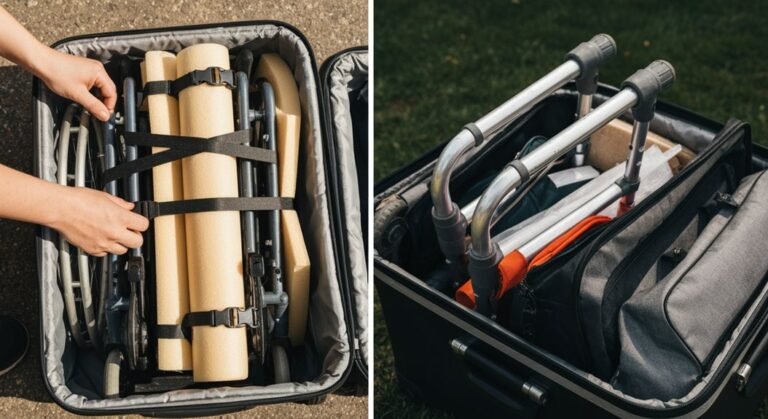
Before you go, prepare your chair: remove or secure loose parts, fold or lock components as required, and label any detachable pieces. Bring any tools or documentation the airline might need.
At the airport, ask staff for help maneuvering through check-in and security—many airports provide wheelchair escorts or accessible lanes. Request pre-boarding to get settled on the plane comfortably.
After landing, airline and ground staff will assist with arrival and retrieving your wheelchair. With these steps, you’ll be ready to travel confidently.
Booking and Pre-flight Preparation
Booking a flight with a wheelchair is like planning a mini adventure—there’s a bit of prep involved, but it can lead to smooth travels and exciting destinations!
Start by requesting wheelchair assistance while you book your flight, or at least 48 hours before departure. Early notification helps airlines arrange the accommodations you need. This is especially important because airport personnel trained to provide support will be available throughout your journey.
When you book, don’t forget to clearly state your mobility requirements, like device type and any special handling needed. If you didn’t ask for assistance initially, just call customer service; they’re usually more than happy to help.
Remember to arrive early, especially with a battery-powered chair. The early bird gets the smoothest check-in!
With a little planning, you’re all set for an amazing journey!
Wheelchair Preparation and Handling
When you’re gearing up for a flight, prepping your wheelchair can feel a bit like getting a trusty sidekick ready for an epic adventure—it’s all about making sure you’ve got everything in order!
First, remove all easily detachable parts like seat cushions and side guards to avoid losing them during transport. Make sure nothing’s hanging loose; secure all straps and belts. For delicate components, carry them onboard to keep them safe.
Remember to set your wheelchair up upright for stable positioning, as airlines love that! Don’t forget to provide specific configuration instructions to the staff. It’s also important to know your rights regarding assistance with mobility devices during handling and storage.
Before you head out, snap a few photos of your wheelchair’s condition—it’s a smart move for potential damage claims later.
Let the adventure begin!
Airport Navigation and Security
After getting your wheelchair all set for the journey ahead, it’s time to tackle the airport experience, which can feel like maneuvering an obstacle course!
Start by visiting the help desk for assistance, and don’t forget to identify yourself as someone needing help. Airport staff will guide you from check-in to the gate, covering luggage and security navigation.
At security, expect a modified screening process—just a heads-up; they might give you a pat-down! Personal wheelchairs will undergo inspection, so be prepared for that. Communicate any sensitive areas to the TSA officers. If you’re part of TSA PreCheck, you can skip some of those invasive procedures, making things easier.
Boarding Procedures
Maneuvering the boarding process can feel like stepping into a new adventure, especially when you’re traveling with a wheelchair!
First things first, make sure you request wheelchair assistance when booking your flight, or at least 48 hours in advance.
When you arrive, it’s smart to confirm those arrangements at the check-in desk. You’ll usually get pre-boarding, so you can take your time getting settled.
Airport staff will guide you from the gate to the aircraft, using an aisle chair if needed. Just remember, you can carry on any delicate parts of your wheelchair to keep them safe!
And if you want to relax while you board, just ask for help transferring to your seat when you’re ready.
Happy travels!
During the Flight
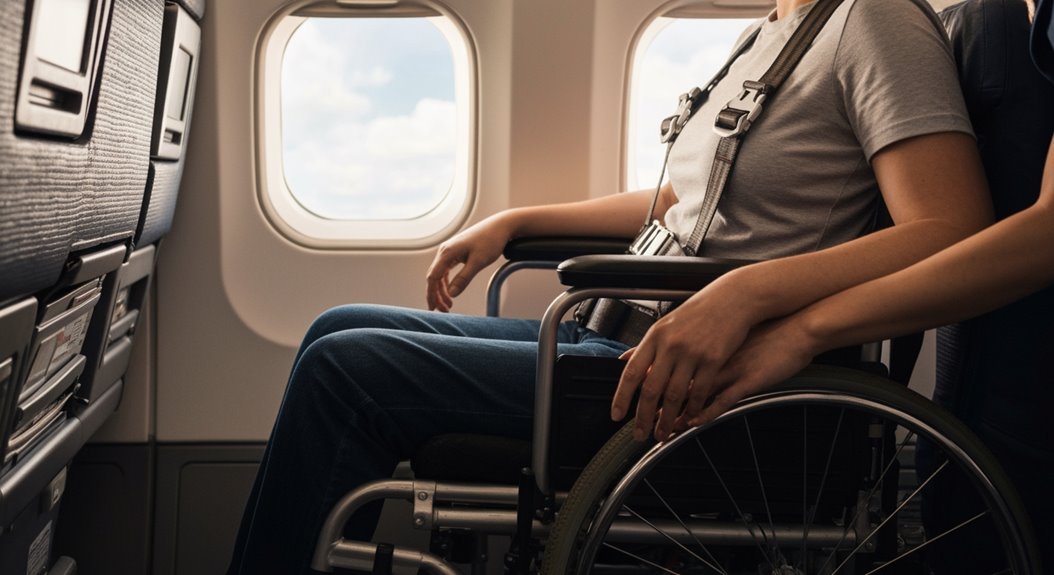
Flying with a wheelchair doesn’t just mean maneuvering the airport—it also means finding your comfort and safety while you’re in the air!
Once you’re onboard, flight attendants are ready to assist you, whether it’s stowing your carry-on or using aisle wheelchairs to help you reach the lavatory.
If you’re nervous about safety, don’t worry! You’ll receive a personalized briefing about emergency exits and evacuation plans.
Transfer to your seat might feel challenging, but trained staff will assist you, often using slide boards for ease.
Remember, bringing your wheelchair cushion can boost comfort and help prevent those pesky pressure sores.
Arrival and Post-Flight Considerations
When you land, the airport’s ready to roll out the red carpet for you, ensuring your arrival is just as smooth as your flight!
As soon as you step off the plane, staff will whisk you from the aircraft door to baggage claim or your ride. You can stay in your personal wheelchair until you reach the plane door—easy peasy! Just let the staff know if you need help with bags or grabbing your meds.
At the terminal, accessible restrooms and elevators have your back. Your checked wheelchair will appear at baggage claim, so make sure it’s labeled to avoid mix-ups.
And don’t forget to pre-arrange your ride ahead of time! After all, you deserve a seamless exit!
Providing Feedback and Improving Future Experiences
Your experience maneuvering the airport can be greatly improved when you share your feedback!
Airports want to hear from you about wheelchair assistance, accessible amenities, and anything else that impacts your journey. Using surveys or mobile apps, you can easily voice your thoughts, whether it’s how easy it was to find an accessible restroom or if an attendant gave you the heebie-jeebies by asking for a tip.
Don’t hold back—real-time tech helps airports refine services based on your input! Plus, by participating in focus groups or sharing stories on social media, you contribute to real change.
Frequently Asked Questions
Can I Travel With a Companion or Personal Assistant?
Absolutely, you can travel with a companion or personal assistant!
Airlines usually let you choose who you want by your side, so don’t sweat it! If they think you need a safety assistant, they’ll cover their ticket, which is a nice perk.
Just be sure to request seats together when booking. You’ll have a travel buddy to share the adventure with, making the journey more enjoyable and a lot less lonely!
What Are the Policies for Emotional Support Animals on Flights?
Flying with an emotional support animal (ESA) can feel like traversing a maze, but don’t fret!
As of now, most airlines treat ESAs like pets, meaning you’ll need to follow pet policies and pay fees.
You’ll likely need documentation from a licensed mental health professional, too. Each airline has its own rules regarding size and species, so check before booking your flight.
Get ready for an adventure, furry friend included!
Are There Additional Fees for Wheelchair Assistance Services?
Nope, you won’t encounter additional fees for wheelchair assistance services!
Most airlines, especially in the U.S., cover these costs under disability laws. They absorb the $30-$35 it takes them to help you navigate the airport, which is pretty generous, right?
So, you can focus more on your upcoming adventure and less on extra charges.
Just remember to request assistance in advance, and you’ll be all set for a smooth journey!
How Do I File a Complaint About My Travel Experience?
To file a complaint about your travel experience, start by sharing the details while they’re still fresh—like capturing a selfie!
Reach out to the airline through their website within 45 days, using their complaint form. Be clear and mention the Air Carrier Access Act for added weight.
If you don’t get a response in 30 days, escalate it to the DOT.
What Happens if My Flight Gets Canceled While Using a Wheelchair?
If your flight gets canceled while using a wheelchair, don’t panic!
Your rights kick in, and airlines should help you rebook on the next available flight or find alternatives.
They’ll also guarantee your wheelchair gets to you safely.
Keep documentation handy for any claims, and remember to ask for assistance—after all, you’re not alone!
A little preparation can turn that inconvenience into an adventure, or at least a good story!
Conclusion
Flying with a wheelchair doesn’t have to feel like climbing a mountain; it can be a thrilling adventure! By following this guide, you’re all set to navigate the skies with confidence. Remember, every journey brings new experiences, and a little preparation goes a long way. So buckle up, enjoy the view, and don’t hesitate to share your stories—who knows, you might inspire someone else to take their own flight of fancy! Safe travels!