GPS Vs Smartphone Navigation: What Should Seniors Use?
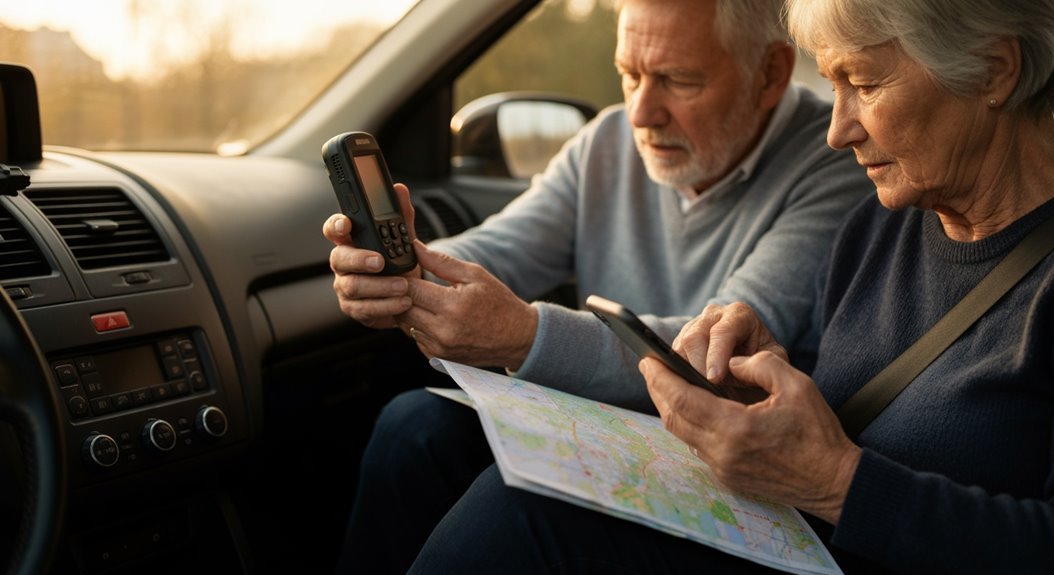
GPS vs Smartphone Navigation is a common choice for seniors looking for help with directions. Both options have advantages depending on what you find easiest to use.
Standalone GPS units offer large, clear buttons and simple screens. Their precise positioning and straightforward menus can make driving and maneuvering less stressful.
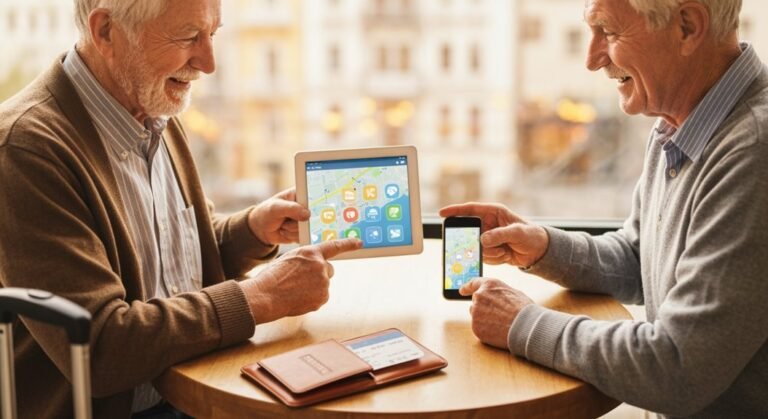
Smartphones provide navigation apps with real-time updates, traffic alerts, and map changes. They’re convenient but can feel fiddly if you’re not comfortable with touch screens or frequent app updates.
Ultimately, the best choice depends on your comfort level and preferences. Consider ease of use, screen size, and whether you want live traffic info when deciding which to use.
Benefits of GPS Navigation for Seniors
When it comes to getting around, GPS navigation can be a game-changer for seniors, especially if you’ve ever found yourself lost in a maze of unfamiliar streets!
Imagine driving confidently, with turn-by-turn directions guiding you, minimizing stress and navigation errors. Studies show that using GPS not only boosts your driving performance but also helps you feel safer and more confident behind the wheel. Additionally, GPS tracker devices assist caregivers in tracking individuals with dementia, offering peace of mind for families concerned about loved ones wandering.
If you’re in your 60s or 70s, you’ll likely find that GPS makes you more willing to explore new places without the fear of getting lost. Plus, if spatial awareness isn’t your strongest suit, GPS can lend a helping hand, ensuring you maintain that precious driving independence.
Over 80% of older drivers are already tapping into this smart tech! So why not join the club?
With a bit of practice, you’ll soon navigate like a pro, relishing every adventure that comes your way!
Advantages of Smartphone Navigation
While GPS devices are fantastic for direction-finding, let’s not forget about the remarkable advantages smartphones bring to the table!
For starters, many smartphones come with super user-friendly maps and direction-finding apps, perfect for those of you who may not be tech experts. With voice-guided direction-finding and hands-free controls, you can keep your focus on the road while the phone handles the details—talk about a safety bonus!
Smartphones also offer real-time updates on traffic and route changes, so you won’t be left stuck in surprise jams. Plus, their large screens make it easy to read maps, even if your vision isn’t what it used to be. Did you know that an expected 66.8% of smartphone users will be making use of maps monthly?
And let’s not forget the fact that smartphones consolidate several gadgets into one—your map, phone, and weather updates, all in your pocket!
With the right apps, you’re not just direction-finding; you’re exploring the world around you with confidence and style!
Limitations of GPS and Smartphone Navigation
Maneuvering the world with tech is a great adventure, but both GPS devices and smartphone apps come with their own set of limitations that can trip you up along the way. For starters, GPS devices need to be worn constantly—forgetting them at home can leave you wandering aimlessly! Plus, dead batteries mean no navigation, so keep that charger handy. On the flip side, smartphones can be a tad overwhelming, especially if you’re trying to juggle small screens and complicated menus. Let’s not forget about the internet—if your signal dips, so does your ability to navigate! Additionally, frequent updates can change how everything works, which might leave you scratching your head. Oh, and anxiety about getting lost? That can keep you at home instead! Rising cases of dementia and Alzheimer’s highlight the crucial need for reliable navigation tools for seniors.
Comparing Accuracy: GPS Vs Smartphone
Steering through the streets can feel like a treasure hunt, and choosing the right tool for the job is essential! When it comes to accuracy, dedicated GPS devices often take the crown. These devices use specialized chipsets that deliver precise positioning, even in tricky spots like dense forests or rugged mountains. They can pinpoint your location within 1 to 3 meters, making them quite dependable.
Now, smartphones can also be impressive! Under perfect conditions, they can match GPS accuracy, usually around 5 to 10 meters.
But here’s the catch: their altitude tracking can be a bit wonky, with errors sometimes reaching 50 meters. They do rely on Wi-Fi and cell signals too, which can provide mixed results in remote areas.
Ultimately, whether you choose a dedicated GPS or your trusty smartphone, understanding these accuracy differences can help steer you in the right direction on your adventures!
Factors to Consider When Choosing Navigation Tools
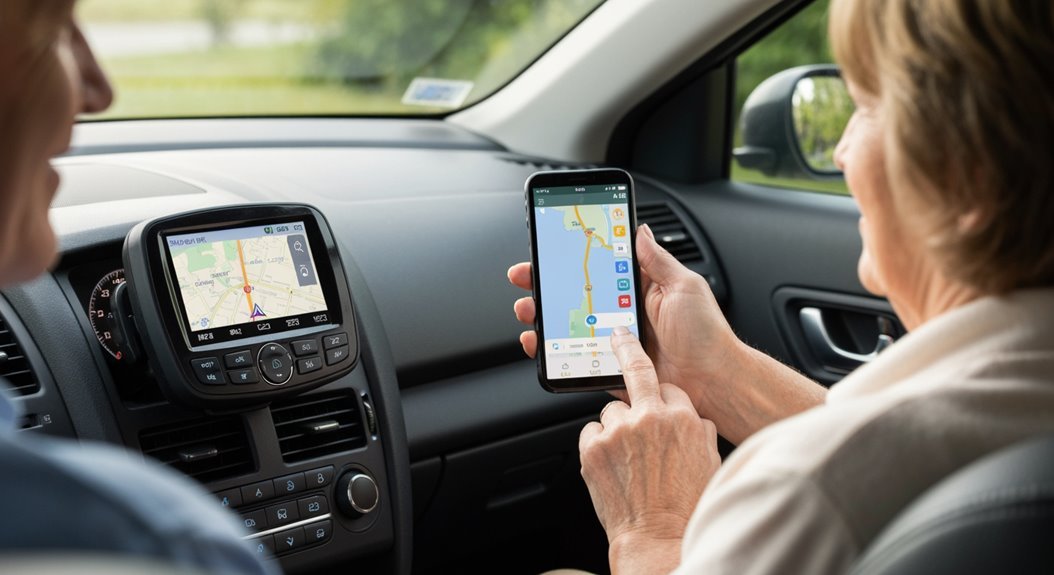
When picking the right navigation tool, it’s essential to think about a few key factors that can really shape your experience.
First up, usability! If you prefer large buttons and clear voice prompts, a GPS might be your best buddy. Those shiny smartphone apps? They can be a bit tricky with touchscreen swipes and constant updates.
Next, consider safety. GPS devices can track your location, ensuring quick help if you need it. Meanwhile, smartphones might rely on battery life and signal strength—those pesky dead zones in rural areas!
Finally, think about cost. GPS units often come with a one-time payment, while smartphones tag on monthly data fees.
Frequently Asked Questions
Can Seniors Easily Learn to Use GPS Devices?
Absolutely, seniors can learn to use GPS devices! It might seem a bit intimidating at first, but with a little practice, you’ll be maneuvering like a pro.
Many find that with peer support and some simple training, they quickly gain confidence. Plus, once you get the hang of it, that feeling of independence and safety is so rewarding!
Are There Specific GPS Models Recommended for Seniors?
For seniors, the Bay Alarm Medical SOS Smartwatch and Medical Guardian MGMove are fantastic choices with features like fall detection and quick emergency responses.
If you’re looking for something discreet, the Medical Guardian MGMini is perfect, fitting comfortably around your neck.
And if simplicity is your game, Theora Connect keeps things easy with straightforward GPS tracking.
Forget the tech panic; these devices have your back, making safety a breeze!
How Often Should GPS Map Data Be Updated?
You should update your GPS map data at least once a year.
Think of it like giving your car a tune-up; a little maintenance goes a long way! If you’re planning a big trip or moving to a new area, double-check those updates.
For devices without much internet, aim for every 3-6 months—like watering a houseplant, regular attention keeps it thriving!
Keeping your maps fresh guarantees smooth travels, so you won’t miss a turn—and maybe a snack!
What Features Should Seniors Prioritize When Choosing Navigation Tools?
When choosing navigation tools, prioritize ease of use, battery life, and emergency features.
Look for intuitive interfaces with big buttons—nobody wants to wrestle with tiny screens!
It’s also smart to check for long-lasting batteries, so you don’t need to recharge daily.
Features like SOS buttons and fall detection can provide peace of mind.
Are Smartphone Navigation Apps Free or Do They Require Subscriptions?
Most smartphone route-finding apps are free, giving you basic features like route planning and turn-by-turn directions.
However, if you want nifty perks like offline maps or traffic alerts, you’ll need to shell out some cash for a premium subscription.
Think of it this way: it’s like choosing between a free sample and the full buffet. Sure, the free stuff is great, but sometimes it’s worth splurging for the extra goodies!
Happy exploring!
Conclusion
So, whether you choose a trusty GPS or the convenience of a smartphone, the best navigation tool is the one that feels right for you. Think of it like picking a favorite pair of shoes; they both get you where you want to go, but one might fit you better than the other! Enjoy your adventures, embrace the journey, and don’t forget—it’s okay to ask for directions if you get lost. Happy travels!