
Handling Medical Emergencies Abroad
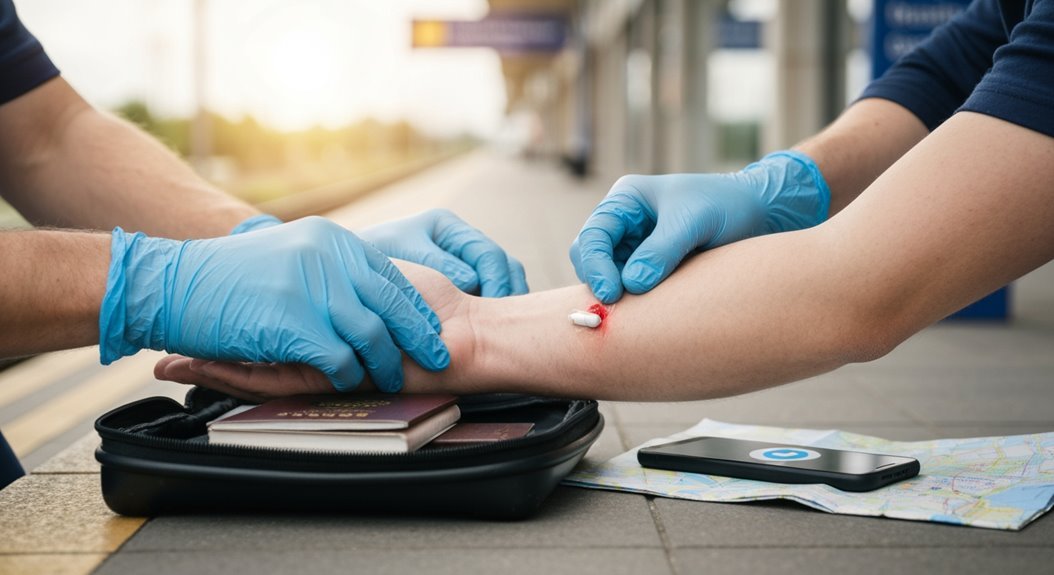
Handling medical emergencies abroad can be stressful, so try to stay calm and quickly assess the situation.
If the problem is serious, call local emergency services right away—numbers vary by country, so know them before you travel or look them up quickly.
Keep your travel insurance details accessible; it can cover high medical costs and help with hospital arrangements.
Carry a basic first aid kit for minor injuries, and stay hydrated, especially in hot climates.
Making friends with locals can speed up help and guidance. Want more tips for staying safe while traveling?
Understanding the Risks of Traveling Abroad
When you’re packing your bags for an overseas adventure, you mightn’t think about the unexpected surprises that could come your way—yes, even the not-so-fun ones!
Did you know that between 22% and 64% of travelers end up feeling under the weather during their trips? If you’re heading to a developing country like India or Kenya, that number jumps to a staggering 43% to 79%! Yikes!
From peculiar belly troubles to more serious illnesses, the risks are real. You might brush it off, thinking, “It won’t happen to me,” but that’s risky business. Health risks are influenced by various factors including destination, so it’s crucial to stay informed.
Awareness is your friend here! Keeping an eye on health hazards, local food, and sanitation can save you from unwanted adventures with the restroom.
Preparing for Health Challenges Before Your Trip
Before you jet off on your next big adventure, you’ll want to make sure you’re prepped for any health bumps that might pop up along the way.
Start by scheduling your vaccinations at least four weeks before your trip—those immunity superheroes need time to get ready! Don’t forget the destination-specific jabs like hepatitis or yellow fever; check the CDC or U.S. State Department for any traveler advisories.
Pack a well-stocked travel health kit, including your prescription meds—bring extras just in case—and over-the-counter essentials like pain relievers and allergy meds. It’s like packing your very own mini-pharmacy! Also, consider getting travel medical insurance for peace of mind, because let’s face it, no one wants to deal with medical emergencies abroad without backup. Additionally, verify passport validity to ensure it meets the requirements for entry to your destination.
A little preparation can turn potential hiccups into mere bumps on your journey—so get ready for an adventure of a lifetime!
Navigating Healthcare Access in Foreign Countries
Traversing healthcare access in foreign countries can feel a bit like exploring a new city without a map—daunting but packed with adventures if you play your cards right!
As you venture out, remember that healthcare varies greatly around the globe. In high-income countries, you’ll likely find easier access to services, while low- and middle-income nations might present hurdles, like high out-of-pocket costs. The U.S. has a notable shortage of primary care physicians, which can impact the quality of emergency care available to travelers.
If you land in a place without universal coverage, you might want to check your travel insurance—it could save you a financial headache later!
Access to care also depends on where you are; urban centers usually have better facilities than rural areas, especially in developing nations.
And let’s not forget, quality isn’t always guaranteed. Whether you’re in a bustling city or a tiny village, knowing the healthcare landscape can turn potential chaos into a manageable journey. Keep your eyes open, and you’ll navigate just fine!
Dealing With Medical Emergencies During Travel
Dealing with medical emergencies during your travels can feel like steering through a surprise plot twist in a thrilling novel—unexpected and potentially chaotic, but not entirely insurmountable! Imagine it: you’re sightseeing, and suddenly, a fall leads to a fracture. Ouch!
It’s essential to know that trauma and cardiovascular issues top the list of travel emergencies. In-flight, you might even witness someone having a stroke or chest pain. But don’t panic; health professionals often step in for about 40–70% of those cases!
Carrying a well-stocked travel medical kit can make all the difference, especially with common conditions like appendicitis or even severe cases of traveller’s diarrhoea.
Stay hydrated, move during long flights, and remember: avoiding risky behaviors can reduce emergencies considerably. With a bit of preparation and a sprinkle of luck, you can navigate these unexpected turns like a pro and keep the adventure alive!
The Importance of Travel Insurance and Assistance Services
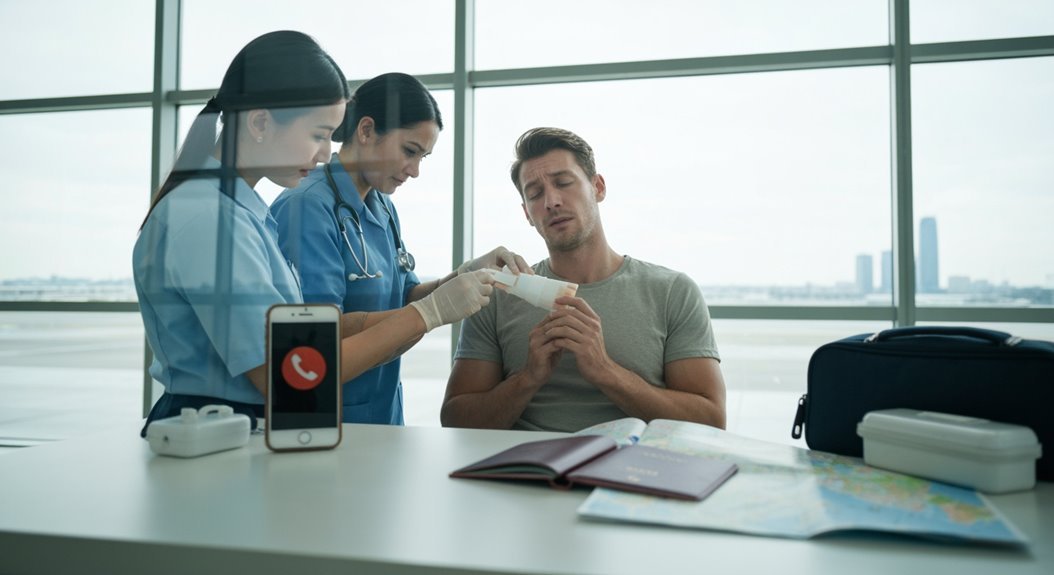
Traveling should be all about fun adventures and creating unforgettable memories, right?
But let’s face it—unexpected medical emergencies can put a hitch in your plans faster than you can say “oops.”
That’s where travel insurance and assistance services come into play. Here’s why you need them:
- Financial Protection: With medical claims averaging around $1,816, avoiding hefty bills is essential.
- Emergency Evacuation: Medical transport can cost over $50,000, so having evacuation coverage saves you from a serious financial headache.
- 24/7 Support: Need help in a scary situation? Assistance services provide round-the-clock medical advice and coordination.
Don’t wait until you’re in a bind to realize you’re unprotected.
Secure your trip with travel insurance to enjoy every moment with peace of mind.
After all, who wants to worry about medical bills when you’re trying that exotic street food?
Communicating During Medical Emergencies
Have you ever found yourself in a tight spot, needing help but struggling to communicate? It can feel like you’re speaking a foreign language—literally!
That’s where effective communication during medical emergencies comes in. It’s important to be clear and concise; no one wants to misunderstand a crucial instruction. Rapid announcements build trust and help guide everyone to act quickly.
Using multiple languages and modes, like texts or visual graphics, guarantees that everyone, from tourists to locals, gets the message.
Best Practices for Staying Healthy While Traveling
When you’re planning an adventure abroad, staying healthy doesn’t have to be a challenging task. With a little prep, you can enjoy your trip without the worry of getting sick. Here are some best practices to keep you feeling great:
- Get Vaccinated: Visit a healthcare provider 4–8 weeks before you leave for essential vaccines. Trust us, you don’t want to miss out on fun because of preventable diseases!
- Stay Hydrated and Well-Fed: Drink plenty of water and choose safe food. Remember, that street cart might be tempting, but it’s not worth a week of stomach woes!
- Practice Good Hygiene: Wash your hands often, and be cautious with insect repellents in risky areas. Just think of it as your superhero shield against pesky bugs!
Keeping these tips in mind will help you enjoy your travels with less worry and more adventure. So pack your bags and get ready for fun!
Staying Informed About Destination Health Risks
Wondering how to keep yourself healthy while exploring a new country? Staying informed about health risks at your destination is key!
Start by checking government travel advisory websites for up-to-date warnings on disease outbreaks and vaccination requirements. The World Health Organization (WHO) can be your best friend here with plenty of guidance on infectious diseases.
Don’t skip a trip to a travel health clinic. They tailor advice based on where you’re headed—think of it as your personal health concierge!
Keep an eye on local outbreaks like dengue or measles, and know what medical facilities are available in case of emergencies.
Oh, and stay updated with mobile apps for real-time alerts—you don’t want to be surprised by an unexpected travel restriction!
With a little preparation, you’ll be ready to explore like the health-conscious adventurer you are. Happy travels!
Frequently Asked Questions
How Can I Prepare for Language Barriers in Emergencies Abroad?
To prepare for language barriers in emergencies abroad, start by learning a few key phrases in the local language, like “help” or “hospital.”
Pack a translated medical history, including allergies and medications; it’s like a cheat sheet for your health!
Also, consider using a translation app or carry a medical phrasebook—super handy!
Finally, enroll in travel assistance programs; they’ll have your back 24/7.
What Are Common Medical Emergencies During Air Travel?
While flying, you might encounter some common medical emergencies, like fainting, which can happen quite easily at high altitudes.
Seizures can strike unsuspecting passengers, while chest pain may lead to serious concerns. Also, respiratory issues and nausea can make air travel quite uncomfortable.
So, if you’re feeling queasy or lightheaded, don’t hesitate to ask the flight crew for help—they’ve got your back!
After all, the sky’s not just for clouds, right?
How Do Jurisdiction Laws Affect In-Flight Medical Assistance?
Jurisdiction laws can really shake things up when it comes to in-flight medical assistance!
You might think you’re protected, but it depends on where the plane’s registered and even where it’s soaring through the skies. Some countries expect medical pros to help, while others don’t require a thing.
It’s like a game of legal dodgeball! So, before jumping in to help, be sure to check your legalese and keep your passport handy!
What Should I Do if My Travel Insurance Is Not Accepted?
If your travel insurance isn’t accepted, don’t sweat it—just roll with the punches!
First, pay upfront with cash or card, and make sure to grab all your receipts.
Then, call your insurance provider for guidance and help on finding care.
Don’t forget to reach out to the nearest U.S. embassy for support.
Finally, keep all documents organized for later reimbursement.
It might feel like jumping through hoops, but you’ll handle it like a pro!
How Can I Stay Updated on Local Health Alerts While Traveling?
To stay updated on local health alerts while traveling, you’ve got options!
Sign up for the Smart Traveler Enrollment Program (STEP); it sends you essential updates from U.S. embassies.
You can also check platforms like WHO or ProMED for the latest on disease outbreaks and health risks.
And don’t forget to ask locals! They often have the best insider knowledge, keeping you safe and healthy while you explore new places.
Happy travels!
Conclusion
So, traveling abroad can definitely feel like an adventure, but when it comes to health, a little prep can go a long way. Grab that travel insurance, brush up on local healthcare options, and remember, your well-being is a priority! Just think of it as packing an umbrella; you may not need it, but you’ll be glad it’s there if a storm hits. With a bit of planning, you can focus on making unforgettable memories instead of dealing with medical mishaps!