
No Heavy Lifting: Managing Luggage as a Senior
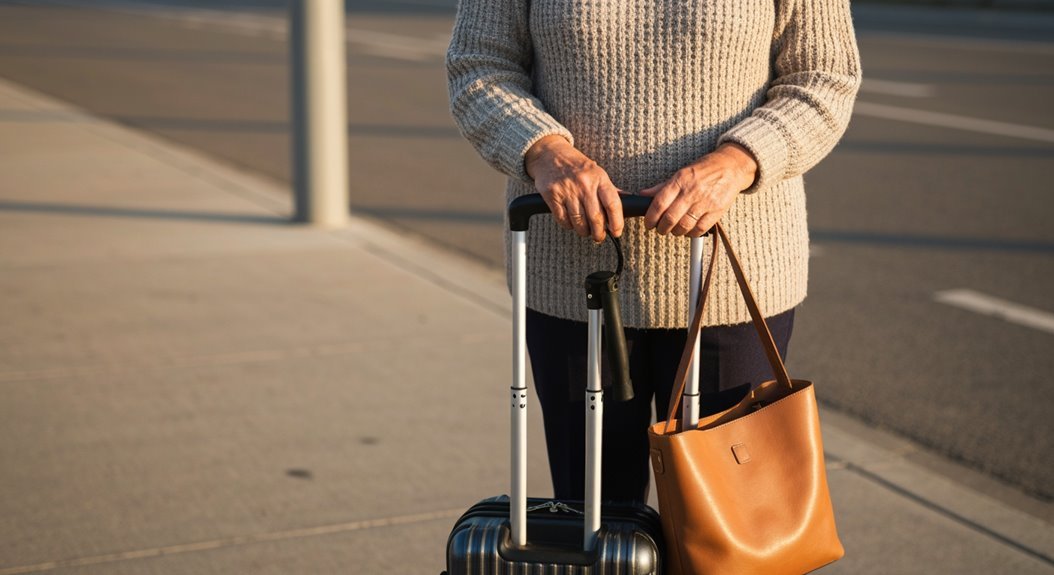
Managing luggage as a senior means prioritizing lightweight options — aim for bags under 9 lbs to reduce strain and make travel easier.
Choose suitcases with ergonomic handles and multi-directional spinner wheels for smooth, effortless movement. These features cut down on pushing and lifting.
Optimize packing by creating a checklist and choosing versatile clothing pieces that mix and match. Use packing cubes to compress items and keep things organized.
Limit toiletries to travel-sized containers to save weight and space. Consider smart luggage features like GPS tracking and weight sensors to streamline your journey.
Explore additional strategies and tools, such as luggage carts, shoulder straps, or porter services, to further simplify travel and avoid heavy lifting.
Choosing the Right Luggage for Seniors
Selecting the appropriate luggage is essential for seniors. Lightweight construction is vital; look for bags under 9 lbs, as these reduce physical strain. High-quality woven fabrics or polycarbonate shells combine durability and lightness, supporting easier handling.
Ergonomic handle designs distribute weight evenly, vital for seniors with arthritis, while telescoping handles offer multiple height settings for comfort. Multi-directional spinner wheels enhance maneuverability, allowing effortless navigation through airports. High-quality wheels perform better on uneven surfaces, minimizing jarring.
Additionally, easy-access pockets and smart compartments help you retrieve essentials quickly. Consider TSA-approved locks for security and anti-theft features for peace of mind.
These features guarantee your travel experience is manageable and safe. Selecting the right luggage greatly simplifies your journey.
Packing Light: Strategies to Reduce Weight
When packing for travel, keeping weight to a minimum greatly enhances your experience. Start by creating a detailed packing list to guarantee you only take essentials. Choose versatile clothing that mixes and matches, reducing the overall number of garments. Select dual-purpose items to minimize packed pieces, and opt for lightweight, breathable fabrics like cotton and linen for comfort. Utilize packing cubes to compress clothing and save space, rolling items instead of folding to reduce wrinkles. Limit toiletries to travel-sized containers, decluttering unnecessary cosmetics. Travel with a medium-sized bag to balance capacity, and opt for luggage with spinner wheels for easy maneuvering. Additionally, request easy-access seating when booking your transport to ensure convenient travel every step of the way. Weigh your packed items beforehand to comply with airline limits, guaranteeing a manageable load throughout your journey.
Enhancing Comfort and Accessibility During Travel
Comfort and accessibility are essential elements for seniors during travel. Ergonomic handle designs minimize strain on hands and wrists, particularly benefiting those with arthritis. Additionally, lightweight luggage is crucial as it promotes independence while decreasing injury risks. Telescoping handles can lock at multiple heights, allowing you to avoid back strain. Lightweight materials, such as polycarbonate, reduce the overall weight of luggage, typically ranging from 5 to 7 pounds for carry-ons. This light construction promotes independence while decreasing injury risks. Easy-access storage solutions, like multiple external pockets and smart organizers, enable quick retrieval of essentials without excessive effort. Additionally, multi-directional spinner wheels facilitate smooth movement across surfaces, while compact rolling backpacks offer hands-free convenience, making mobility easier for seniors with limited strength.
Navigating Airports With Ease
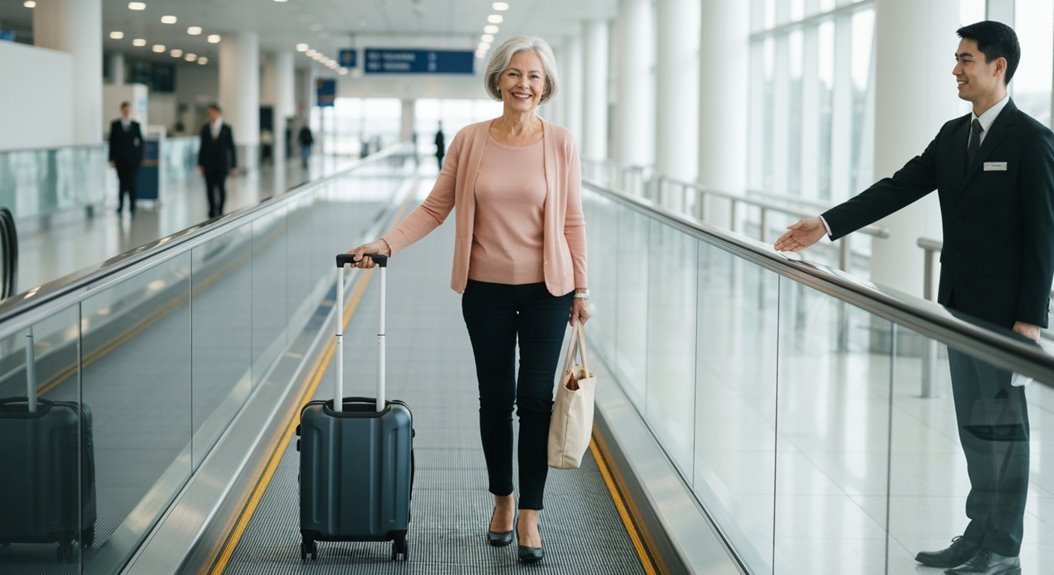
Maneuvering through airports can feel overwhelming, but knowing what to expect can ease the process.
Accessible facilities feature clear signage and intuitive layouts, reducing confusion and unnecessary walking. Elevators, escalators, and people movers help minimize physical strain.
Expect shorter distances between gates with trains connecting terminals. Free wheelchair assistance is available at all major U.S. airports, enhancing mobility.
Prioritize boarding options offer extra time without stress. Trained airport staff provide direct assistance, ensuring you’re supported at every step.
Federal regulations mandate accessible routes and service animal relief areas, reinforcing your rights. Airports like Atlanta and Dallas/Fort Worth excel in accessibility, ensuring a smoother journey.
Planning ahead and notifying airlines secures necessary accommodations before your flight.
Technology Aids for Simplified Packing
Packing for travel can be streamlined considerably with the help of modern technology. Smart luggage featuring GPS tracking allows real-time location updates, minimizing lost luggage risks.
Built-in weight sensors automatically weigh baggage to prevent excess fees at the airport. Remote locking and biometric access enhance security, enabling you to lock or gain access to your suitcase via smartphone apps, plus receive tampering alerts.
Senior-friendly travel apps like TripIt Pro organize trip details and suggest packing layouts based on weight limits. Voice-activated assistants, such as Amazon Echo, can answer packing queries and set reminders hands-free.
Additionally, lightweight travel aids and robotic luggage systems simplify mobility, allowing you to manage your packing with ease and confidence while minimizing physical strain.
Pre-Travel Preparation and Safety Tips
Pre-travel preparation is essential for ensuring a smooth journey, especially for seniors.
Begin by creating an all-inclusive packing list to prevent overpacking, and select versatile clothing items for flexibility. Utilize packing cubes to maximize space efficiently. Store travel-sized toiletries in Ziploc bags to reduce bulk and improve accessibility.
Always carry medications in original containers for clarity, and bring a detailed list of prescriptions and dosages. Discuss any special health needs with your healthcare provider before traveling.
For safety, use mobility aids as needed, wear well-fitting shoes to minimize fall risks, and take your time maneuvering through airports. Confirm airline policies regarding carry-on limits and allowable mobility devices for seamless travel logistics.
Essential Features in Senior-Friendly Luggage

Selecting the right luggage can considerably enhance travel ease for seniors. Opt for lightweight construction; materials like high-density nylon provide durability without excess weight.
Choose luggage with four 360-degree spinner wheels, offering smooth maneuverability in crowded areas. Ergonomic handles that lock at adjustable heights minimize back strain, while top and side handles offer versatile lifting options.
Look for built-in TSA locks and large, easy-to-use zippers for security and accessibility. Smart compartmentalization helps with organization, reducing search time for essentials.
Ascertain your luggage features durable fabrics and high-quality hardware to withstand extensive use. This combination of features collectively promotes a hassle-free travel experience, making navigation simpler and more efficient for seniors.
Optimal Clothing Choices for Travel
When planning your travel wardrobe, focus on clothing that balances comfort, functionality, and versatility. Choose fabrics like cotton, jersey, or blends with spandex for ease of movement. Merino wool wicks moisture and regulates temperature, making it ideal for various climates.
Consider lightweight, wrinkle-resistant materials for reduced laundering needs. For layering, lightweight cardigans or jackets allow easy adaptation to temperature changes. Opt for stretchy pants or leggings with comfortable waistbands to enhance extended sitting. Dark jeans and breathable skirts add versatility.
Select neutral-colored midi dresses for various occasions. Wrinkle-resistant options minimize packing concerns. Incorporate accessories like accent scarves to introduce color without complicating your choices.
Prioritize technical fabrics that guarantee durability, ease, and a polished appearance.
Utilizing Services for Stress-Free Travel
To guarantee a smooth journey, leverage specialized assistance services designed for seniors.
Utilize airport luggage assistance, which helps with check-in and bag drop, guaranteeing hassle-free handling from departure to arrival. Airline staff can assist with gate-checked or carry-on luggage, so you won’t need to struggle during your travels.
Consider concierge services for efficient luggage management and personalized itinerary planning. Additionally, wheelchair support provides dedicated assistance throughout the terminal, enabling easy navigation to your gate.
Explore medical and personal care companions for health monitoring, offering peace of mind as you travel.
Finally, familiarize yourself with airline policies that guarantee priority boarding and accessible services, optimizing your overall travel experience while focusing on convenience and comfort.
Frequently Asked Questions
What Type of Luggage Is Best for Train Travel?
For train travel, four-wheeled rolling luggage is best. It offers 360-degree maneuverability, making it easy to navigate crowded stations. You can push or pull it with minimal effort, reducing strain.
Lightweight carry-on suitcases, such as the Travelpro Maxlite 5, weigh between 7.1 to 8.2 pounds, facilitating easier management. Ergonomic handles distribute weight evenly, while durable wheels guarantee smooth movement across platforms.
Select luggage that prioritizes your comfort and convenience.
How Can I Keep Track of My Luggage During Layovers?
To keep track of your luggage during layovers, consider using real-time tracking options. Airlines utilize RFID systems, providing 99.9% accuracy at critical points. By registering for your airline’s app, you can receive updates on your bag’s location.
Additionally, Bluetooth and GPS trackers offer extra security, allowing you to monitor your luggage outside conventional ranges. These devices can notify you if your bag is delayed or misplaced, reducing potential anxiety.
Are Travel Insurance Options Necessary for Seniors?
Yes, travel insurance options are necessary for seniors. They provide essential medical coverage, protecting against health emergencies while traveling.
Trip cancellation policies safeguard against unexpected interruptions, covering over 95% of claims. Costs typically range from 4-10% of trip totals, ensuring financial security.
Furthermore, all-encompassing plans enhance peace of mind, addressing various risks. As travel intent increases among seniors, securing robust insurance is a prudent decision to mitigate potential disruptions or health issues.
Can I Use a Personal Scooter With My Luggage?
Yes, you can use a personal scooter with your luggage.
Make sure your scooter’s lithium-ion battery is under 100Wh, as this is the standard limit. Some airlines allow higher wattage with approval.
Pack your scooter in a sturdy suitcase, removing parts to meet size and weight limits.
Check airline policies for potential baggage fee waivers for scooters.
Always confirm rules regarding battery transport and necessary documentation before your trip to avoid issues.
How Do I Handle Lost or Delayed Luggage as a Senior?
To handle lost or delayed luggage as a senior, act quickly. Report the issue immediately at the airline’s baggage service office.
Approximately 28% of travelers faced luggage loss recently, highlighting the risk. Register your luggage with tracking apps for enhanced recovery chances. Keep baggage claim tags and purchase travel insurance for financial protection.
Additionally, pack essential items and medications in your carry-on to minimize inconvenience during delays. Prioritize airlines with better handling reputations.
Conclusion
To conclude, effective luggage management for seniors involves selecting the right luggage, packing light, and utilizing services to ease stress. For example, a recent case study highlighted a senior traveler who opted for a lightweight suitcase with 360-degree spinner wheels, making navigation through the airport seamless. By integrating these strategies, seniors can enhance their travel experience and increase independence, ultimately enjoying their journeys with minimal physical strain and maximum convenience. Additionally, familiarizing oneself with senior travel packing essentials can further streamline the travel process. Items like compression bags, packing cubes, and travel organizers can help maintain order and accessibility within the luggage. By prioritizing organization and convenience, seniors can focus more on enjoying their trips rather than worrying about logistics. Implementing suitcase packing strategies for seniors can significantly reduce the burden of travel preparations. By utilizing packing cubes for different clothing categories or employing the rolling method to save space, seniors can maximize efficiency. Such approaches not only streamline packing but also ensure that essential items are easily accessible throughout the journey.