How to Pack Medications and Supplements Safely
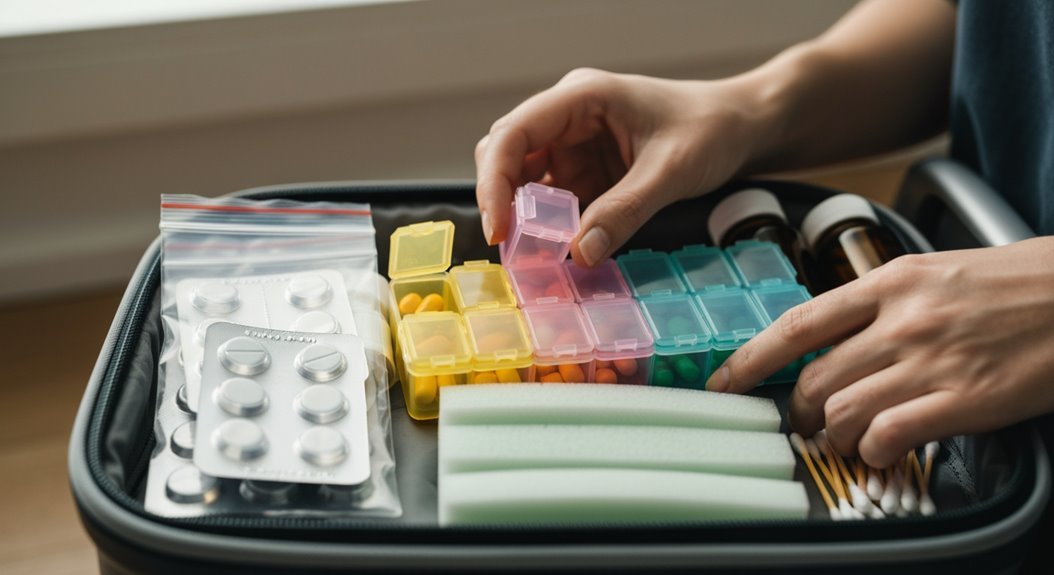
How to pack medications and supplements safely starts with keeping them in their original containers. This reduces the chance of mix-ups, makes identification easy for TSA, and helps if you need to show prescriptions at security.
Place all containers together in a clear, resealable bag so they’re easy to access. Keeping everything grouped also speeds up security checks and minimizes the risk of losing an item.
Bring your prescriptions and consider packing a little extra in case of delays or emergencies. For specific rules about liquids, injectables, or other special medications, check TSA guidance and airline policies before you travel.
Understanding the Importance of Original Packaging
When you’re gearing up for a trip and packing your medications, you might wonder why keeping them in their original packaging is such a big deal. Well, for starters, the original containers display your name, the doctor’s details, and dosage info, which helps avoid any mix-ups. Imagine facing airport security—having those labels ready makes things smoother.
If a medical emergency arises, healthcare providers can quickly identify your meds and dosages, which is super important. Additionally, carrying essential medications in their original packaging ensures compliance with international regulations, preventing any potential issues during your travels.
Plus, many countries require medications in their original packaging for customs, ensuring you’re following local laws. Those original containers protect your meds against environmental factors, keeping them effective and safe. They’re designed to fit nicely in your luggage, so no excuses there!
Keeping everything organized not only saves you stress during travel, but it also gives you peace of mind, knowing you’ve got all the critical info right at your fingertips. Now, that’s a travel win!
Best Practices for Carry-On Luggage and Storage
Packing your medications for air travel can feel like a formidable task, but it doesn’t have to be! Start by storing your meds in a clear bag, so they’re easy to grab when you reach security.
Placing your medication in an outer pocket of your personal item, like a small backpack or purse, makes an ideal storage spot. This way, you can keep them handy throughout your flight—even during those pesky delays! Remember, carrying medications in your carry-on will also help maintain a specific medication schedule during your trip.
Keeping all your medications together will speed up the TSA process. If you have refrigerated meds, like insulin, consider using a medical-grade cooler bag that’s clearly labeled.
And don’t worry about limits on solid medications; you can pack as many pills or supplements as you need without a hitch.
With these simple practices, you’ll breeze through security while keeping your health in check, letting you focus on what really matters—enjoying your trip!
Essential Documentation for Your Medications
You’ve got your medications neatly packed and ready for your journey, but wait—there’s one more thing you can’t forget: the paperwork! Having the right documentation can save you a world of trouble.
First, carry a written prescription or a note from your healthcare provider detailing your meds. Make sure it’s on proper letterhead and, if you’re headed abroad, translated into the local language—nothing like a language barrier to spice up your travels!
Keep those prescriptions in their original pharmacy containers, with your name and dosage clearly labeled. Oh, and don’t forget copies! They can come in handy if anything goes missing or for customs checks. Additionally, ensure you have proof of vaccination documentation relevant to your travel destination, as it may be a requirement when entering certain countries.
Also, have documentation of your medical conditions or allergies ready for emergencies, along with your health insurance details.
With all this paperwork in hand, you’re set for a smooth and worry-free trip.
Happy travels!
Preparing for Extra Medication and Supplies
Before you zip up your suitcase and head out the door, it’s wise to think ahead about your medications and supplies—after all, nobody wants to find themselves in a sticky situation without their essentials!
First, pack enough medication to last your entire trip plus a few extra days. We all know how travel can throw curveballs your way, like delays or lost luggage, so a buffer of 3-5 days is your best friend.
Don’t forget those over-the-counter goodies! Stuff your bag with extra pain relievers and vitamins to keep you going strong.
Consider splitting your meds between your carry-on and checked luggage—it’s like a secret stash!
And just in case, stash a duplicate set of essential medications in a separate bag. Keep them in their original packaging to avoid confusion.
With a little prep, you’ll be ready for any adventure life throws at you, so go ahead and pack confidently!
Navigating Rules for Liquids and Special Medications
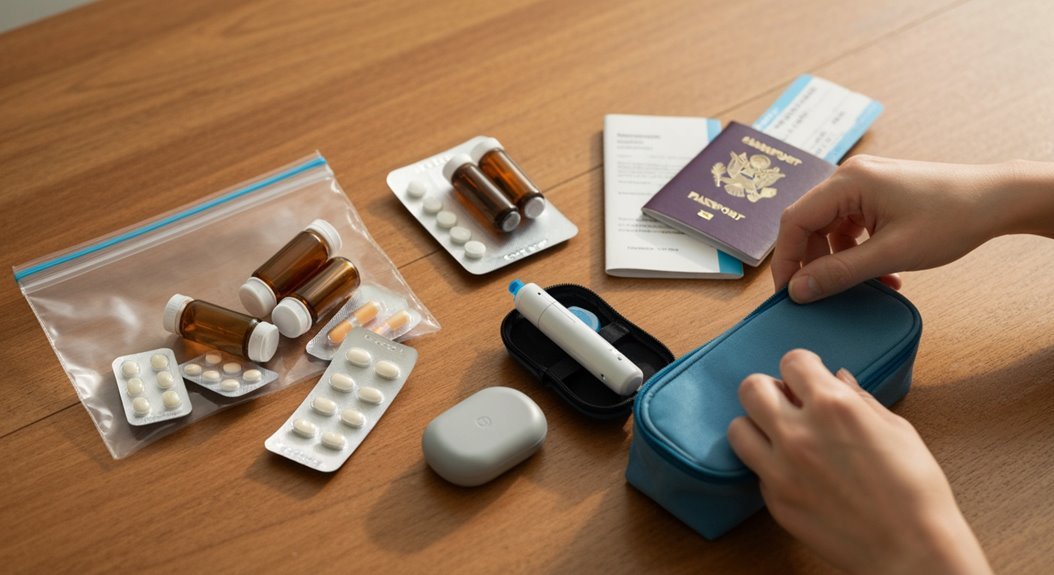
How can you make sure your medications sail through airport security without a hitch?
First, know that over-the-counter liquid meds, like cough syrup, must be in containers of 3.4 ounces or less. They all need to fit snugly into a quart-sized plastic bag, and you can only pack one of those per trip.
But don’t panic! If you’ve got prescription liquids or other medically necessary items, you’re in luck. These are exempt from the rules, which means no pesky size limits and no need to pack them in a liquid bag. Just remember to declare them when you reach the TSA checkpoint. A friendly “I’ve got liquid medication” goes a long way!
And while hand sanitizer might be a no-go, your pills and gel capsules can travel freely.
Frequently Asked Questions
Can I Pack Medications in Non-Original Containers for Convenience?
Absolutely, you can pack medications in non-original containers for convenience! Just make sure to label them with the medication name, dosage, and frequency — a little DIY touch can save you from a panic moment later.
Keep in mind that while it’s usually fine for domestic travel, some places might’ve stricter rules. So, a quick check on local laws is always a smart move.
Happy travels! You’ve got this!
How Should I Organize Multiple Medications for Easy Access?
To organize multiple medications for easy access, grab a weekly pill organizer!
It’s like a treasure chest for your meds, keeping everything sorted by day and time.
Label each compartment with the medication name and dose—it’ll make finding what you need a breeze. You can even use color-coded stickers for a fun touch!
And don’t forget to keep a current medication list handy. Trust me, it’ll save you from potential mix-ups!
Are Medications Allowed in My Personal Item or Just Carry-On Luggage?
You can definitely pack your medications in both your personal item and carry-on luggage!
Personal items, like that trusty backpack or purse, give you easy access during the flight—perfect for when you need those meds pronto.
Plus, keeping them close means less worry about lost baggage.
Just remember to follow any label rules for controlled substances.
What Should I Do if My Medication Gets Lost During Travel?
If your medication goes missing while you’re off exploring, don’t panic!
First, file a lost baggage claim right away—that’s your ticket to tracking it down. Next, reach out to your pharmacy for a refill or transfer.
You can also call your doctor to get a new prescription faster than you can say “where’s my bag?”
Finally, check local clinics if you need something urgent. Adventure awaits, even without your meds!
Is There a Specific Way to Store Medications in Hot Climates?
To store medications in hot climates, keep them in a cool, dry spot away from sunlight—think of a cozy bedroom drawer, not a steamy bathroom!
Avoid your car, too; it can turn into an oven. Use original containers to shield them from humidity.
And hey, if you can, grab a thermometer to monitor that sweet 68°F to 77°F range. Your meds will thank you, and you’ll be the hero of the heat!
Conclusion
Packing your medications and supplements doesn’t have to feel like solving a Rubik’s Cube in the dark! By keeping things in their original containers, having your documentation at hand, and knowing the rules for liquids, you’re setting yourself up for a smooth journey. Picture yourself breezing through security, a cheerful grin on your face, knowing you’re well-prepared. So, pack wisely, stay organized, and let your adventures unfold without a hitch—because every great trip begins with a little preparation!