Preventing DVT on Long Flights
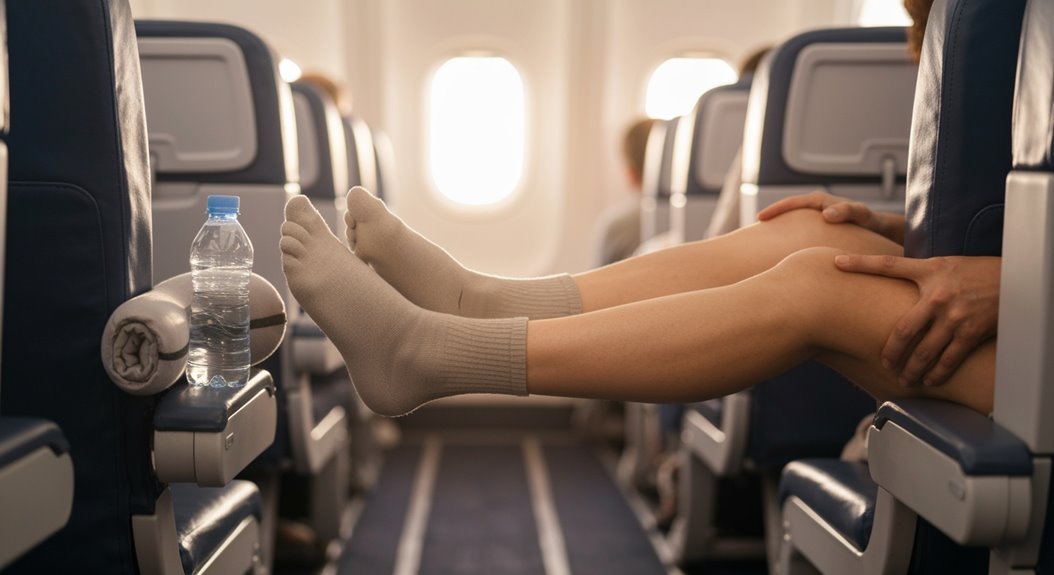
Preventing DVT on long flights is easier than you might think. Start with simple leg exercises, like ankle rotations and calf raises, and try to stand up and stroll down the aisle every hour or two.
Hydration is important—drink water throughout the flight rather than lots of alcohol or caffeine. Wearing well-fitted compression stockings can also reduce the risk of clots.
After you land, watch for any unusual leg swelling, pain, or breathlessness and seek medical advice if you notice symptoms. Small habits during travel can make a big difference for safe, comfortable flights.
Understanding DVT and Long-Haul Flights
When it comes to long-haul flights, understanding Deep Vein Thrombosis (DVT) is key—think of it as your unwanted travel buddy! DVT can sneak up on you, with up to 10% of long-haul airline travelers experiencing symptomless clots. Imagine that—just sitting there for hours could double your risk of calf muscle thrombosis! While it sounds scary, clinical symptoms are pretty rare, popping up in only about 0.05% of flights. But don’t let your guard down; every extra two hours of traveling boosts your risk by 18%. So, after hours of blissful in-flight movies, your legs mightn’t be quite as happy. It’s important to note that travel-related VTE risk increases significantly with additional risk factors, making some travelers more vulnerable than others.
DVT can show up anytime within the first two weeks after travel, but the good news is that your risk starts to fade back to normal after eight weeks. Staying aware of DVT means you can enjoy your journey instead of worrying about this pesky travel companion.
Key Risk Factors for Developing DVT
As you zip through the skies on a long flight, it’s essential to keep an eye on certain risk factors that can make you more susceptible to developing DVT.
If you’re over 40, had recent surgery, or are battling cancer, your risk may be higher. Pregnant women and those who’ve just given birth also need to be mindful, as do individuals with obesity or a history of DVT. Even the comfort of your seat plays a role; cramped spaces can restrict blood flow.
Deep vein thrombosis (DVT) is often associated with prolonged knee bending, which can further increase your risk during long flights. Don’t forget medical aspects, like birth control pills and chronic health issues, that could up your chances, too.
And while it’s tempting to sip cocktails mid-flight, remember that alcohol and caffeine can lead to dehydration—another risk factor!
The Importance of Mobility During Flights
Mobility is your best friend when it comes to staying healthy during long flights! Let’s face it, sitting for hours can turn your legs into stiff, unresponsive noodles. To keep that blood flowing, try simple leg exercises like ankle rotations, foot pumps, or knee lifts. These moves aren’t just for gym buffs; they’re your secret weapons against DVT!
Make it a point to stroll the aisle every couple of hours—nothing like a mini workout to shake off the stiffness and get the blood moving back to your heart. This is especially important since keeping blood flowing helps prevent DVT complications.
Even while seated, you can lift your toes and heels, activating those calf muscles that help with circulation. Remember, even small movements matter—every wiggle counts!
Recommended Positioning and Seating Choices
Choosing the right seat and positioning yourself smartly can make all the difference in keeping your legs happy and healthy during a long flight!
If you can, grab an aisle seat—it’s your golden ticket to better movement and circulation. You’ll be able to stretch your legs and do those little calf exercises without bothering your fellow passengers.
Avoid crossing your legs; it’s like putting the brakes on your blood flow! Keep your feet flat on the floor or use a footrest when you can. Remember to keep your knees slightly bent to promote better blood flow.
Don’t forget to wiggle and shift your legs every now and then. Even simple ankle rotations can work wonders!
And if you’re in the rare privileged position of being in first class, remember, it’s not just about the seat; it’s about how you use it.
Effectiveness of Compression Stockings
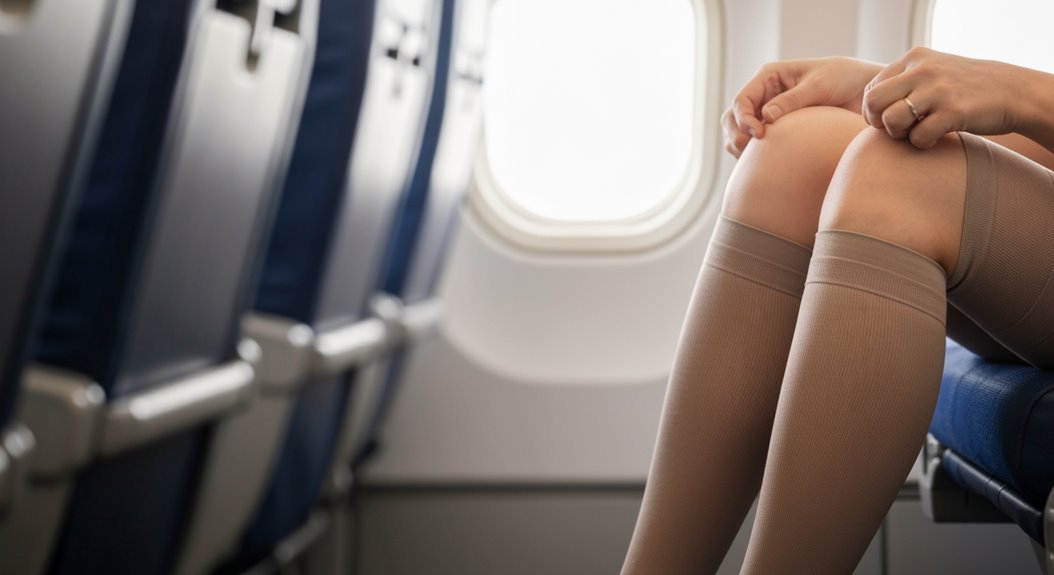
Long flights can be a bit of a leg workout, can’t they? When you sit for hours, your blood flow can slow down, but that’s where compression stockings come to the rescue!
These amazing garments apply pressure to your legs, helping blood return to your heart and reducing that uncomfortable swelling.
Studies show that wearing compression stockings can cut the risk of DVT during long flights dramatically. In fact, it can lower the chance of developing a clot from a concerning 3% to just 0.3% for high-risk travelers!
They’re like a hug for your legs, promoting better circulation and preventing fluid build-up.
And there’s no need to worry; they’re safe and comfortable for most people!
Importance of Staying Hydrated
Hydration is your best friend when you’re settling in for a lengthy flight! Drinking enough water helps keep your blood flowing smoothly, which is essential for reducing the risk of DVT. When you’re dehydrated, your blood thickens, making it more likely to form clots—definitely not what you want during hours of sitting still!
Aim for about 2 liters of water throughout your day, and don’t forget to sip extra on flights when you’re stuck in your seat. You can even check the color of your pee; clear is the way to go!
Watch out for alcohol and caffeine, too—those sneaky drinks can sneakily dehydrate you.
Lifestyle Changes to Mitigate DVT Risk
While you might think that sitting back and relaxing on a plane is the best way to pass the time, there’s actually a lot you can do to keep your body happy and healthy during those long hours.
For starters, try getting up and walking around every hour or so. Your legs will thank you! While you’re seated, you can do simple in-seat exercises—calf raises and ankle circles work wonders. Remember to stretch now and then to keep the blood flowing.
Maintaining a healthy weight is another game-changer. It helps reduce pressure on your veins, making your journey smoother.
Opt for loose, breathable clothing to keep things comfy and to support circulation. Oh, and don’t forget to take into account graduated compression stockings—they’re fantastic for preventing swelling and clot formation.
With these tweaks, you’ll transform your flight experience into a healthier adventure!
When to Consider Medical Interventions
When contemplating a long flight, you might get overwhelmed by all the travel tips floating around, but knowing when to assess medical interventions can make a real difference in keeping your journey safe and comfortable.
If you’re flying for over 4 hours, it’s wise to evaluate your risk factors. For instance, if you’ve had a history of DVT or thrombosis, chat with your doctor beforehand about potential preventive measures.
Those extra-long flights of 6 to 8 hours heighten your chances of clots, so that’s when precautions come into play. Low-dose anticoagulants might help if you’re at higher risk, and graduated compression stockings can be your best friend—trust me, your legs will thank you!
Just make sure they fit right since nobody wants to be uncomfortable. Remember, it’s all about making your travel as enjoyable as possible while keeping those pesky clots at bay!
Monitoring for DVT Symptoms After Travel
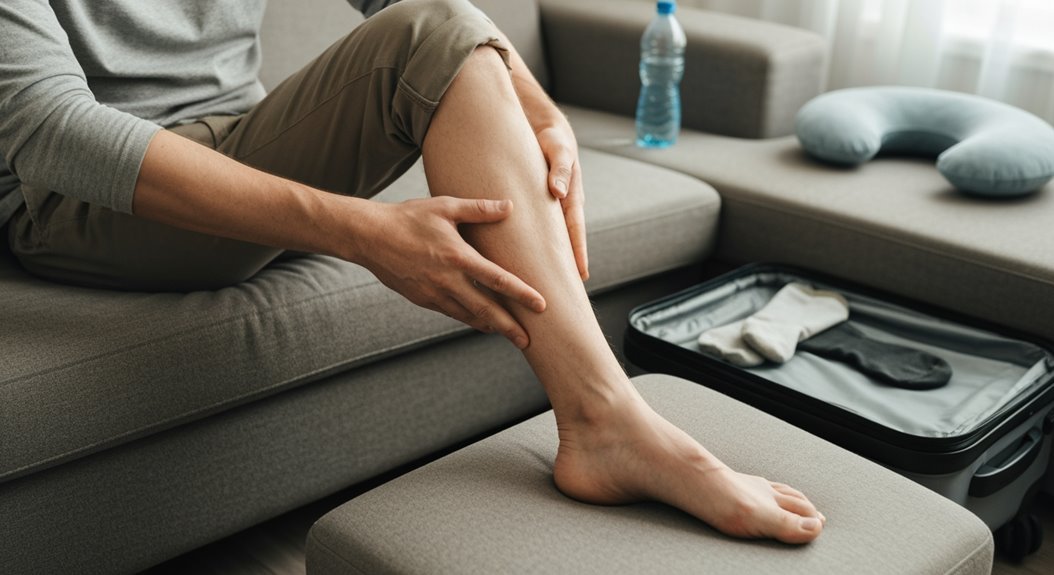
After you’ve landed safely from that long flight and tucked away your suitcase, it’s easy to brush off any worries about DVT symptoms.
But hold on! You should monitor yourself for signs, especially in the weeks following your trip. Look out for deep pain or swelling in your legs; if your calf feels like it’s throwing a party of pain every time you walk, that’s a sign to pay attention.
Don’t ignore sudden shortness of breath or chest pain, either—those can signal something more serious like a pulmonary embolism.
It’s vital to stay vigilant for at least four weeks after long flights, as symptoms can pop up anytime. And remember, if something feels off, don’t hesitate to see a doctor. Better safe than sorry, right? Just think of it as getting a check-up for your travel adventures!
Frequently Asked Questions
Can Children Develop DVT During Long Flights?
No, healthy kids don’t typically develop DVT during long flights, which is great news!
While immobility can be a risk factor, children actually have a much lower chance than adults.
If your little traveler has certain medical conditions, like thrombophilia or a previous blood clot, it’s a good idea to chat with a doctor.
Are Certain Airlines More Concerned About DVT Prevention?
Absolutely, some airlines are definitely more concerned about DVT prevention than others! They often promote leg exercises and hydration during flights, and some even suggest aisle seats to keep you moving.
It’s like a subtle command to shimmy and shake a bit! While there’s no universal standard, you might find that certain carriers actively team up with health organizations to offer tools like compression stockings, making those long journeys a bit safer.
Happy flying!
Is DVT More Common in Older Adults on Flights?
Absolutely, DVT is more common in older adults on flights!
Imagine sitting for hours on end, and your blood just wants to escape! As we age, factors like decreased blood flow and comorbidities come into play, making those lengthy flights a bit riskier.
If you’re over 60 or have other health issues, you really need to keep moving!
How Does My Flight’s Altitude Affect DVT Risk?
Your flight’s altitude definitely affects DVT risk!
When flying high, like 30,000 feet, you face mild hypoxia and reduced cabin pressure, which can make your blood thicker.
Plus, sitting still for too long doesn’t help! The longer you’re in the air, the more your risk increases, especially on long-haul flights.
Should I Avoid Long Flights if Pregnant?
You don’t necessarily have to avoid long flights while pregnant, but it’s wise to be cautious!
Those long hours in the air can add some extra risks for blood clots, especially if you’re past your second trimester.
If you’re feeling adventurous, keep moving your legs, stay hydrated, and wear comfy clothes!
Just make sure to check with your doctor first—after all, a little planning can turn anxiety into excitement for your journey!
Conclusion
Staying mobile, hydrating like a fish, and strutting your stuff in comfy compression stockings can keep DVT at bay on those long flights. Just think, with a little effort, you could be dancing through the airport instead of worrying about your veins. Traveling should be about adventure and new experiences, not a medical scare. So buckle up, keep moving, and enjoy every moment of your journey—because every trip is a chance to make lovely memories!