
Navigating Public Transportation With a Mobility Aid
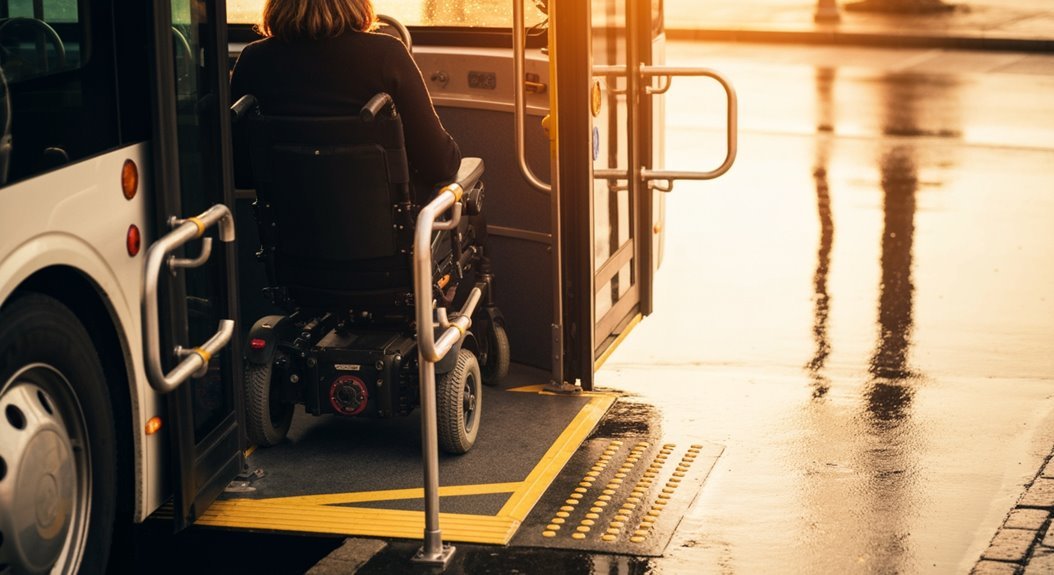
Navigating Public Transportation With a Mobility Aid can be easier with a few simple strategies. Seek out low-floor buses and accessible stations that have ramps and elevators to make boarding and exiting smoother.
Keep an eye on real-time updates for delays or reroutes, and don’t hesitate to use paratransit services when regular routes aren’t suitable. Planning your trip in advance reduces surprises.
Be mindful of tricky areas like broken sidewalks or uneven curbs, and stay alert when transferring between modes of transport. With a little preparation and the right information, you’ll be zipping around town in no time! Curious for more tips?
Understanding Accessibility Requirements in Public Transit
When it comes to maneuvering public transit with a mobility aid, you’ll find that understanding accessibility requirements can really open doors—or at least make getting on and off the bus a whole lot easier!
To start, make sure there are unobstructed paths from the station entrance to the platform, thanks to handy elevators and ramps. Accessible fare machines and audio signals really help, too!
And hey, if you’re vision-impaired, look for braille options. It’s like a treasure hunt, but way more useful!
Remember, over 90% of urban bus stations became ADA compliant recently, which is impressive.
However, keep in mind that the total number of ADA accessible public transportation stations for various modes shows that accessibility is continually improving.
But don’t forget to check out sidewalks—wide enough for you to glide through safely. After all, public transit is for everyone, and you deserve to get where you’re going!
Transportation Challenges Faced by Mobility Aid Users
Traveling through public transportation can feel like a never-ending obstacle course, especially for those using mobility aids. You might find yourself facing several hurdles that make getting around a real challenge.
- Limited access to most city areas means you can’t simply hop on a bus like others.
- Sidewalks are often non-existent or in rough shape, making bus stops hard to reach. One study found that manual wheelchair users access only 1% of the city via public buses, highlighting the dire need for better infrastructure.
- The scarcity of accessible transit areas leads to some serious navigation headaches.
- Paratransit services can be unreliable, with unexpected wait times tossing a wrench in your plans.
- And let’s not forget those inaccessible vehicles—sometimes it feels like they were designed without you in mind!
Despite these challenges, you’re resilient, and there are solutions just around the corner!
Key Features for Accessible Public Transportation
Accessible public transportation isn’t just a dream; it’s a reality that keeps getting better!
Imagine hopping onto a bus without worrying about steps, thanks to low-floor designs or wheelchair lifts. With 99.9 percent of bus fleets now accessible, your ride’s practically guaranteed!
And those handy stations? They’re designed with you in mind, ensuring safe entry and easy navigation. Plus, tech’s on your side: real-time updates and automated stop announcements keep you in the loop.
Need flexibility? On-demand microtransit has got your back! You’ll find wheelchair-accessible vehicles ready when you are. Technology-enabled microtransit provides a more affordable and accessible option compared to traditional paratransit services.
All of this makes getting around smoother, easier, and a whole lot more fun. Public transport isn’t just about moving; it’s about enjoying the journey!
The Role of Paratransit Services
Paratransit services are like your personal ride on demand, tailored just for you! When you’re unable to hop on fixed-route transit, these services step in to save the day.
You’ll enjoy some major perks, including:
- Wheelchair-accessible vehicles with ramps or lifts for easy boarding
- Flexible routes that let you go almost anywhere within service boundaries
- Curb-to-curb or door-to-door options, depending on your needs
- Subscription rides for your regular appointments, like work or medical visits
- The comfort of knowing they’re mandated by the ADA to keep you moving
With paratransit, you’ll feel in control of your travels, gaining independence and freedom, and who doesn’t love that?
Barriers to Public Transportation for People With Disabilities
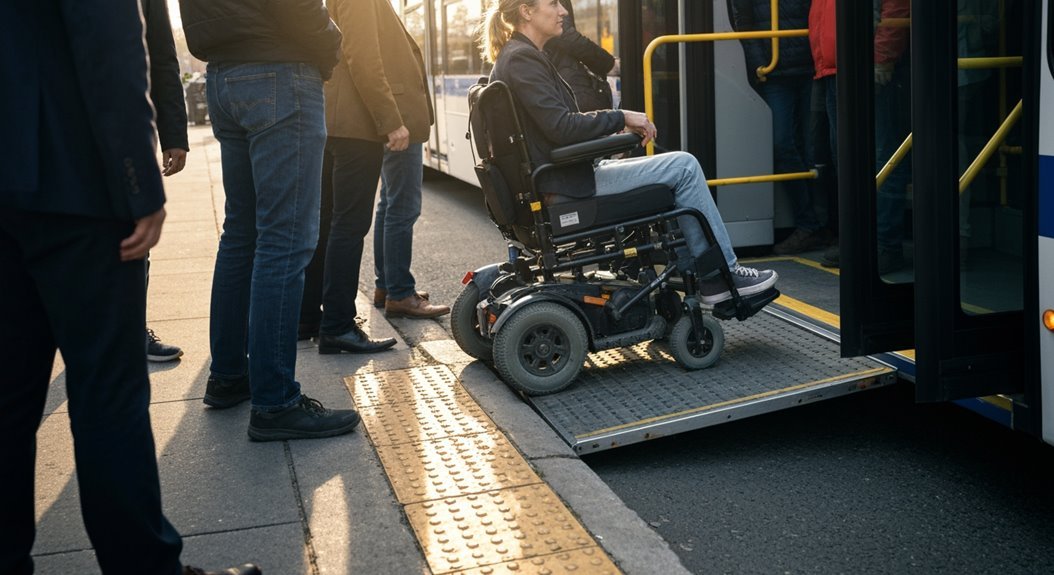
When it comes to getting around, you’d think that hopping on public transportation would be a breeze, right? Well, think again! You might be surprised to discover that about 40% of U.S. counties don’t even have public transportation options.
That’s a major bummer! Even where systems do exist, they’re often not fully ADA-compliant. So, buses mightn’t announce stops, leaving you guessing.
And let’s not forget the physical barriers like broken sidewalks or snow-covered curb cuts that can turn your journey into an obstacle course.
With nearly 2 million folks with disabilities stuck at home due to transport troubles, it’s clear these barriers can leave you feeling isolated and frustrated.
Who knew getting around could be such a headache?
Insights on User Experience in Public Transit
Have you ever stopped to think about how your experience could change when using public transit?
When it comes to traversing the world with a mobility aid, insights from fellow users reveal some eye-opening trends. Here are a few takeaways you won’t want to miss:
- Over 50% of wheelchair users are satisfied with ride-hailing services like Uber and Lyft.
- But nearly 40% face service denial—yikes!
- Many folks transfer from wheelchairs to car seats, which complicates things.
- Only 35 out of 69 subway stations in Toronto are accessible—talk about a challenge!
- Accessible transit boosts income and promotes inclusivity.
Understanding these insights can help improve your experience, making transit more enjoyable and stress-free.
Let’s keep pushing for better options!
How to Effectively Navigate Transit Systems
Maneuvering transit systems can feel like solving a puzzle, especially when you’re using a mobility aid, but don’t let that deter you—there are plenty of ways to make it easier!
Start by using accessibility-focused route planners like AccessMap to find routes that avoid steep inclines. Next, prioritize transit systems known for their accommodations, such as elevators and ramps.
When planning your trip, check for connections and coverage areas, making sure to have backup options like buses or trains just in case. Familiarize yourself with how to secure your mobility aid once onboard—stability is key!
And remember, timing is everything; traveling during off-peak hours can help you dodge crowds. Have fun finding your way through the city!
Resources for Improving Accessibility in Transportation
As you set out to explore the world of accessible transportation, it’s important to know that a wealth of resources is out there just waiting for you to discover them!
From funding programs to innovative transit options, you have plenty of routes to navigate.
Here are some nifty highlights:
- All Stations Accessibility Program (ASAP): Grants for upgrading transit stations.
- Microtransit Services: On-demand rides that welcome everyone and often include accessible vehicles.
- Federal Funding: Ongoing grants aimed at improving transportation options.
- Americans with Disabilities Act (ADA): Enforces essential accessibility standards.
- Community Resources: Local organizations that focus on transportation advocacy and assistance.
With these resources on your side, hopping on public transit can become much smoother!
Frequently Asked Questions
How Can I Find Accessible Public Transit Options in My Area?
To find accessible public transit options in your area, start by checking your local transit agency’s website—you’ll often find an accessibility section just waiting for you!
You can also explore apps or national directories that specialize in transit info. Don’t forget to ask community organizations for advice; they’ve got the inside scoop.
It’s like treasure hunting but for getting around! Getting out and about has never been more exciting, right?
What Should I Do if I Encounter Inaccessible Transit Facilities?
If you encounter inaccessible transit facilities, don’t just stand there staring at the stairs!
Report the issue right away to transit authorities, request alternate routes from staff, and ask for physical support if needed. Snap some photos to document the situation, too.
If all else fails, consider using paratransit or on-demand services—it can be your superhero alternative!
Are There Apps That Assist With Navigating Public Transportation for Mobility Aid Users?
You’ve got some fantastic apps at your fingertips. Try Moovit for real-time guidance or Google Maps for routes that suit your mobility aid.
Citymapper pinpoints accessible options, while Wheelmap lets you discover rated places nearby.
Don’t forget AccessNow for filtering by specific features! With these tools, getting around can be a breeze.
How Can I File a Complaint About Accessibility Issues in Public Transit?
To file a complaint about accessibility issues in public transit, start by gathering details like dates, times, and route numbers. You can submit your complaint in writing or verbally, but writing’s usually better for the records!
Just make sure you do it within 180 days of the incident. Don’t forget to include your contact info! Most agencies will respond in about 60 days.
It’s your ride, and you deserve to voice your concerns!
What Types of Mobility Devices Are Commonly Accepted on Public Transportation?
Wondering what mobility devices you can take on public transportation? Well, you’ve got options!
Standard manual wheelchairs, lightweight foldable scooters, and powered devices often make the cut. Just make sure they meet size and weight limits—no one wants a scooter party that takes over the bus!
And don’t forget other aids like walkers and canes; they’re welcomed too.
Conclusion
Maneuvering public transportation with a mobility aid might seem intimidating, but don’t let that worry you! With the right knowledge and resources, you can tackle transit systems like a pro. Remember, every bus driver who smiles at you can be your new best friend, and accessible features are designed just for you. So, gear up for your next adventure! The world is waiting for you, and it’s more accessible than you might think. Let’s hit the road!