Staying Connected Abroad: Phone & Internet Tips for Seniors

Staying connected abroad is easier than you might think. Options like T-Mobile’s budget-friendly plans or AT&T’s $12 daily plan let you call home and share your travels without breaking the bank.
Choose simple, user-friendly phones with large buttons and bright displays to make texting and calling straightforward. These models reduce frustration and make on-the-go communication more accessible.
Also look for senior discounts from carriers and retailers to save even more. Want to be the tech-savvy traveler in your group? Keep reading for more handy tips.
Understanding International Roaming Options
When you’re gearing up for an adventure abroad, understanding your international roaming options can save you a bundle and keep you connected without a hitch!
Major carriers like AT&T, Verizon, and T-Mobile have plans that cater to every traveler. AT&T charges $12 daily for unlimited talk, text, and data in over 210 destinations. Verizon’s TravelPass gives you similar perks but slows down after 5GB—perfect for the occasional Instagram post. T-Mobile offers a budget-friendly $5 daily option too! International cellphone plans are crucial to evaluate to avoid unexpected fees during your travels.
Plus, you can choose plans specifically designed for your trip length. So, whether you’re off to a cozy café in Paris or hiking in the mountains, you’ll stay in touch without breaking the bank. Go explore!
Choosing the Right Phone Plan for Travel
Choosing the right phone plan for travel doesn’t have to be a challenging task, and it can even feel a bit like a scavenger hunt for the best treasure!
Start by exploring options like T-Mobile’s 55+ plan. At around $70 a month, it includes international features automatically.
If you’re a frequent traveler, Verizon’s Unlimited Ultimate may catch your eye with its $90/month price tag, offering unlimited data in over 210 countries.
For more flexibility, check out Google Fi’s plan, starting at $20/month! You can stick with your current phone, keeping things simple. It’s also important to evaluate customer service accessibility since having help on the go can enhance your travel experience.
And don’t forget about day pass options from carriers like AT&T for occasional trips.
The key is finding a plan that fits your travel style and budget!
Essential Features for Senior-Friendly Phones
Finding the perfect phone that meets your needs can be a bit like searching for buried treasure—exciting and full of surprises! When choosing a phone, look for essential features like a 2.8 to 3.2-inch screen that’s easy on the eyes. Larger icons and simplified menus make navigation a breeze, while brighter displays work wonders under various lighting—no squinting required! Opt for a user-friendly interface that prioritizes core functions, avoiding those confusing apps. Additionally, consider phones that offer senior-friendly features like medical alert integration for added safety. Safety matters, too, so a dedicated SOS button is a must. And let’s not forget audio enhancements, like adjustable volume and hearing-aid compatibility, for those spirited conversations.
With the right features, you’ll cruise through your calls and texts, feeling confident and connected!
Cost-Effective Plans for Frequent Travelers
Traveling to new places is thrilling, and staying connected shouldn’t break the bank!
By considering cost-effective plans, you can keep in touch without stress. Here are three great options:
- Google Fi: Start with $20 per month, plus $10 per GB, perfect for those who use their phone lightly while exploring.
- T-Mobile: Their plans include unlimited texting and data in 200+ countries, making it easier to share your adventures with family back home.
- Mint Mobile: At just $15 a month for basic coverage, it’s one of the budget-friendliest choices out there.
With these plans, you won’t have to choose between chatting with loved ones and enjoying a local treat!
Happy travels!
Leveraging Discounts and Promotions
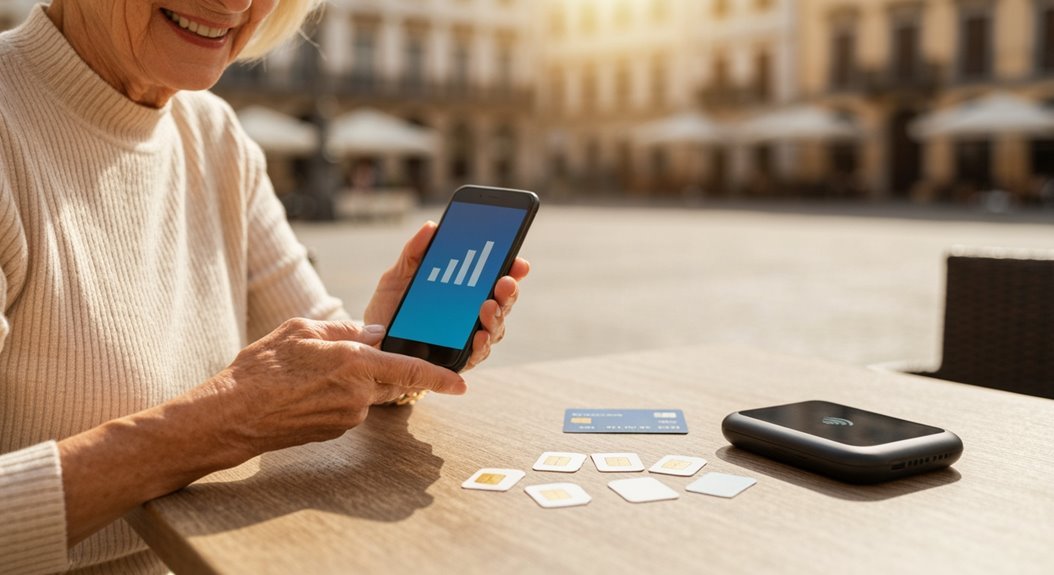
While staying connected in today’s fast-paced world can feel overwhelming, tapping into discounts and promotions designed just for seniors can make it a breeze!
Carriers like AT&T and T-Mobile roll out fantastic deals just for you, offering plans that save you money while keeping you connected. AT&T’s Unlimited 55+ plan at $40/month is a steal, especially when bundled with internet!
Don’t forget about Consumer Cellular’s plans starting at just $20/month for seniors; no long-term contracts needed!
Plus, if you’re a veteran, many providers will stack discounts, creating even more savings! So grab your ID, check eligibility, and take advantage of great offers—you might even have a little extra left over for a sweet treat!
Staying Connected With Free Texting and Data
Staying connected with loved ones shouldn’t break the bank, and luckily, there are plenty of free texting apps that help you keep in touch without the hassle of hefty fees!
Here are three fantastic options:
- WhatsApp: Easily send free texts, voice messages, and even video calls over WiFi. It’s as popular as grandma’s secret cookie recipe!
- Viber: This app provides free texting and calls worldwide with message encryption, keeping your chats secure like your favorite diary.
- Telegram: Enjoy fast messaging and offline features that deliver texts later if you lose your connection—perfect for when you’re exploring dodgy WiFi spots!
With these apps, you can stay connected, save money, and have fun talking to friends and family wherever you roam!
Navigating Health and Safety While Traveling
Before you commence your next adventure, remember that steering through health and safety while traveling doesn’t have to feel like solving a mystery!
Start by evaluating health risks based on your destination and personal health. Schedule a pre-trip consultation with a travel clinic 4-8 weeks ahead, and pack your medication list, emergency contacts, and insurance info.
Keep anti-bacterial wipes handy to disinfect surfaces, as you never know when you’ll encounter a sneaky germ!
Before you jet off, research local healthcare access, and pack enough meds for potential delays.
And don’t forget to check those immunizations!
With a bit of planning, you can focus more on enjoying your trip and less on those pesky “what ifs.” Safe travels!
Tips for Using Technology Abroad
As you commence your adventure, staying connected with loved ones and accessing helpful information can make your travel experience even more enjoyable.
Embrace the technology around you with these simple tips:
- Get a Local SIM Card: This can save you from those outrageous roaming charges—your wallet will thank you later!
- Enable Wi-Fi Calling: Make the most of Wi-Fi when available, so you can chat with family without the cost adding up.
- Download Essential Apps: Offline maps and translators are lifesavers—trust me, they’ll make finding your way and communicating a breeze!
With a little preparation, you’ll find that technology can enhance your trip instead of complicating it.
Frequently Asked Questions
How Can I Troubleshoot Connectivity Issues Abroad?
To troubleshoot connectivity issues abroad, start by restarting your device.
If that doesn’t work, double-check your settings—make sure data roaming is enabled, and that you’re not stuck in airplane mode.
Next, try manually selecting a network; you might just need to kiss a few frogs!
Don’t forget to guarantee your SIM card’s clean and firmly in place.
If all else fails, reach out to your carrier’s support for assistance.
Happy travels!
What Emergency Services Can I Access With My Phone While Traveling?
While traveling, you can access local emergency services through your phone by dialing the appropriate number for your destination—like 112 in Europe or 999 in the UK.
It’s essential to save these numbers before you go, as your familiar 911 mightn’t work!
Plus, consider downloading emergency apps or storing important contacts, so help’s just a tap away.
Are There Offline Options for Navigation Without Data?
Absolutely, there are great offline options for navigation that don’t require data!
Apps like Google Maps and HERE WeGo let you download maps ahead of time, so you can wander without worrying about getting lost.
MAPS.ME is also fantastic for off-the-beaten-path adventures, offering detailed maps without data.
Just imagine, exploring a new city and following your downloaded route—no phone bill surprises!
It’s like having a trusty compass in your pocket!
Can I Use My Phone in Emergency Situations Without a Plan?
Well, they say “better safe than sorry!” You absolutely can use your phone in emergencies without a plan.
Most phones can still dial emergency numbers, like 112 or 911, even without a SIM card. However, do keep in mind that your phone won’t receive any calls back.
How Do I Protect My Personal Information While Using Public Wi-Fi?
To protect your personal information on public Wi-Fi, use a reliable VPN to keep your data safe and encrypted.
Always double-check if the network’s legit before connecting—don’t fall for rogue hotspots!
Avoid banking or sensitive tasks, because nobody wants to be a victim of data-snatching ninjas!
Strengthen your passwords, update your apps, and consider using a password manager.
Stay smart, stay safe, and keep your info under wraps—even in cyberspace!
Conclusion
So, there you have it! Staying connected while traveling doesn’t have to be a hassle. Did you know that 72% of seniors now use smartphones while traveling? That’s a huge jump! With a little planning, you can keep in touch with loved ones, share your adventures, and even find the best local spots to eat. So, grab your phone, embrace technology, and enjoy your travels—your family at home will be glad you did! Happy travels!