Staying Hydrated and Healthy During Travel

Staying hydrated while traveling keeps you feeling your best and ready for adventures! Aim for about 2.1 to 2.6 liters of fluids daily, and remember to sip regularly on flights where the air is dry.
Bring a refillable water bottle and ask flight attendants for refills when needed. Try to limit excessive caffeine and alcohol, as both can contribute to dehydration.
Keep an eye on your urine color—if it’s pale, you’re likely well hydrated. Follow these simple tips, and your travels will feel more comfortable and enjoyable.
Understanding Your Hydration Needs
When you’re on the go, it’s easy to forget just how essential staying hydrated is for keeping your energy up and your spirits high.
You need about 2.1 to 2.6 liters—yeah, that’s 8 to 10 cups—of fluids daily to stay on top of your game. Adequate hydration is crucial for physical and mental health!
Want to check if you’re hydrated? Just peek at your urine; if it’s pale, you’re golden!
Dark? Time to drink up!
Practical Tips for Hydration on Flights
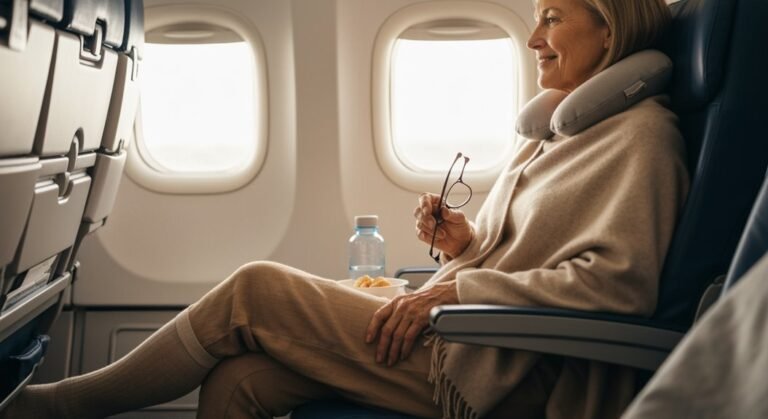
Staying hydrated during flights can feel like a bit of a challenge, especially when you’re surrounded by dry air and busy travel schedules. But don’t worry, there are simple ways to keep your hydration game strong!
First, bring a refillable water bottle—it’s your new best travel buddy. Fill it up after security and request refills from flight attendants whenever you can. Aim for about 8 ounces of water per hour; it’ll keep you feeling fresh and ready for takeoff. Remember that in-flight humidity levels often drop to 10% to 20%, so staying on top of your water intake is essential.
Be mindful of what you’re sipping, too. Limit alcohol and caffeine, which can dehydrate you faster than a desert sunset. Instead, consider hydrating snacks like fruit—give those apples a little Airplane Air!
And setting reminders or alarms? Genius! They’ll nudge you to drink regularly, so you can enjoy your movie while feeling like a hydration pro.
Enjoy your flight, and keep that water flowing!
The Impact of Travel on Fluid Balance
Traveling can be exhilarating, but it can also throw a wrench in your hydration game! Long flights can lead to some surprising fluid shifts, making your legs feel like balloon animals as they swell from edema.
Plus, the low cabin humidity saps moisture, causing you to lose roughly 200 mL of fluids every hour. That’s sneaky hydration sabotage right there! You might even not feel thirsty due to the dry air, which can trick you into thinking you’re fine. But then, bam! You might end up with a headache or foggy mind instead.
As if that wasn’t enough, drinking only plain water could dilute your electrolytes, making things worse. Additionally, studies show that travelers can experience an average fluid retention of 1150 ml during long flights, which can exacerbate these hydration challenges.
Staying Hydrated in Different Travel Environments
No matter where your travels take you—whether it’s the sweltering heat of a tropical paradise or the dizzying heights of a mountain range—staying hydrated is key to keeping your adventure fun and energizing!
In hot climates, don’t just sip water; increase your intake and replenish with electrolyte-rich drinks like coconut water. Ditch the caffeine and alcohol, which can make you feel like a dried-up sponge! Seek shade and plan your activities during cooler hours.
At high altitudes, your body needs more water, too. Breathe deeply, drink steadily, and watch for any signs of altitude sickness.
If you’re on a long road trip or flying, carry a reusable water bottle and hydrate often, especially in those dry airplane cabins! So, pack your snacks and hydration tools wisely—your body will thank you, and you’ll keep your spirit soaring as high as those mountain peaks!
Monitoring Your Hydration Levels
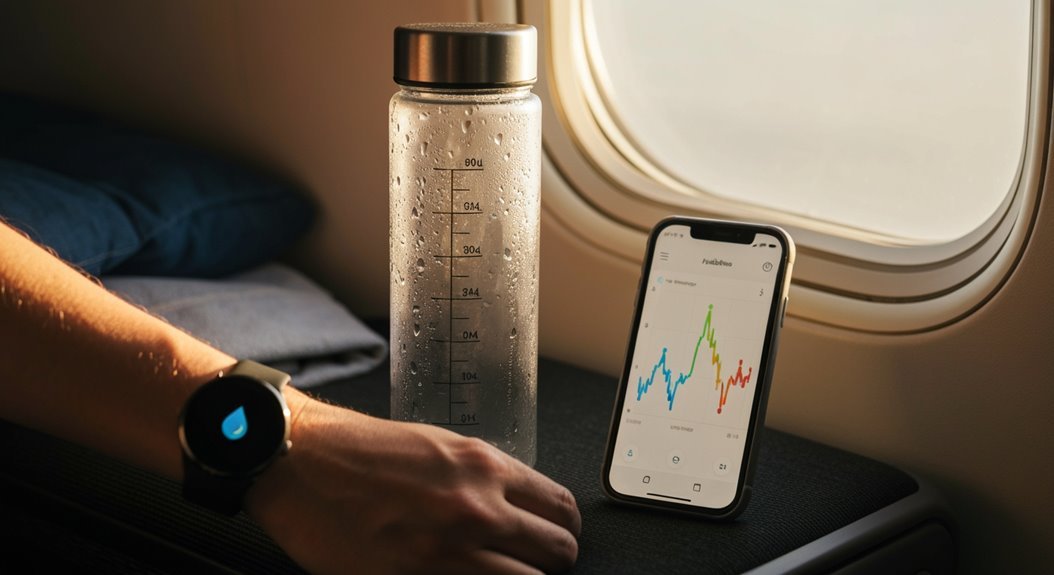
How can you tell if you’re properly hydrated while on the go? Staying aware of your hydration levels is essential, especially during travel.
You can make use of various nifty tools and techniques to keep track of your fluid intake. Here are some straightforward ways to monitor your hydration:
- Set reminders on your phone to drink water every 20-30 minutes, even if you’re not feeling thirsty. Your body will thank you later!
- Check your urine color; aim for a pale yellow, which indicates solid hydration. If it’s darker, you might want to gulp some water.
- Keep an eye on your weight; daily fluctuations can help you spot fluid loss quickly.
With smart water bottles and wearable sensors hitting the market, tracking hydration has never been easier.
Frequently Asked Questions
Can I Drink Too Much Water While Traveling?
Absolutely, you can drink too much water while traveling!
It’s like pouring a gallon into a cup that can only hold a pint—things are gonna spill! When you guzzle excessive water, it can dilute sodium in your blood, leading to stuffy symptoms like nausea or confusion.
So keep sipping, but don’t drown yourself. Just balance it out with some tasty snacks, and you’re good to go on your adventures!
Stay smart and hydrated!
What Are Signs of Dehydration Specific to Flying?
When you’re flying, signs of dehydration can sneak up on you like a ninja! You might notice a dry mouth, headaches, or even those chapped lips that scream for attention.
If dizziness joins the party, it’s your body saying, “Hey, I need water!” Fatigue and confusion can crash the fun, too.
Keep an eye out for dark urine; it’s not a good look! So, sip that water and keep the flying fun going!
How Does Hydration Affect Jet Lag Recovery?
Staying well-hydrated can be a game-changer for jet lag recovery—did you know that long-haul flights can make you lose twice the moisture you normally would?
When you’re hydrated, your body’s electrolyte balance perks up, helping reduce that pesky fatigue and headaches. It’s like giving your body a little energy drink!
Plus, sipping on electrolyte water keeps you feeling spry, making those post-flight adventures way more enjoyable. Cheers to a more refreshed you!
Are There Hydration Needs for Specific Age Groups?
Different age groups have unique hydration needs. For instance, toddlers need about 4 cups, while kids aged 4-8 require 5-7 cups daily.
Teens? They’re thirsty, needing 8-14 cups depending on their sex.
And don’t forget older adults—yikes! They often forget to drink enough.
Can I Hydrate With Food Instead of Drinks?
Absolutely, you can hydrate with food instead of drinks!
Imagine biting into a juicy watermelon on a hot day—it’s like summer in every bite! Foods like oranges, cucumbers, and yogurt not only quench your thirst but also pack a punch of nutrients.
Sure, drinking water’s quick, but munching on hydrating snacks can be fun and keep you feeling full.
Just remember to mix it up with some water to hit your hydration goals!
Conclusion
So, there you have it—staying hydrated while traveling isn’t just a drop in the bucket! By understanding your needs, packing smart, and keeping an eye on your fluid intake, you can sidestep that dreaded travel fatigue. Think of your body as a plant; when you nourish it with plenty of water, you’ll thrive wherever your adventures take you. So, grab that water bottle, stay refreshed, and make a splash on your next trip!