Travel Tips for Seniors With Hearing Loss
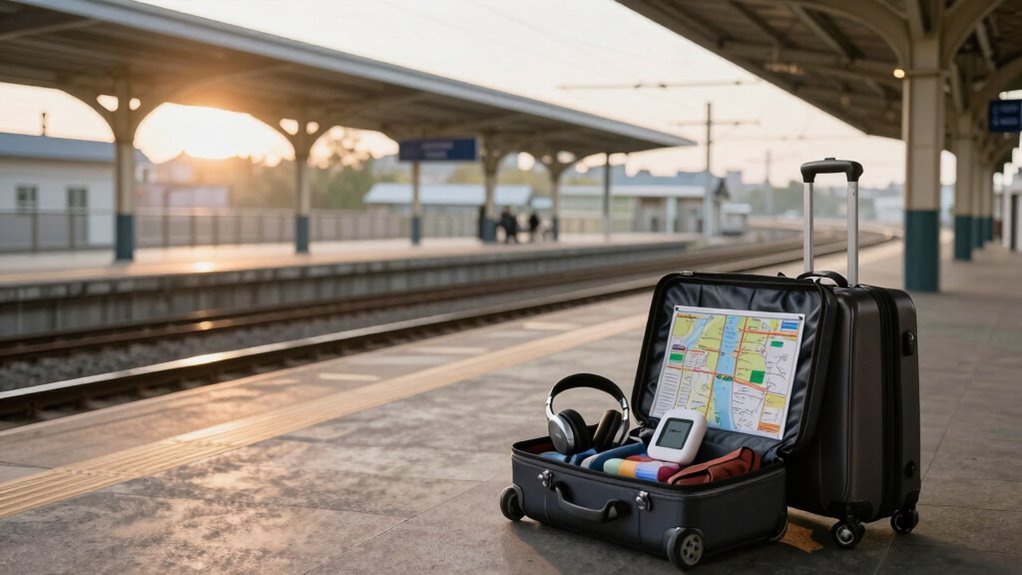
Travel Tips for Seniors With Hearing Loss: Traveling as a senior with hearing loss doesn’t have to be intimidating. Start by prepping your hearing aids—stock up on batteries, bring a cleaning kit, and schedule a check-up with your audiologist before you leave.
Communicate your needs with travel staff and ask for accommodations like captioned announcements or seating changes. Use speech-to-text apps for easy conversations and carry a written note explaining your hearing preferences if needed.
Plan for noisy environments by choosing quieter times to visit attractions and bringing noise-reduction accessories. Above all, embrace your adventure—crowds can be loud, but with a little preparation you can travel like a pro.
Understanding Hearing Loss in Seniors
Hearing loss can sneak up on you like a mischievous little gremlin, especially as you age. It’s pretty common—about 65% of folks aged 71 and older experience it. You might find it surprising that men face nearly double the risk of loss compared to women; it’s like a secret club nobody wants to join!
By the time you hit your 90s, a whopping 96% of you’ll have some degree of hearing impairment.
When you’re soaking in the sounds of nature on your travels, remember that changes in the inner ear can make it hard to catch every word of conversation. Plus, things like diabetes can speed up hearing loss.
Challenges Faced While Traveling
While soaking in the beauty of new places sounds fantastic, traveling can throw some curveballs, especially for seniors with hearing loss. Maneuvering the bustling world can be tricky, but recognizing the challenges can help you prepare and stay safe.
- Sound Localization: You might struggle to locate sounds, like honking horns or someone calling your name, making navigation a bit nerve-wracking.
- Communication Barriers: Airports and train stations can be overwhelming with noise, and missing announcements can add to the travel stress. In fact, among individuals age 65 and older with disabilities, 40.2% reported making zero trips on the survey day due to health challenges, illustrating that travel-limiting disabilities can significantly affect mobility.
- Reduced Independence: You may find yourself relying more on friends or family for transportation, which can feel limiting.
- Physical Limitations: If hearing loss is accompanied by mobility issues, it might lead to fewer adventures or shorter trips.
Preparing Hearing Aids for Travel
Before you commence your next adventure, taking a moment to prep your hearing aids can make a world of difference.
First, stock up on extra batteries or pack your charging case and cords, ensuring you can hear every announcement—even if it’s an unexpected love song on a plane! Check your battery quality and take along a portable power bank for those emergency charging moments while you’re on the go.
And don’t forget your trusty cleaning kit—microfiber cloths and wipes are your best friends for keeping things fresh and hygienic!
Schedule a check-up before you leave; your audiologist can fine-tune your aids for noisy airports or busy streets.
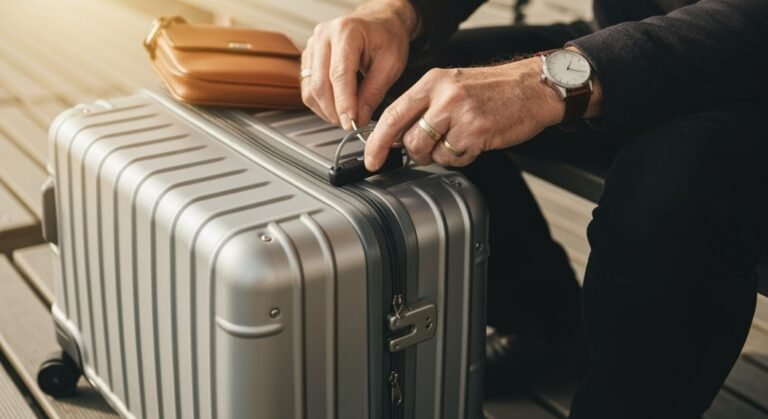
Also, keep your hearing aids and all accessories in your carry-on, not checked luggage, so they’re within easy reach.
With a few simple preparations, you’ll be ready to soak up every delightful sound on your travels!
Safe adventures await!
Practical Travel Tips for Seniors
Getting ready for a trip can be a thrilling adventure, especially when you take a few practical steps to guarantee everything goes smoothly!
Here are some tips to keep in mind:
1. Choose Accessible Accommodations****: Look for hotels with ramps and elevators, making life easier for everyone.
Plus, proximity to medical facilities is a bonus, just in case!
2. Select Travel Modes Wisely: Consider driving if you’re more comfortable behind the wheel, or explore train options for some scenic views.
Who doesn’t love a good train ride?
3. Plan Health and Safety: Don’t forget to consult your doctor before you jet off!
And carry emergency contact info—better safe than sorry!
4. Pace Yourself: Remember, it’s not a race.
Schedule rest breaks between activities. Your body—and your feet—will thank you for it later!
Communication Strategies on the Go
Traveling can be a wonderful opportunity to connect and share moments with others, but it can present unique communication challenges, especially if you or someone in your group experiences hearing loss.
To make communication smoother, carry communication cards that explain your hearing needs. These can help when speaking with airport staff or hotel personnel. When abroad, pre-written notes in the local language can bridge any language gaps.
Don’t forget modern tech! Speech-to-text apps can turn conversations into readable text, making things clearer amidst the background chaos.
Let travel personnel know about your hearing loss beforehand; this way, they can provide necessary accommodations. Also, establish simple hand signals with your companions for when you need clarification or a break.
And remember, clarity is key—maintain eye contact and face each other directly when talking. These strategies can make your adventures more enjoyable and less stressful!
Navigating Crowded Environments
Maneuvering crowded environments can feel like trying to dance through a packed room during a lively party—you want to enjoy yourself, but the chaos can be a little overwhelming!
To make your experience easier and more enjoyable, consider these tips for tackling noisy situations:
- Choose Smart Seating: Sit near walls or corners to cut down on background noise, and opt for round tables for better face-to-face interactions.
- Arrive Early: Beat the crowd by arriving early or choosing off-peak hours. You’ll find quieter spaces to relax before the hustle starts.
- Seek Quiet Zones: Identify quieter areas in the venue where you can chat without too much clamor, like tucked-away corners or less busy spots.
- Communicate Your Needs: Don’t hesitate to ask hosts to lower the music or find a quieter setting—it’s totally okay to advocate for your comfort!
With these strategies, maneuvering crowds can be less intimidating and more fun. Enjoy the dance!
Enhancing Travel Experience With Technology
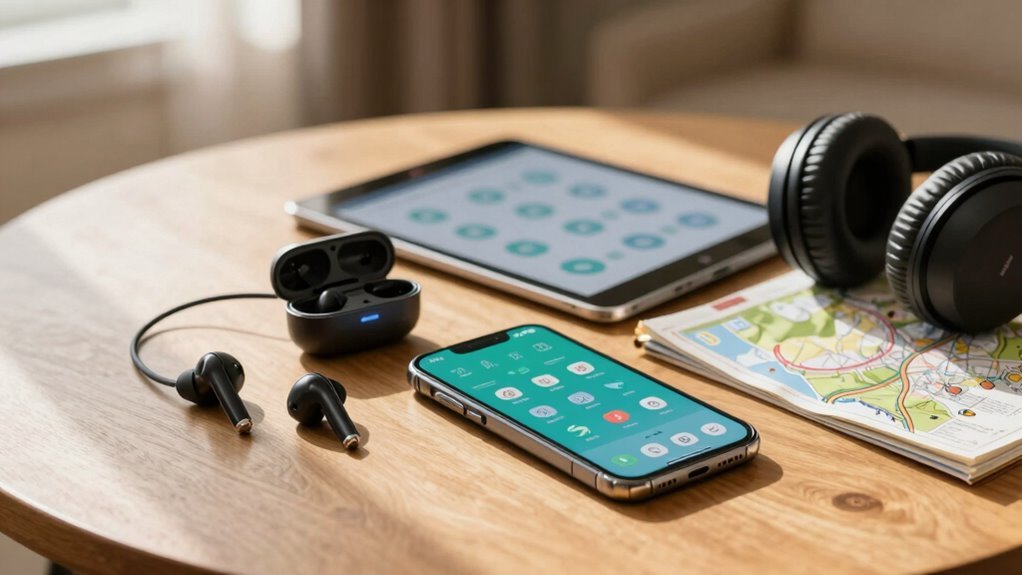
As you commence your next adventure, you’ll find that technology can be your trusty sidekick, enhancing your travel experience in ways you mightn’t have imagined.
Bluetooth-enabled hearing aids make it easy to stream audio from your smartphone or tablet, so you can enjoy music, podcasts, or even audiobooks while sightseeing. Plus, with Auracast™ technology, you can join group tours without missing a beat, even in bustling environments.
Smartphone apps like Live Caption provide real-time conversation transcriptions, helping you understand others, while GPS directions are just a tap away, ensuring you never get lost in translation.
Many venues offer hearing loops and tele-enabled systems, creating crystal-clear audio, and hotels often provide ADA kits loaded with helpful devices.
Psychological Considerations for Travelers
When you’re exploring new places, your emotional well-being can make all the difference in the world. Traveling can be a wonderful adventure, but for seniors with hearing loss, it often comes with its own set of challenges.
Here are a few psychological considerations to keep in mind:
- Social Connections: Don’t shy away from social settings—embrace them. Engaging with others can boost your mood and alleviate feelings of loneliness.
- Prepare for Anxiety: Anticipating communication hiccups can make you nervous. Breathe, and remember it’s okay to ask for help!
- Watch for Fatigue: Tune in to your mental load. If conversations tire you out, take breaks to recharge.
- Check Your Self-Esteem: Rock those assistive devices confidently! They’re tools that help you enjoy your trip.
Focus on enjoying each moment, and don’t let hearing loss dim your travel spirit! Adventure awaits!
Recommendations for the Travel Industry
Traveling can be a thrilling experience, but it often comes with unique challenges for those with hearing impairments. To make your adventures smoother, the travel industry can step up.
First, always inform your airline or hotel about your hearing needs during booking. This helps them prepare the right accommodations and guarantees everyone’s on the same page. Carry communication cards that explain your hearing loss—these can be life-savers in foreign countries!
Don’t forget about assistive technologies, like hearing loops or captioned phone apps; they can enhance your experience greatly.
It’s also essential that staff receive sensitivity training—when they know how to communicate effectively, everyone wins!
Lastly, advocate for seamless infrastructure at transportation hubs, including visual alerts and easy access to staff.
Frequently Asked Questions
Can Seniors With Hearing Loss Travel Alone Safely?
Absolutely, seniors with hearing loss can travel alone safely!
It’s all about staying aware and using strategies that work for you. Keep up with regular hearing check-ups, and don’t shy away from using hearing aids or assistive devices—they can be game changers!
Try to choose quieter travel times, and always keep your eyes on the road.
What Types of Hearing Aids Are Best for Travel?
The best hearing aids for travel are the durable Behind-the-Ear (BTE) models, which come with larger batteries for those long adventures.
If you prefer something discreet, In-the-Ear (ITE) styles offer that sleek look but may need more frequent charging. Rechargeable options are fantastic for convenience, especially when you minimize battery worries.
Plus, choose waterproof aids for those unexpected splashes. You’ll hear all the fun without missing a beat—happy travels!
Are There Travel Insurance Options for Seniors With Hearing Loss?
You know what they say, “Better safe than sorry.”
Yes, there are travel insurance options for you, even if you have hearing loss! Many plans cover emergency medical costs, trip cancellations, and even your precious hearing aids.
Just keep an eye on the fine print, as some exclusions could surprise you.
How Can Family Members Support Seniors With Hearing Loss During Travel?
To support seniors with hearing loss during travel, speak clearly, face them, and keep your mouth visible for lip-reading.
Use handy gadgets, like hearing amplifiers, to make sounds crisper. Also, prepare written notes for those noisy spots!
Give them a hand steering through crowded places, and don’t forget to choose quieter seats.
What Should I Do if My Hearing Aid Fails While Traveling?
Oh no, your hearing aid just gave up during your trip! Don’t panic; check the battery first and swap it out if you’ve got a spare. A quick clean might work wonders, too – moisture or wax could be the culprits!
If it still refuses to cooperate, lean on visual clues and communicate with gestures. Remember, laughter can be a great icebreaker, so don’t hesitate to involve your travel buddies in the fun!
Conclusion
So there you have it—traveling with hearing loss doesn’t have to be a bumpy ride! By preparing ahead, using the right tech, and keeping communication clear, you can enjoy adventures without missing a beat. Remember, life’s too short to let a little hearing loss hold you back. Whether you’re off to the nearest coffee shop or a cross-country road trip, embrace the journey. After all, every trip—like a good Wi-Fi signal—should connect you to joy!