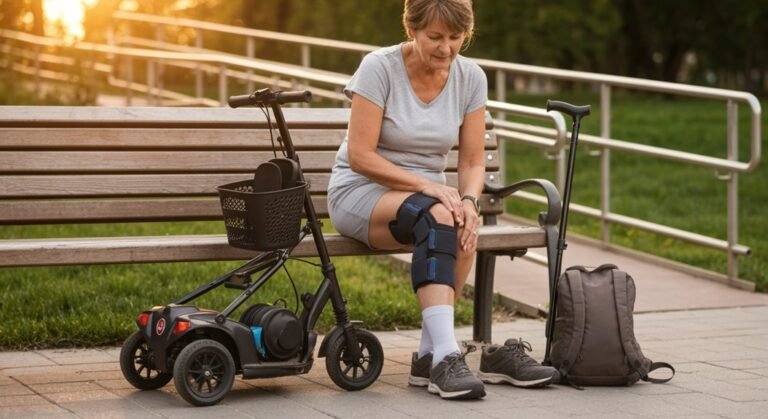
Traveling After a Knee or Hip Replacement
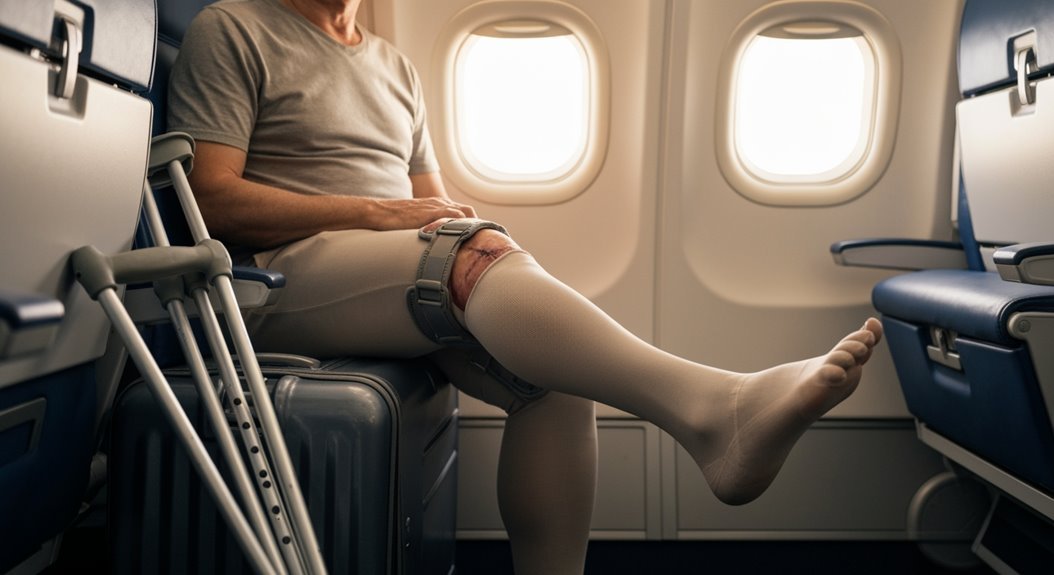
Traveling after a knee or hip replacement requires some planning to reduce risks like deep vein thrombosis (DVT). Talk with your surgeon about your specific situation before booking travel.
Wait at least six weeks after surgery before taking longer trips. For short flights, some people can travel at three to four weeks if their surgeon approves and recovery is going well.
During travel, keep moving regularly—stand, stretch, and walk when possible. Wear compression stockings and stay well hydrated to help prevent blood clots and swelling.
If you have questions about pain control, blood thinner use, or travel logistics (assistive devices, seating, or mobility assistance), check with your healthcare team so you can travel safely and comfortably.
Understanding VTE Risk After Joint Replacement
When you think about getting a knee or hip replacement, it’s easy to focus on the exciting news of improved mobility, but don’t forget about the potential risks lurking in the background—like venous thromboembolism (VTE). This sneaky complication can happen post-surgery, with rates soaring if you skip preventive measures. Without thromboprophylaxis, DVT rates can hit up to 22%. Yikes! Additionally, as the number of knee joint replacement procedures increases, so does the incidence of VTE. Even worse, VTE can bump your hospitalization death risk sky-high. The good news? Using medications and early movement can help keep those pesky clots at bay.
Safe Timing for Air Travel Post-Surgery
Ready to spread your wings and hop on a plane after knee or hip replacement surgery? It’s exciting to think about, but timing is key!
Most surgeons recommend waiting at least six weeks before you fly, giving your body a chance to heal properly. If you’re itching for a short-haul trip, you might consider flying as early as three to four weeks, but only if you feel comfortable. However, flying immediately after surgery increases the risk of deep vein thrombosis (DVT). Long-haul flights? Best to hold off for about 12 weeks.
Remember, your recovery journey is unique, so always check with your surgical team for clearance. Staying smart about travel after surgery means avoiding complications and ensuring your adventure is as enjoyable as possible!
Don’t rush the journey; it’ll be worth the wait!
Recommended Flight Durations for Travelers
Considering a flight after your knee or hip replacement? You can definitely mark that trip on your calendar, but let’s keep a few things in mind about flight durations.
Here are some recommendations to help you plan:
- Aim for flights under 4 hours during the first 6-12 weeks after surgery; it keeps prolonged sitting to a minimum. Additionally, it’s crucial to consult with your doctor for medical clearance before flying to ensure a safe travel experience.
- For longer flights, make sure to move around every 1-2 hours to keep blood flowing.
- If you’re feeling adventurous enough for flights over 6 hours, consider using compression stockings and drink plenty of water.
VTE Prophylaxis Strategies for Air Travelers
If you’re planning to take to the skies after your knee or hip replacement, it’s important to keep your risk of venous thromboembolism (VTE) in check.
Long flights can be tricky, especially those over six hours. You’ll want to wear graduated compression stockings; they’re like a warm hug for your legs, helping to keep blood flowing!
Don’t forget to get up and stretch every hour. Walk around the aisle or do a few calf raises in your seat.
Stay hydrated, but skip the soda! Avoid wearing tight clothing that can cramp your style (and circulation).
And remember, if you’re feeling any unusual symptoms, don’t hesitate to reach out for help. Happy travels!
Airport Security Protocols for Joint Replacement Patients
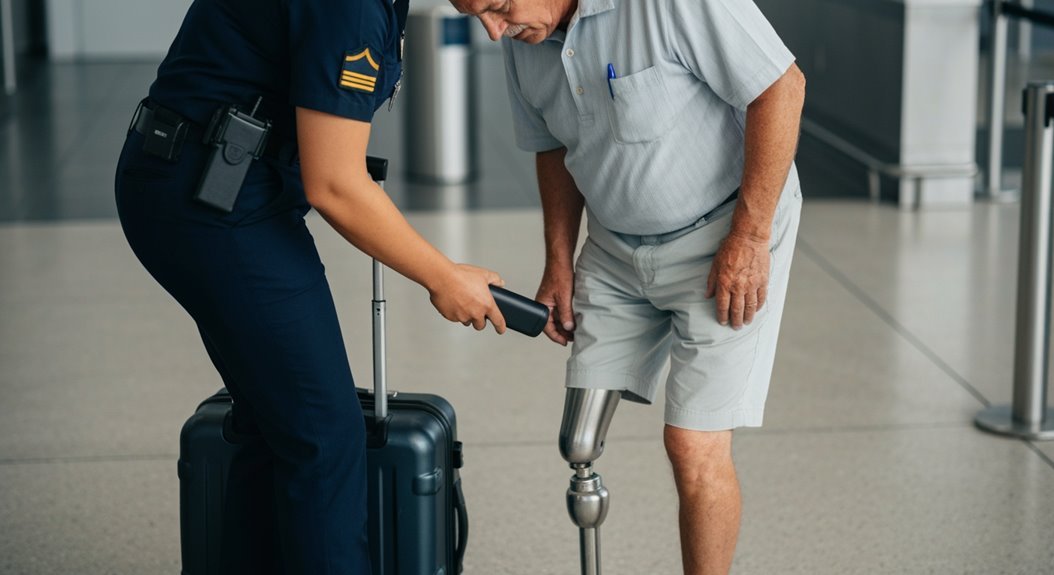
When you’re jetting off on your next adventure after knee or hip replacement, maneuvering airport security might seem a bit intimidating.
Don’t worry; you’re not alone! Here are some handy tips to help you breeze through:
- Communicate: Let the security officers know about your joint replacement before you enter the screening area. It’s easier for everyone!
- Know What to Expect: Be prepared for possible secondary screenings, like a hand-held wand or pat-down. It’s just a precaution!
- Pack Smart: Keep any implant ID cards or documentation handy, even if they’re not strictly required.
With a bit of preparation, you can tackle airport security without breaking a sweat.
Happy travels!
Impact of Joint Replacement on Physical Activity
After you’ve had knee or hip replacement surgery, adjusting to your new normal can feel like a little adventure of its own!
You might notice that getting back to your everyday activities takes some time. In the short term, your physical activity levels may not change much by six months, but you’d likely see some improvement by one year, even if you’re still not quite “running marathons.”
Many people spend about 30 more minutes locomoting each day post-surgery, which is a win!
However, it’s important to keep moving, as around 59% of folks struggle to stay active five years later.
Returning to Sports After Knee or Hip Surgery
Wondering what it’s like to get back to your favorite sports after knee or hip surgery?
Well, you’re in for some exciting news! Most athletes can return to their game, but timing is key. Here’s what you can expect:
- Knee Surgery Success: About 60% of patients return to sports within 10 weeks after partial knee replacement.
- Hip Surgery Returns: A staggering 87% of hip resurfacing patients jump back into sports, including high-energy options like soccer and tennis.
- Patience Pays Off: Remember, full go-back to pre-surgery activity might take up to a year.
Managing Pain and Discomfort During Travel
Travel can be a bit of a hurdle, especially if you’ve just had knee or hip replacement surgery, but managing pain and discomfort doesn’t have to turn your trip into an uphill battle.
First off, keep your pain meds handy in your carry-on. Trust me, you’ll want to have easy access to them! Ice packs can work wonders too; just remember to treat your skin like royalty and use a barrier like a towel.
Don’t forget those compression stockings—they’re not just for fashion! Hydration and gentle movement keep your blood flowing and legs happy during travel.
And hey, don’t hesitate to switch up your position often; your body will thank you! Travel smart, and enjoy your adventure!
Tips for a Comfortable Journey After Surgery
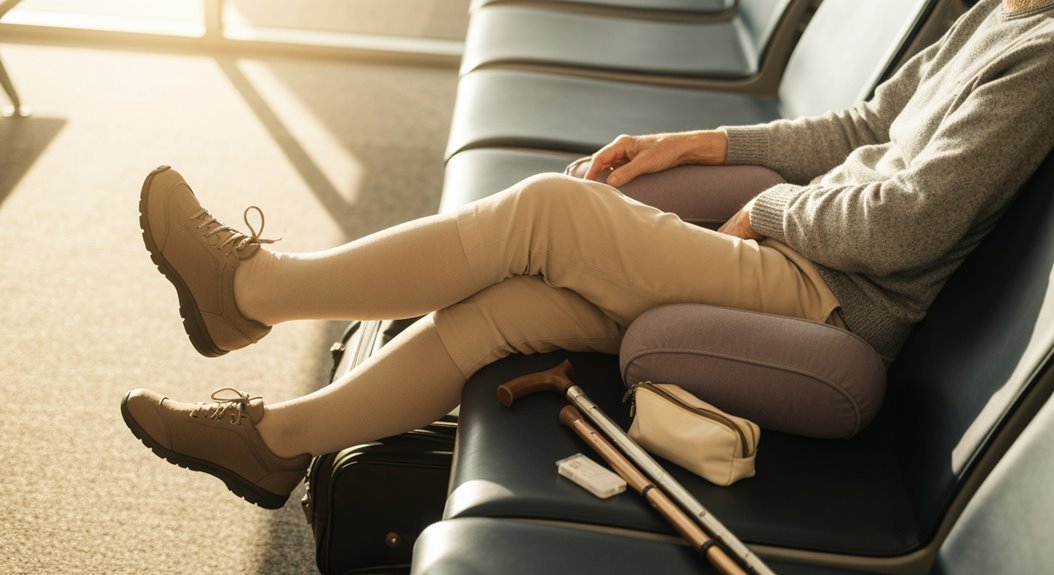
While you’re gearing up for that upcoming adventure after knee or hip replacement surgery, there are some savvy strategies that can help make your journey a breeze!
Here are a few tips to keep you comfy:
- Pack Wisely: Bring essential meds, mobility aids, and cozy items like pillows in your carry-on—trust me, you’ll want them close at hand!
- Frequent Breaks: Stand and stretch every 15-20 minutes. Your joints will thank you, and it’s a great excuse to walk around.
- Stay Hydrated: Drink plenty of water, but skip the dehydration-inducing drinks like caffeine and alcohol—tricky but worth it!
With these tips in your travel arsenal, you’ll be ready for adventure while keeping comfort in the forefront!
Patient Experiences and Success Stories
After getting back on your feet and conquering the challenges of travel post-surgery, you’ll be keen to hear how others have embraced their new lease on life.
Many patients can’t believe how quickly they’re back to adventures, walking without aids just weeks after surgery. Some shared stories of taking beach trips and enjoying family outings, while others jumped back into hiking and cycling after a few months.
Imagine skiing again! Quick recovery truly opens doors; a patient even traveled solo within six months!
With renewed freedom, they’ve found pain-free days filled with laughter, joy, and active leisure. These successes shine a light on how the right treatment and mindset can lead you back to the life you love.
Frequently Asked Questions
Can I Travel Internationally Shortly After My Surgery?
You might want to hold off on that international trip right after your surgery!
Most doctors recommend waiting at least six weeks, especially to dodge pesky blood clots.
If you’re itching to travel, chat with your surgeon first. If they give you the green light, just make sure to prep with comfy seats, legroom, and those fancy compression stockings.
Will My Insurance Cover Travel-Related Medical Expenses?
Often, travel insurance covers up to £15 million for medical expenses, but it depends on your situation!
You’ll have to declare any pre-existing conditions, like a knee or hip replacement, to get the right coverage. If you don’t, you might face some sneaky claim denials.
Be upfront about your health, and don’t forget to contact your insurer if things change—no one wants surprise bills while enjoying their vacation, right?
Happy travels!
What Should I Pack for Post-Surgery Travel?
You’ll want to pack some comfy clothes, like loose-fitting pants and zip-front tops, to keep things easy.
Grab slip-on shoes, a light robe, and don’t forget your compression garments!
For medical supplies, stash your meds, bandages, and ice packs.
Include gentle skincare products and a water bottle for hydration.
And for fun, bring magazines or a journal to keep your spirits up.
You’re all set for a smooth recovery adventure!
Can I Use Public Transport After My Joint Replacement?
Absolutely, you can use public transport after your joint replacement, but it’s a bit of a dance!
Picture yourself gliding onto a bus with crutches, ready to explore the world again. Just make sure to get the green light from your doctor first.
Once you’re cleared, start slow, take aisle seats, and don’t forget those calf squeezes! You’ll feel like a pro maneuvering the transit scene before you know it.
Do I Need Special Assistance at the Airport?
Yes, you might need special assistance at the airport, especially if you’re not up for long walks just yet.
Don’t hesitate to ask for a wheelchair or cart—those friendly airport staff are there to help!
It’s smart to give your airline a heads-up about your situation during booking.
Plus, arriving early will give you enough time to breeze through security, making your journey much smoother.
Adventure awaits, my friend!
Conclusion
So, whether you’re jetting off to paradise or just visiting family, remember your journey doesn’t have to be a bumpy ride. With the right precautions and a sprinkle of patience, you can soar through the skies post-surgery like a well-oiled machine! Embrace these tips, and you’ll be dancing in the clouds before you know it. Just think of all those fabulous stories you’ll have to share when you land. Safe travels, and keep that spirit high!