What to Do if You Get Sick Abroad
If you get sick abroad, don’t panic. First dial the local emergency number or ask hotel staff for immediate help.
Contact your travel insurance right away — they can arrange care, cover costs, or advise on next steps. Keep all medical receipts and documentation for claims.
For minor issues, consider telemedicine for quick advice and treatment recommendations to avoid long waits at clinics.
Learn how to navigate the local healthcare system before you travel so you know where to go and what to expect. Want more tips for handling health hiccups while away? There’s plenty to explore.
Pre-Trip Health Preparation
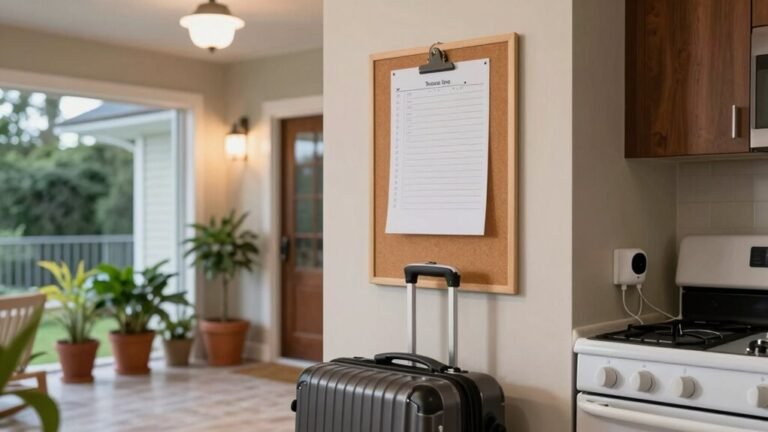
Before you jet off to a new adventure, it’s super important to prepare your health like a well-packed suitcase—carefully and with everything you might need!
Start by checking if you need any destination-specific vaccines, like hepatitis A or yellow fever. Get those routine shots up-to-date, too, ensuring you’re ready to tackle anything from flu season to COVID-19.
It’s smart to schedule a travel consult at least 30 days prior; this way, your doctor can tailor health advice just for you! Additionally, make sure to consult the CDC’s Traveler’s Health information for vaccination guidelines related to your destination.
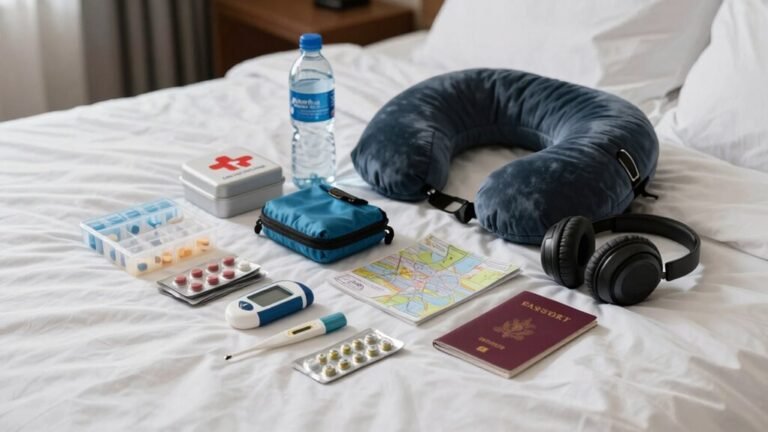
Don’t forget to pack enough prescription meds for the trip, plus extras for those “just in case” moments. Bring along common over-the-counter stuff like pain relievers and allergy meds, because who wants a headache during paradise?
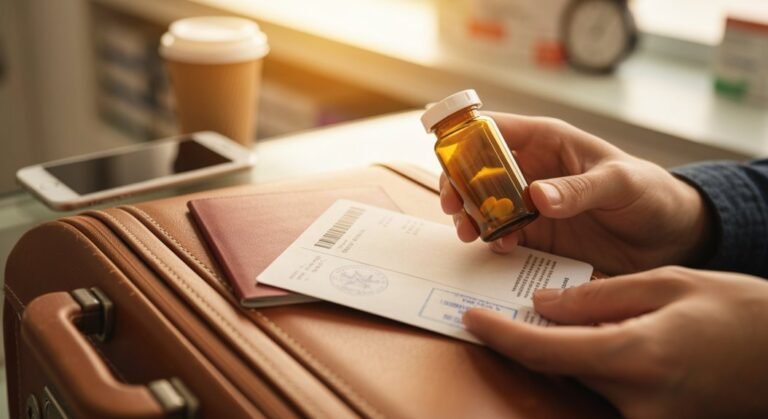
Finally, stash away those important docs like your vaccination records and insurance details. Trust me, this prep will let you focus on having fun instead of worrying about what-ifs!
Immediate Actions During a Medical Emergency
When you find yourself in a medical emergency abroad, it’s essential to stay calm and act quickly—think of it as your travel adventure taking an unexpected turn!
Here’s what to do right away:
- Dial the local emergency number—you’ll need it, and it differs by country (e.g., 112 or the local equivalent of 911).
- Ask for help—if you can’t make the call, get assistance from hotel staff or friendly passersby.
- Contact your embassy or consulate—they can help locate nearby medical facilities and offer language support.
- Use travel insurance hotlines—these can provide coordinated support and medical referrals to get you safely where you need.
Navigating Healthcare Facilities Abroad
Experiencing a medical emergency abroad can feel overwhelming, but knowing how to navigate healthcare facilities can greatly ease your worries.
First, look for hospitals with international accreditations, like JCI. It means they maintain high safety and quality standards—great news for your peace of mind! Check out patient reviews to gauge experiences, and make sure medical professionals are certified and qualified—after all, you want the best care.
Don’t forget about language! Facilities with multilingual staff can help you communicate better.
Also, familiarize yourself with local healthcare systems and practices. Knowing what to expect can make a huge difference.
Lastly, consider using medical concierge services for smooth sailing. They can assist with logistics, translations, and everything in between.
Insurance and Financial Considerations
Getting sick abroad can throw a real wrench in your travel plans, but having the right insurance makes a world of difference!
To avoid a financial headache, consider these essential tips for choosing the best coverage:
- Understand your options: Decide between international health insurance, short-term travel health insurance, or medical evacuation insurance based on your needs.
- Check coverage limits: Aim for at least $50,000 for emergency medical coverage, especially if traveling to high-risk areas.
- Think about costs: Travel medical insurance can start at just $1 a day, providing significant protection without breaking the bank.
- Document everything: Keep receipts and medical records handy, as they’ll be necessary when filing claims.
With the right insurance in your corner, you can focus on enjoying your adventure, letting the worry fade away like a bad selfie.
Your journey should be unforgettable for all the right reasons!
Emergency Medical Evacuation
Traveling with the right insurance sets you up for peace of mind, but what happens if you face a serious medical emergency overseas? Well, that’s where emergency medical evacuation comes into play! This process involves whisking you away—either by ambulance or air ambulance—to a medical facility that can handle your specific needs.
If you’re in a remote area or a place where local care can’t help, an evacuation could be your best option. Medical teams will assess your situation, and they often make the call on whether you need to be moved, not you!
From securing the necessary paperwork to planning the logistics, it’s a whirlwind of coordination. Just remember, emergencies abroad can get pricey—so make sure your insurance covers at least $250,000!
If you find yourself in a jam, don’t panic; you’ve got support, and soon you’ll be on your way to better care!
Practical Communication Tips
When you find yourself in need of medical assistance abroad, having a plan for communication can make all the difference!
To navigate those tricky situations with confidence, here are some practical tips to keep in mind:
- Learn essential phrases: Master local terms for symptoms, allergies, and medications. It’s easier than it sounds, and you’ll impress locals too!
- Use translation apps: Download medical-specific apps to help express your needs accurately. Handy, right?
- Carry a medical summary: Jot down your medical history, allergies, and current medications. This quick reference can save you time and confusion.
- Know emergency numbers: Familiarize yourself with local healthcare contacts before you travel, so you’re prepped for anything.
With a little preparation, you’ll turn communication hurdles into mere bumps in the road.
Stay positive, and you’ll handle your medical needs like a pro!
Documenting Medical Care and Expenses
Facing a medical situation abroad can feel overwhelming, but with a little effort in documenting your care and expenses, you can turn the tide in your favor!
Start by collecting all itemized medical bills, receipts, and physician notes. Trust me, these goodies are your best friends when filing claims. Make sure your name matches what’s on your insurance ID card; no one likes a claim getting delayed!
Snap clear photos or scans of everything because you never know when your documents might freak out and vanish. Keep a timeline of your symptoms and treatments; it’s like a mini medical mystery novel!
When it’s time to submit, do it promptly through your insurer’s portal—don’t leave them hanging!
Also, if you need a medical evacuation, believe me, those costs can hit hard, so document everything!
With careful record-keeping, getting reimbursed can turn from a nightmare into a walk in the park.
Understanding Local Healthcare Infrastructure
Understanding how local healthcare infrastructure works can be a lifesaver when you’re sick in a foreign land. Knowing what to expect helps you stay calm and make the right choices.
Here are four key factors to take into account:
- Hospital Capacity: The number of hospital beds per 1,000 people can vary wildly, affecting how quickly you can get care.
- Healthcare Workforce: More doctors mean better care. If you’re somewhere with a shortage of healthcare professionals, you might face longer wait times.
- Emergency Preparedness: Make sure to check if the local health system is equipped for emergencies. Trust us, this can save you!
- Access to Care: Urban areas usually have better access to healthcare than rural ones. Knowing your surroundings helps you plan better.
With all this in mind, you’ll navigate any healthcare hiccup like a seasoned traveler!
Utilizing Telemedicine Services
Imagine you’re lounging on a beautiful beach, and suddenly, a cold comes knocking at your door.
Don’t panic! Telemedicine‘s got your back. With a simple internet connection, you can chat with a doctor from the comfort of your hotel room. Forget those long wait times at crowded clinics because telemedicine consultations often take under 20 minutes. Plus, it’s usually way cheaper than a visit to a foreign ER, saving you from unexpected expenses.
Rely on telemedicine for everything from routine check-ups to urgent care; it’s perfect for travelers like you. You’ll be able to get prescription refills and test results delivered right to your device.
And with 89% of users satisfied with their virtual visits, you can feel confident knowing you’re getting solid care. So next time the sniffles strike while you’re away, just tap into telemedicine and keep enjoying your beach vibes.
Frequently Asked Questions
Can I Find a Local Doctor Who Speaks My Language?
You can definitely find a local doctor who speaks your language!
Many health clinics, especially in touristy areas, have multilingual staff ready to help.
Start by checking out international clinics or asking your hotel for recommendations.
Don’t forget to use online forums or medical tourism websites for tips too!
If you’re feeling brave, a telehealth consultation could be an option.
What Should I Do if I Lose My Medication Abroad?
If you lose your medication abroad, don’t panic! First, contact your travel insurance for help; they’re usually a lifesaver.
If it’s stolen, file a police report for insurance purposes.
Next, reach out to a local doctor who can prescribe replacements—don’t forget to bring your prescription and a note explaining your medical needs.
Finally, check local pharmacies; some might’ve what you need without needing a local prescription.
You’ve got this!
How Can I Get My Prescriptions Refilled in Another Country?
If you need your prescriptions refilled abroad, start by approaching local pharmacies with your original prescription or empty bottles.
Don’t sweat it if they don’t take it; just consult a local doctor who can help! Some countries even allow emergency refills without a new prescription.
Plus, using telehealth services lets you get your meds without stress.
It’s all about staying prepared and keeping your health on track while enjoying your adventures!
Are Herbal Remedies Safe to Use in Place of Prescribed Medication?
Herbal remedies can be tempting, but they’re not a safe swap for prescribed meds. You never know what hidden ingredients might be lurking in those supplements!
Plus, they can mess with the effectiveness of your medication or cause unexpected side effects.
Why take the risk? Stick with what a doctor recommends, especially for serious health issues.
It’s always best to chat with your healthcare provider before diving into the herbal jungle!
What if Local Healthcare Standards Differ From Those in My Home Country?
If local healthcare standards differ from your home country, don’t panic! Start by seeking care at internationally accredited hospitals, as they generally meet higher quality standards.
Do some research on local facilities before your trip, and read patient reviews to gauge their reputation.
Plus, having travel insurance that covers emergencies can be a lifesaver. Remember, being informed can make all the difference, and hey, you’ve got this adventure covered!
Conclusion
In the adventure of traveling, getting sick isn’t part of the itinerary, but it happens! Just remember, a little preparation goes a long way. With the right mindset and info in your back pocket, you can handle any health hiccup like a pro. So, embrace the unexpected, laugh it off, and don’t forget to find the nearest pharmacy instead of a fancy café! After all, even the best explorers encounter a few bumps on the road!